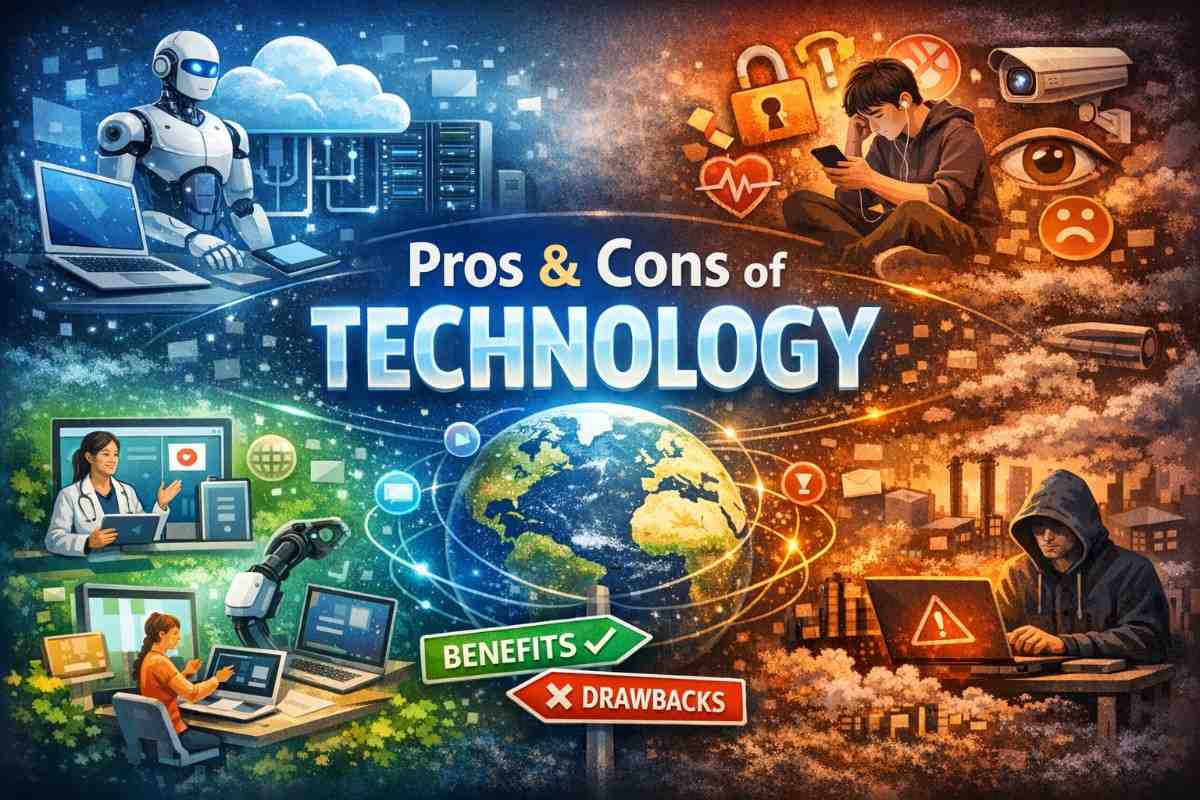
Technology has become a central part of modern life. From smartphones and laptops to artificial intelligence and cloud computing, digital tools influence how we communicate, learn, work, and entertain ourselves. Almost every industry now depends on advanced systems to improve efficiency and productivity. Whether at home, in offices, or in classrooms, innovation continues to reshape daily experiences.
Understanding the pros and cons of technology is important because it helps individuals and organizations make smarter decisions. While technology brings speed, convenience, and global connectivity, it also raises concerns about privacy, mental health, and overdependence. By examining both sides, we can use digital tools responsibly and effectively.
This guide will explore the benefits and drawbacks of modern advancements in detail. It will also discuss the pros and cons of technology in education, the pros and cons of technology for students, ideas suitable for a pros and cons of technology group discussion, guidance for creating a pros and cons of technology ppt, and a focused look at the key pros of technology that drive progress worldwide.
What Is Technology?
Technology refers to tools, systems, and innovations created to solve problems and improve human life. It includes everything from simple machines like the wheel to advanced systems like artificial intelligence, robotics, and cloud computing.
In today’s digital era, technology mainly revolves around:
The internet and digital communication
Smartphones and smart devices
Artificial intelligence and automation
Medical and healthcare innovations
Business and industrial systems
Technology continues to evolve rapidly, making life easier but also more complex.
Major Pros of Technology
 Improved Communication
 Improved Communication
One of the biggest benefits of technology is instant communication. In the past, sending a message across the world could take weeks. Today, it takes seconds. With smartphones, email, video calls, and social media platforms, people can connect globally in real time. Businesses collaborate internationally, families stay connected across continents, and information spreads quickly during emergencies. Technology has effectively turned the world into a global village.
Better Access to Information
The internet has made knowledge more accessible than ever before. Students, professionals, and researchers can access millions of resources within seconds. Online courses, digital libraries, tutorials, and research databases have revolutionized education. Anyone with an internet connection can learn new skills, earn certifications, or explore academic subjects. This easy access to information promotes self-learning and equal educational opportunities worldwide.
Increased Productivity and Automation
Technology improves efficiency in workplaces and industries. Automation tools reduce repetitive tasks, allowing employees to focus on creative and strategic work. Artificial intelligence can analyze large data sets quickly, improving decision-making. Cloud computing enables remote collaboration, while project management tools streamline workflows. Businesses save time and money, resulting in higher productivity and faster growth.
Advancements in Healthcare
Medical technology has significantly improved healthcare quality. Modern diagnostic tools detect diseases earlier and more accurately. Telemedicine allows patients to consult doctors remotely, saving time and travel costs. Robotic surgeries, wearable health monitors, and AI-based disease prediction systems are transforming patient care. These innovations increase life expectancy and improve overall quality of life.
Economic Growth and Innovation
Technology drives economic development. It creates new industries such as e-commerce, fintech, digital marketing, and app development. Startups can launch online businesses with minimal investment. Freelancers can work globally. Digital platforms allow entrepreneurs to reach worldwide audiences. Technology also encourages innovation, leading to continuous improvement in products and services.
Major Cons of Technology
Privacy and Security Risks
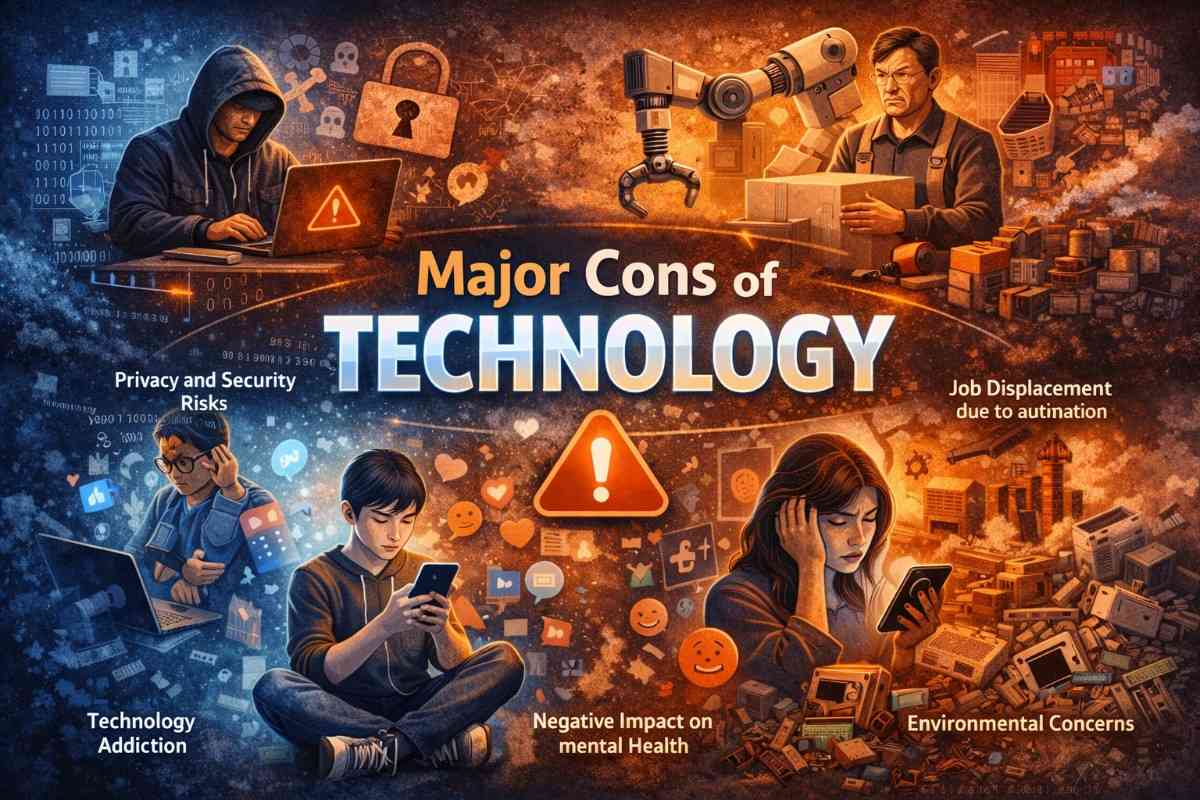
As digital usage increases, so do cybersecurity threats. Websites, apps, and companies constantly collect personal data. Data breaches, hacking, identity theft, and online fraud are serious concerns. Many users are unaware of how much personal information they share online. Without proper cybersecurity measures, technology can expose individuals and organizations to major risks.
Job Displacement Due to Automation
Automation and artificial intelligence are replacing repetitive jobs in manufacturing, retail, and even customer service. While technology creates new opportunities, it also eliminates certain roles. Workers without updated skills may struggle to adapt. This technological shift increases the need for continuous learning and reskilling.
Technology Addiction
Excessive use of smartphones, gaming platforms, and social media leads to digital addiction. Many people spend hours scrolling, reducing productivity and real-world interactions. Screen addiction affects children and teenagers, especially. It can impact sleep patterns, academic performance, and physical health. Technology should enhance life, not control it.
Negative Impact on Mental Health
Constant exposure to social media can lead to anxiety, depression, and low self-esteem. Comparison culture and online pressure affect mental well-being. Face-to-face communication may weaken social skills and emotional intelligence. While technology connects people virtually, it can also create emotional distance.
Environmental Concerns
Technology contributes to environmental problems such as electronic waste (e-waste) and high energy consumption. Data centers require massive amounts of electricity. Frequent device upgrades increase the amount of discarded electronics, harming ecosystems. Sustainable technology practices are necessary to reduce environmental impact.
| Pros of Technology | Cons of Technology |
|---|---|
| Instant communication | Privacy risks |
| Access to information | Job displacement |
| Higher productivity | Technology addiction |
| Medical advancements | Mental health concerns |
| Economic growth | Environmental impact |
Pros and Cons of Technology in Different Areas
Technology influences different areas of life in unique ways. Its impact can be positive in many situations, yet it can also create serious challenges. To better understand the advantages and disadvantages of technology, it is important to examine how it affects education, business, and society as a whole.
Technology in Education
Technology has transformed education by making learning more accessible and flexible. Online learning platforms allow students to study from anywhere in the world, breaking geographical barriers that once limited educational opportunities. Digital tools such as interactive apps, virtual classrooms, and multimedia presentations make lessons more engaging and easier to understand. Students can access vast online resources, improving research skills and independent learning.
However, technology in education also has drawbacks. Digital distractions, such as social media and gaming, can reduce students’ focus and academic performance. Overdependence on devices may weaken critical thinking and traditional study habits. Additionally, not all students have equal access to high-speed internet or digital devices, creating unequal learning opportunities. While technology significantly enhances education, balance and discipline remain essential for long-term success.
Technology in Business
In the business world, technology increases efficiency and expands global opportunities. Remote work has become possible through communication platforms and cloud-based systems, giving employees flexibility and improving work-life balance. Advanced productivity tools help teams collaborate in real time, manage projects effectively, and streamline daily operations. Businesses can also reach international customers through digital marketing and e-commerce platforms, increasing revenue potential.
Despite these benefits, technology introduces several risks in business environments. Cybersecurity threats, such as data breaches and hacking attacks, can damage a company’s reputation and financial stability. Reduced face-to-face interaction may affect teamwork and workplace relationships. Furthermore, automation and artificial intelligence are replacing certain job roles, creating uncertainty for workers. Businesses must therefore adopt technology carefully while protecting employee welfare and data security.
Technology in Society
Technology has deeply influenced modern society by connecting people across the globe. Social media platforms, messaging apps, and video calls allow individuals to communicate instantly regardless of distance. Emergency response systems and digital alert networks improve public safety and disaster management. Technology also raises awareness about global issues, enabling people to stay informed and participate in social movements.
On the other hand, excessive reliance on digital communication can lead to social isolation and reduced face-to-face interaction. The rapid spread of misinformation online can create confusion and division within communities. Privacy has also become a growing concern, as personal data is frequently collected and shared across digital platforms. While society benefits greatly from technological advancement, addressing these ethical and social challenges is crucial for a balanced future.
How to Reduce the Negative Effects of Technology
Practice Digital Wellbeing. Set healthy limits on screen time and avoid excessive device use. Scheduling device-free hours each day helps improve focus, sleep quality, and mental clarity. Creating boundaries with technology ensures that it supports your life rather than controls it.
Strengthen Cybersecurity
Improving cybersecurity protects your personal and professional data from online threats. Using strong passwords, enabling two-factor authentication, and avoiding suspicious links reduces the risk of hacking and identity theft. Staying alert online is one of the most effective ways to prevent digital security problems.
Continuous Learning
Continuous learning helps individuals stay relevant in a rapidly changing technological world. Developing new digital and technical skills increases career opportunities and reduces the risk of job displacement due to automation. Lifelong learning allows people to adapt confidently to technological advancements.
Promote Face-to-Face Interaction
Balancing online communication with real-world relationships strengthens social connections. Spending time with family and friends without digital distractions improves emotional well-being and communication skills. Human interaction remains essential for building trust and meaningful relationships.
Support Sustainable Technology
Supporting sustainable technology helps reduce environmental damage caused by electronic waste. Recycling old devices and choosing energy-efficient products lowers carbon footprints and conserves resources. Responsible consumption ensures that technological progress does not harm the planet.
Is Technology Good or Bad?
Technology itself is neutral. It is neither completely good nor completely bad. Its impact depends on how humans use it. Responsible usage, ethical development, and digital awareness determine whether technology improves or harms society. The real question is not whether technology is good or bad—but how wisely we use it.
Future of Technology: What to Expect by 2030
The future of technology promises even greater transformation. Artificial intelligence will become more integrated into daily life. Smart cities, autonomous vehicles, and advanced robotics may reshape industries. However, ethical concerns, data privacy laws, and sustainability will become even more important. Technology will continue to evolve—but responsible innovation will define its long-term success.
Final Thoughts
The pros and cons of technology highlight a powerful truth: innovation brings opportunity and responsibility. Technology improves communication, healthcare, productivity, and economic growth. At the same time, it introduces privacy risks, job displacement, addiction, and environmental concerns. The key is balance. When used wisely and ethically, technology becomes a tool for progress. When misused, it can create serious problems. As we move further into the digital age, understanding both the advantages and disadvantages of technology will help individuals and societies build a smarter, healthier, and more sustainable future.
Frequently Asked Questions (FAQs)
What are the main pros and cons of technology?
The main advantages include better communication, productivity, and healthcare. The main disadvantages involve privacy risks, addiction, and job displacement.
How does technology affect daily life?
Technology simplifies tasks, improves access to information, and connects people globally, but excessive use may harm mental health.
Is technology harmful to students?
Technology benefits students through online learning, but distractions and overuse can negatively impact academic performance.
How can we use technology responsibly?
By limiting screen time, protecting personal data, and maintaining real-world relationships.
What are the long-term effects of technology on society?
Long-term effects include economic growth, lifestyle transformation, and evolving job markets, as well as ethical and environmental challenges.