Many users expect 5G to deliver ultra-fast speeds, yet they often experience 5g slow connection problems in daily use. Complaints about slow 5g download speeds, buffering videos, and unstable browsing are becoming common. Questions like why is 5g so slow on my phone and why is my 5g slower than 4g appear frequently in forums and search engines.
In reality, several technical and environmental factors influence performance. From carrier specific 5g speed issues to 5g bandwidth limitations, multiple layers affect how your connection behaves. This guide explains the real reasons behind mobile 5g performance issues and how to solve them effectively.
Understanding 5G Technology
5G operates on different frequency bands, and performance depends heavily on which band your device connects to. The debate around low band vs mid band vs mmwave explains why speeds vary so widely. Low-band covers large areas but offers moderate speed, while high-frequency mmWave delivers faster performance but shorter range. The difference in sub-6 ghz 5g speed difference compared to high-band networks also impacts user experience.
Additionally, 5g mmWave limitations include weak indoor penetration and signal blockage. Many networks still rely on 5g non-standalone architecture issues, meaning 5G often depends partly on existing 4G infrastructure. Another reason for inconsistent results is the gap between real world 5g vs advertised speeds. Marketing often highlights peak performance under ideal conditions, not everyday usage scenarios.
Common Causes of Slow 5G Speeds
One of the biggest reasons for 5g network congestion issues is overcrowding. During peak hour, with 5g slow speeds, too many users share the same tower capacity. This leads to urban 5g congestion, especially in busy cities. In less populated areas, rural 5g performance problems occur due to limited tower infrastructure.
The distance from 5g tower effect plays a major role because signals weaken as you move farther away. Physical barriers, such as buildings blocking 5g signal also contribute to 5g indoor signal problems. Sometimes, 5g coverage map accuracy can be misleading, showing availability where the signal is actually weak. Weather can also interfere, as the weather impact on 5g speed is more noticeable at higher frequencies.
Device & Hardware Limitations
Your smartphone may be part of the problem. If your device is not compatible with 5g bands, it may connect inefficiently. An outdated phone modem 5g performance limitation can restrict maximum speed. Phones frequently experience switching between 4g and 5g automatically, which leads to unstable browsing.
In some cases, your device performs a 5g fallback to lte, reducing speed unexpectedly. Network policies also matter. Some users experience 5g throttling after data cap, while others face carrier deprioritization 5g during heavy usage periods. This directly affects 5g upload speed slow scenarios and increases 5g latency issues.
Home & Router-Related Problems
For home users, 5g home internet slow complaints often relate to placement. Following the proper 5g router placement tips can improve performance significantly. Interference from other wireless devices leads to wifi interference affecting 5g, reducing overall speed. Signal inconsistency may also result in 5g speed test results inconsistent, especially when multiple devices consume bandwidth simultaneously.
Practical Solutions to Improve 5G Speed
If you are wondering how to fix slow 5g connection, start with simple troubleshooting. Performing a reset of network settings for 5G can refresh your connection. Ensuring you update phone software for better 5g may resolve compatibility bugs. Advanced users can adjust apn settings for faster 5g if recommended by their carrier. Installing a 5g booster for a weak signal may help in areas with low reception. Finally, remember that occasional version 5g slow speeds may occur due to ongoing network upgrades. Understanding these factors helps set realistic expectations and improve overall performance.
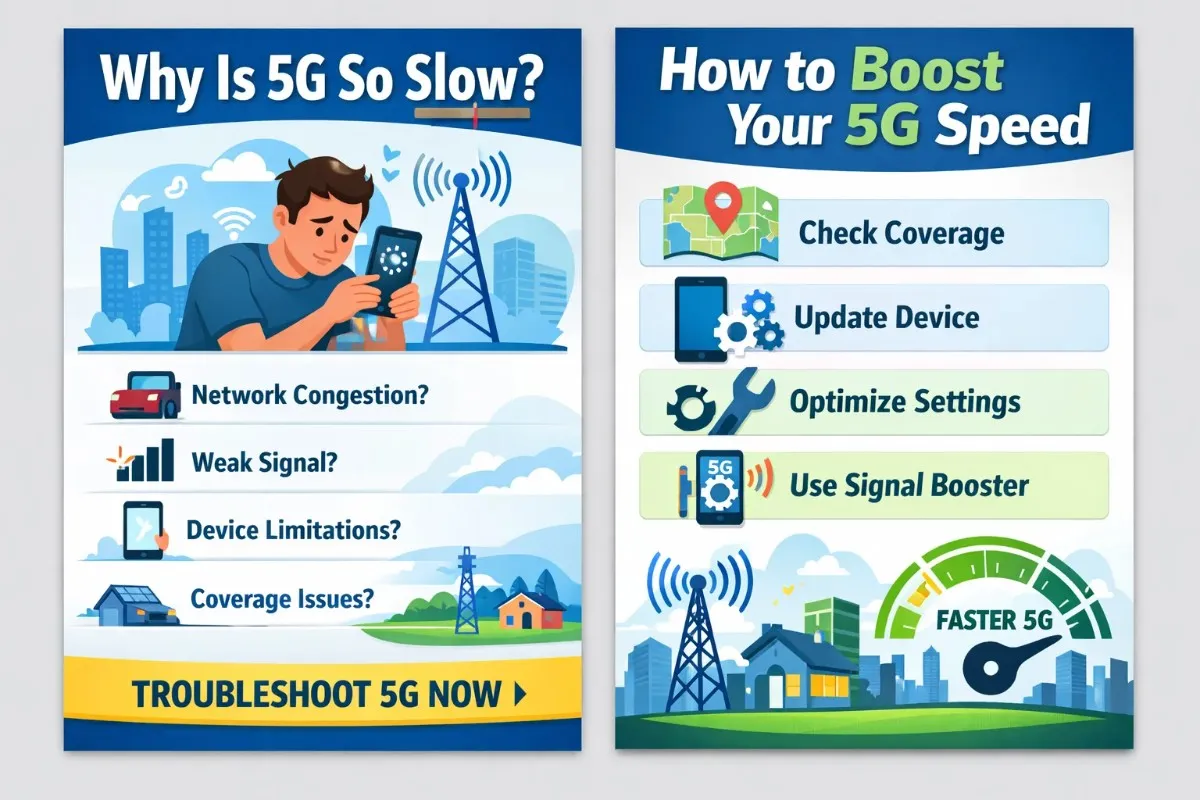
Why Is 5G So Slow?
Many users experience mobile 5g performance issues and immediately question the promise of next-generation connectivity. Complaints about 5g slow connection, slow 5g download speeds, and frustration like why is 5g so slow on my phone or why is my 5g slower than 4g are increasingly common. In reality, several technical, environmental, and carrier-related factors combine to create these speed inconsistencies. Understanding the root causes helps explain why performance often differs from expectations and why real world 5g vs advertised speeds may not always match.
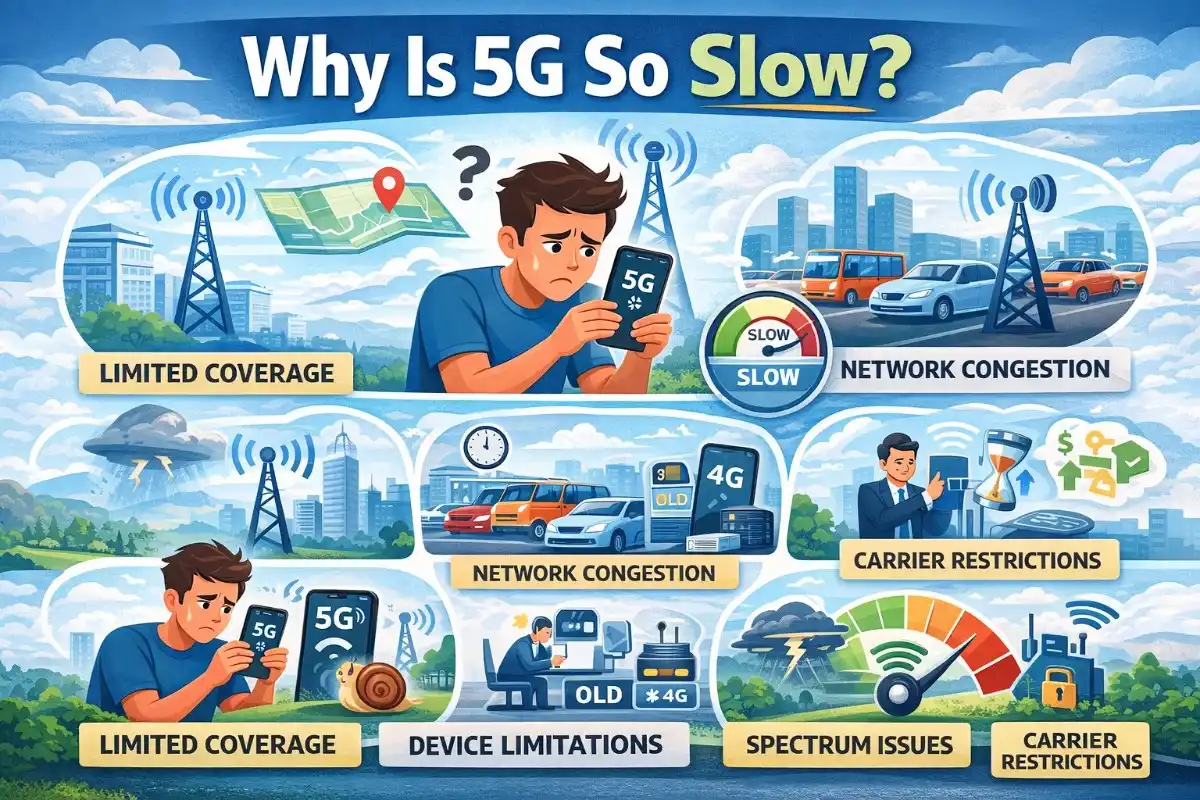
Limited Coverage and Infrastructure
One major reason behind inconsistent performance is incomplete infrastructure. The distance from 5g tower effect significantly impacts signal strength, especially in newly deployed areas. Although providers publish maps, 5g coverage map accuracy may not fully reflect real-world indoor conditions.
Signal challenges such as 5g signal strength problems, 5g indoor signal problems, and buildings blocking 5g signal reduce performance even in covered zones. Environmental factors like weather impact on 5g speed can further weaken higher-frequency signals. During transitional deployment stages, some users also encounter version 5g slow speeds while networks are still being optimized.
Urban vs. Rural Deployment
Deployment differences between cities and remote areas strongly affect user experience. In densely populated cities, urban 5g congestion often leads to peak hour 5g slow speeds due to heavy traffic. This contributes to common 5g network congestion issues and sometimes causes 5g speed test results inconsistent outcomes. In contrast, rural 5g performance problems usually stem from fewer towers and larger coverage gaps. Infrastructure expansion is ongoing, but limited density continues to affect reliability outside major metropolitan regions.
Network Congestion
As more users connect simultaneously, 5g bandwidth limitations become noticeable. Heavy demand increases the likelihood of 5g upload speed slow behavior and noticeable 5g latency issues. Congestion can also trigger policies such as carrier deprioritization 5g, especially during busy periods. If users exceed plan limits, 5g throttling after data cap may reduce speeds intentionally. These network management practices are often misunderstood but directly influence overall performance consistency.
Device Limitations
Your smartphone hardware plays a crucial role in speed performance. A device that is not compatible with 5g bands will struggle to access optimal frequencies. Similarly, outdated phone modem 5g performance limitations can prevent your phone from reaching its full capability. Frequent switching between 4g and 5g automatically can create unstable browsing experiences. In weaker areas, 5g fallback to lte occurs when the 5G signal cannot be maintained, which may lead users to question overall speed reliability.
Spectrum and Bandwidth Issues
Different frequency layers explain much of the speed variation. The comparison of low band vs mid band vs mmwave shows that each spectrum offers a trade-off between range and performance. The sub-6 ghz 5g speed difference often results in moderate speeds compared to higher bands. While high-frequency signals promise faster connections, 5g mmwave limitations restrict coverage and indoor penetration. Additionally, ongoing 5g non-standalone architecture issues mean that some networks still rely partly on 4G infrastructure, affecting peak performance.
Carrier and Plan Restrictions
Not all networks perform equally in every region. Carrier specific 5g speed issues depend heavily on infrastructure investment and traffic management policies. Users searching for how to fix slow 5g connection sometimes overlook that their provider may be the limiting factor. Home users experiencing 5g home internet slow speeds should consider optimizing placement using 5g router placement tips and reducing wifi interference affecting 5g signals.
Technical adjustments such as a reset network settings for 5g, choosing to update phone software for better 5g, or configuring apn settings for faster 5g may improve stability. In weak coverage areas, installing a 5g booster for weak signal can further enhance reception.
Key Benefits of 5G
Despite common complaints about mobile 5g performance issues, the technology itself offers major improvements over previous generations. Many frustrations such as 5g slow connection or confusion around why is 5g so slow on my phone often result from temporary limitations rather than flaws in the core technology. Understanding the advantages of 5G helps separate real benefits from issues like real world 5g vs advertised speeds differences. Below are the major benefits of 5G technology explained clearly.
Faster Speeds
One of the biggest advantages of 5G is higher data transfer speed. Under ideal conditions, users can avoid slow 5g download speeds and enjoy smoother streaming, gaming, and browsing. However, performance can vary depending on low band vs mid band vs mmwave deployment in your area.
The sub-6 ghz 5g speed difference explains why some users experience moderate speeds while others get ultra-fast performance. Although there are 5g mmwave limitations, when available, mmWave delivers impressive results. These improvements aim to reduce frustration around why is my 5g slower than 4g in optimized coverage areas.
Low Latency
5G significantly reduces delay in data transmission. Lower delay helps minimize 5g latency issues, especially in gaming and real-time communication. Even when users experience 5g upload speed slow situations during congestion, latency is generally better compared to older networks. This benefit becomes noticeable when networks operate without heavy 5g network congestion issues or peak hour 5g slow speeds. Reduced delay supports applications that require instant response times.
Increased Capacity
5G networks are designed to handle more connected devices at once. This reduces pressure caused by urban 5g congestion and improves performance during busy hours. Although 5g bandwidth limitations may still appear in certain regions, overall capacity is much greater than previous generations. In rural regions, infrastructure expansion aims to reduce rural 5g performance problems, allowing more users to connect simultaneously without major speed drops.
Enhanced Reliability
5G improves signal stability in many conditions. However, reliability can still be affected by distance from 5g tower effect and buildings blocking 5g signal. Providers continue improving infrastructure to minimize 5g signal strength problems and enhance consistency. Better tower planning also addresses 5g coverage map accuracy, ensuring users get more realistic expectations about service availability.
Greater Efficiency
Modern 5G networks use improved architecture to increase efficiency. Although some areas still face 5g non-standalone architecture issues, full standalone deployments improve energy and spectrum use. Efficiency also reduces dependence on 5g fallback to lte, minimizing interruptions caused by switching between 4g and 5g automatically. This creates a smoother and more stable mobile experience.
Improved Coverage
Network expansion continues worldwide to reduce carrier specific 5g speed issues. While weather impact on 5g speed and 5g indoor signal problems may still influence performance, coverage improvements are ongoing. Home users facing 5g home internet slow experiences can benefit from proper setup and following 5g router placement tips. Reducing wifi interference affecting 5g also enhances indoor connectivity.
Support for New Technologies
5G enables innovations such as smart cities, autonomous vehicles, and advanced IoT systems. These technologies depend on stable connections without problems like 5g throttling after data cap or carrier deprioritization 5g. To maintain strong connectivity, users can apply solutions like 5g booster for weak signal where necessary.
Ensuring your device is not compatible with 5g bands is not an issue, and avoiding outdated phone modem 5g performance limitations helps unlock full potential. If speeds feel unstable, troubleshooting steps such as reset network settings for 5g, update phone software for better 5g, or adjusting apn settings for faster 5g can help optimize performance.
Boosted Economic Growth
5G plays a key role in digital transformation and economic expansion. Faster networks support remote work, online businesses, automation, and innovation. Although some users still encounter version 5g slow speeds or report 5g speed test results inconsistent, long-term infrastructure improvements continue to strengthen performance globally. As networks evolve, the gap between expectations and performance narrows, allowing businesses and individuals to fully benefit from next-generation connectivity.
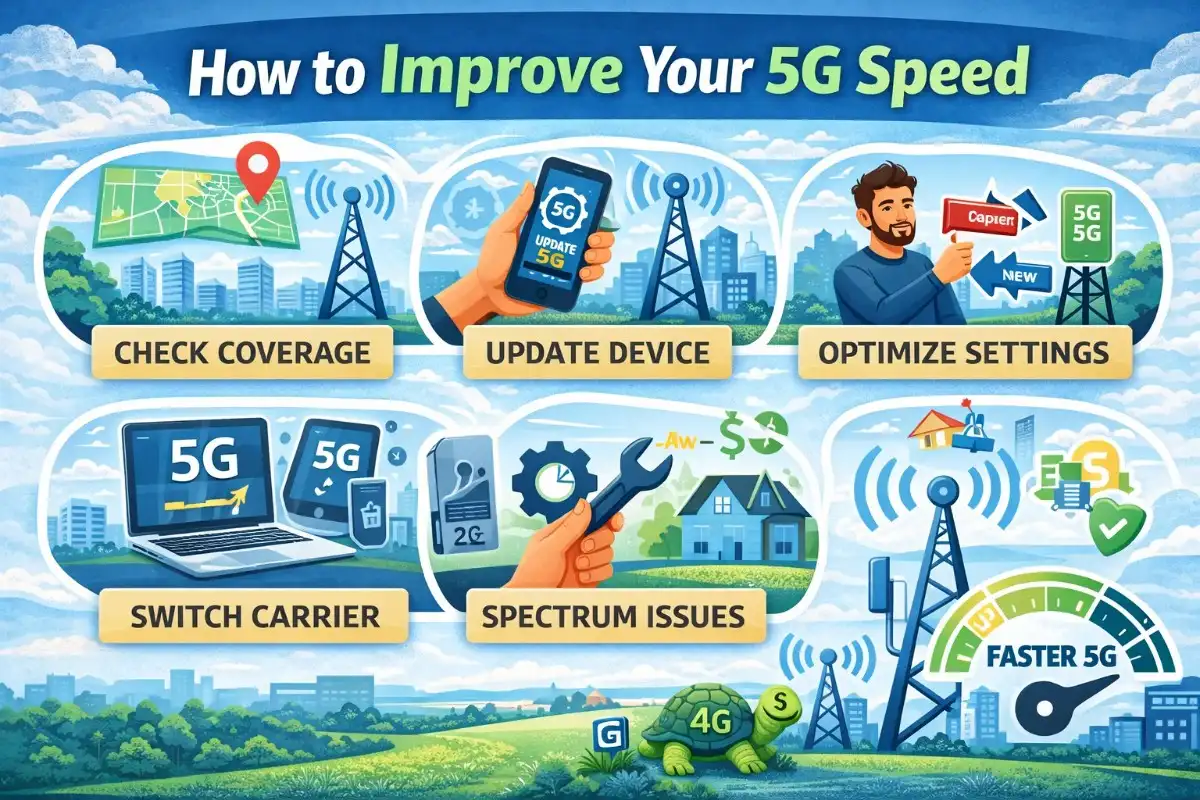
How to Improve Your 5G Speed?
Many users experience mobile 5g performance issues and wonder whether the problem is their phone, location, or network provider. Complaints such as 5g slow connection, slow 5g download speeds, and even version 5g slow speeds are common in both urban and rural areas. If you have ever asked why is 5g so slow on my phone or why is my 5g slower than 4g, the good news is that several practical solutions can help. Below are structured steps to improve performance effectively.
Check Your Coverage
Before making changes, verify whether your area truly has strong 5G service. In many cases, 5g coverage map accuracy can be slightly optimistic compared to real-life experience. The distance from 5g tower effect plays a major role in signal quality, especially when dealing with rural 5g performance problems. In cities, urban 5g congestion and peak hour 5g slow speeds may reduce performance even if coverage appears strong.
Physical barriers like buildings blocking 5g signal contribute to 5g indoor signal problems, while environmental factors such as weather impact on 5g speed can further weaken connections. It’s also important to understand low band vs mid band vs mmwave differences. The sub-6 ghz 5g speed difference and known 5g mmwave limitations explain why some areas deliver ultra-fast speeds while others feel average. Network structure matters too, as 5g non-standalone architecture issues can impact consistency.
Update Your Device
Your smartphone hardware and software significantly influence speed. If your device is not compatible with 5g bands, performance will be limited. An outdated phone modem 5g performance issue may prevent your phone from reaching full capability. Regular updates are essential. Always update phone software for better 5g to fix bugs and improve compatibility. If your device frequently switches between 4 G and 5g automatically, it may indicate weak coverage or configuration issues. In some cases, 5g fallback to lte happens when the signal is unstable.
Optimize Your Settings
Proper configuration can reduce 5g network congestion issues impact and improve stability. If you are searching for how to fix slow 5g connection, start with a simple reset network settings for 5g to refresh connectivity. Advanced users can check their APN settings for faster 5 G if recommended by their carrier.
These settings sometimes resolve 5g upload speed slow behavior and minor 5g latency issues. For home users experiencing 5g home internet slow, placement matters. Following the effective 5g router placement tips helps avoid wifi interference affecting 5g signals. Additionally, using a 5g booster for a weak signal can strengthen reception in low-coverage areas.
Switch to a Different Carrier
Not all providers perform equally in every location. Some users face carrier specific 5g speed issues depending on infrastructure density. Heavy network traffic may cause 5g bandwidth limitations, leading to 5g speed test results inconsistent. Certain plans may also involve 5g throttling after data cap or carrier deprioritization 5g, especially during busy hours. Comparing network quality in your area can help avoid persistent 5g signal strength problems.
Upgrade Your Plan
Your subscription plan directly affects performance. Lower-tier plans may struggle during congestion, contributing to real world 5g vs advertised speeds differences. Upgrading to a premium plan may reduce data restrictions and minimize congestion impact. If speed still feels unstable, it could be due to broader 5g network congestion issues rather than your device. Understanding these limits helps you set realistic expectations and improve your overall experience.
The Future of 5G
Although many users currently report mobile 5g performance issues, the long-term outlook for 5G technology remains highly promising. Concerns such as 5g slow connection, slow 5g download speeds, and even confusion like why is 5g so slow on my phone are largely tied to early-stage deployment challenges. As infrastructure matures, the gap between real world 5g vs advertised speeds is expected to narrow significantly. Ongoing upgrades aim to reduce carrier specific 5g speed issues, minimize 5g bandwidth limitations, and deliver a more consistent experience across regions.
Expansion of Network Infrastructure
The expansion of towers and small cells will directly address the distance-related 5G tower effect, a major reason for weak signals today. Increasing infrastructure density will reduce rural 5g performance problems while also easing urban 5g congestion in busy metropolitan areas.
Improved deployment strategies will enhance 5g coverage map accuracy, helping users better understand service availability. Infrastructure growth will also reduce 5g network congestion issues and limit peak hour 5g slow speeds. As coverage expands, users should notice fewer cases of 5g fallback to lte and less frequent switching between 4g and 5g automatically, creating a smoother experience overall.
Improved Spectrum Utilization
Future optimization of frequency bands will improve how networks handle traffic. A clearer distinction between low band vs mid band vs mmwave deployments will help balance coverage and performance. Addressing the sub-6 ghz 5g speed difference and overcoming current 5g mmwave limitations will allow providers to deliver faster and more stable speeds.
Upgrading beyond 5g non-standalone architecture issues toward fully standalone networks will significantly improve efficiency and reliability. Better spectrum management will also reduce 5g signal strength problems, stabilize 5g upload speed slow conditions, and improve performance affected by weather impact on 5g speed.
Advancements in Device Technology
Device innovation plays a crucial role in eliminating speed complaints. Modern chipsets will resolve outdated phone modem 5g performance concerns and improve compatibility for devices previously not compatible with 5g bands. Enhanced hardware will reduce 5g latency issues, stabilize 5g speed test results inconsistent outcomes, and minimize frustration like why is my 5g slower than 4g.
Stronger antennas will also reduce 5g indoor signal problems caused by buildings blocking 5g signal. Home users experiencing 5g home internet slow will benefit from smarter routers and improved 5g router placement tips, along with reduced wifi interference affecting 5g environments. Additionally, signal enhancement solutions such as a 5g booster for weak signal will become more efficient and affordable.
Enhanced Network Management
Smarter traffic control systems will reduce carrier deprioritization 5g and limit 5g throttling after data cap, improving fairness across users. These improvements will help minimize version 5g slow speeds that sometimes occur during transitional upgrades.
Advanced AI-based network optimization will also support better congestion control, reducing 5g network congestion issues and improving reliability during busy hours. Users searching for how to fix slow 5g connection may rely less on manual solutions like reset network settings for 5g, update phone software for better 5g, or adjusting apn settings for faster 5g, as networks become more self-optimizing.
Conclusion
5G technology promises faster speeds and better connectivity, but many users still face mobile 5g performance issues in daily use. Problems like 5g slow connection, slow 5g download speeds, and confusion around why is 5g so slow on my phone often happen due to network congestion, device limits, or coverage gaps. In some cases, people even wonder why is my 5g slower than 4g, especially when expectations do not match actual performance.
Several technical factors contribute to this situation. Issues such as 5g network congestion issues, urban 5g congestion, and rural 5g performance problems affect speed differently depending on location. Signal-related challenges like 5g signal strength problems, distance from 5g tower effect, and buildings blocking 5g signal also reduce stability. Environmental conditions, including weather impact on 5g speed, and inaccurate assumptions about 5g coverage map accuracy, can further complicate performance.
Frequently Asked Questions (FAQs)
Why is 5G slower than expected even in covered areas?
5G can feel slow due to network congestion, weak indoor signals, spectrum limitations, or your phone switching between 4G and 5G automatically. Real-world speeds often differ from advertised peak performance.
Why is my 5G slower than 4G on my phone?
This usually happens because of low-band coverage, distance from the tower, device limitations, or temporary congestion. In some areas, optimized 4G may perform more consistently than early-stage 5G.
Does network congestion affect 5G speed?
Yes, heavy usage during peak hours can cause slower download and upload speeds. Urban congestion and carrier deprioritization policies can also reduce performance.
Can my device cause slow 5G performance?
Absolutely. An outdated modem, incompatible 5G bands, or old software can limit speed. Keeping your device updated helps improve stability and connectivity.
How can I improve my 5G speed at home?
You can reposition your router, reduce WiFi interference, reset network settings, update your device software, or use a signal booster if coverage is weak.