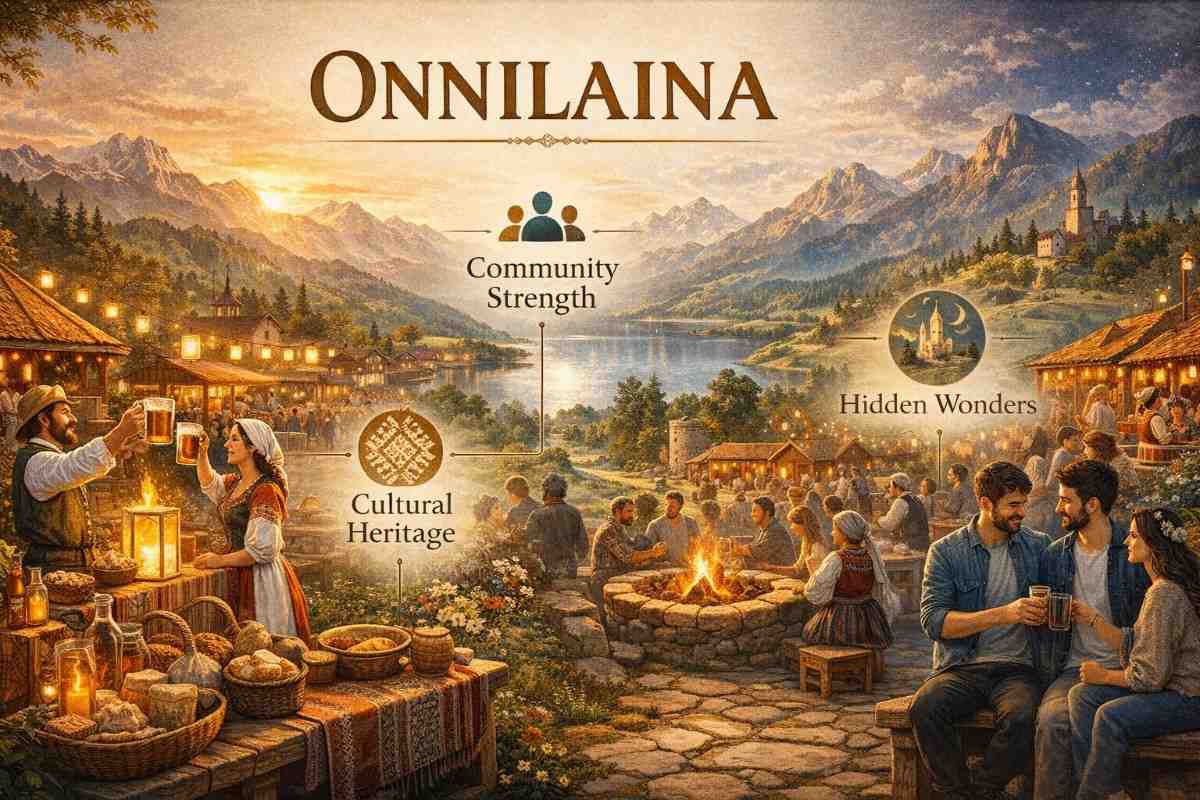
What exactly is Onnilaina, and why are so many people searching for it? That’s the question this guide sets out to answer, fully and honestly.
Depending on where you encounter Onnilaina, it might appear to be a cultural concept, a travel destination, a community-driven financial platform, or a living tradition passed down through generations. The truth is richer than any single definition: Onnilaina exists at the crossroads of identity, belonging, and innovation. It is simultaneously a lens through which communities understand themselves and a practical framework for how people support one another in the real world.
This comprehensive guide goes beyond any existing resource. Whether you’re drawn to Onnilaina’s cultural roots, its role in modern society, its travel appeal, or its community-first philosophy, you’ll find everything you need right here.
What Is Onnilaina?
Onnilaina defies a single tidy description, and that’s precisely what makes it worth exploring in depth.
At its cultural core, Onnilaina represents a philosophy of togetherness, a set of values, practices, and traditions that hold communities together across generations. It is not merely a festival, a location, or a movement. It is a living concept: one that takes on different shapes depending on who is practicing it and where.
In some contexts, Onnilaina manifests as a series of festivals that celebrate shared heritage, where music, food, and ritual come together to reinforce collective identity. In others, it describes a peer-to-peer community model particularly relevant in modern lending and financial support ecosystems where neighbors and community members pool trust and resources in ways that traditional institutions simply cannot replicate.
And in its most geographic sense, Onnilaina points to a destination: a place of rare beauty, authentic culture, and experiences that remain largely untouched by mass tourism.
What ties all of these dimensions together is a single, consistent thread: the idea that people are stronger, more resilient, and more fulfilled when they operate within a web of genuine relationships rather than as isolated individuals. That is the true spirit of Onnilaina.
The Historical Roots of Onnilaina: Where It All Began
No concept with this much depth appears overnight. Onnilaina’s roots stretch back to ancient communal life, where the boundaries between celebration, spirituality, economics, and daily existence were far less rigid than they are today.
Early communities built around Onnilaina values were deeply attuned to natural rhythms, seasonal harvests, celestial cycles, and the land itself, which shaped when and how people gathered. These weren’t mere social events; they were functional rituals that redistributed resources, resolved conflicts, honored the deceased, and welcomed the young into the fold of community responsibility.
As these societies encountered one another through trade routes and cultural exchange, the traditions associated with Onnilaina absorbed new elements without losing their core character. Musical traditions merged. Culinary techniques crossed borders. Artistic motifs were shared, adapted, and made new. This process of absorption and reinvention is not a corruption of Onnilaina’s identity; it is its identity. Onnilaina has always been a living tradition, never a static one.
The historical record makes clear that the communities practicing Onnilaina principles consistently demonstrated greater resilience in times of hardship. Drought, conflict, and economic disruption were more survivable within a community defined by mutual obligation and shared celebration than in one defined by individual isolation. This is not a coincidence; it is the practical wisdom encoded in Onnilaina’s structure.
Key Historical Phases of Onnilaina
| Period | Primary Character | Defining Features |
|---|---|---|
| Ancient Origins | Ritual and nature-based | Harvest celebrations, spiritual ceremonies, seasonal gatherings |
| Early Medieval | Cultural expansion | Cross-community exchange, trade-integrated traditions |
| Pre-Modern Era | Formalized customs | Codified rituals, artisan guilds, and community governance |
| Industrial Age | Preservation pressure | Urbanization challenges, deliberate cultural conservation efforts |
| Contemporary Period | Revival and innovation | Digital reach, global awareness, hybrid community models |
Onnilaina as Cultural Heritage
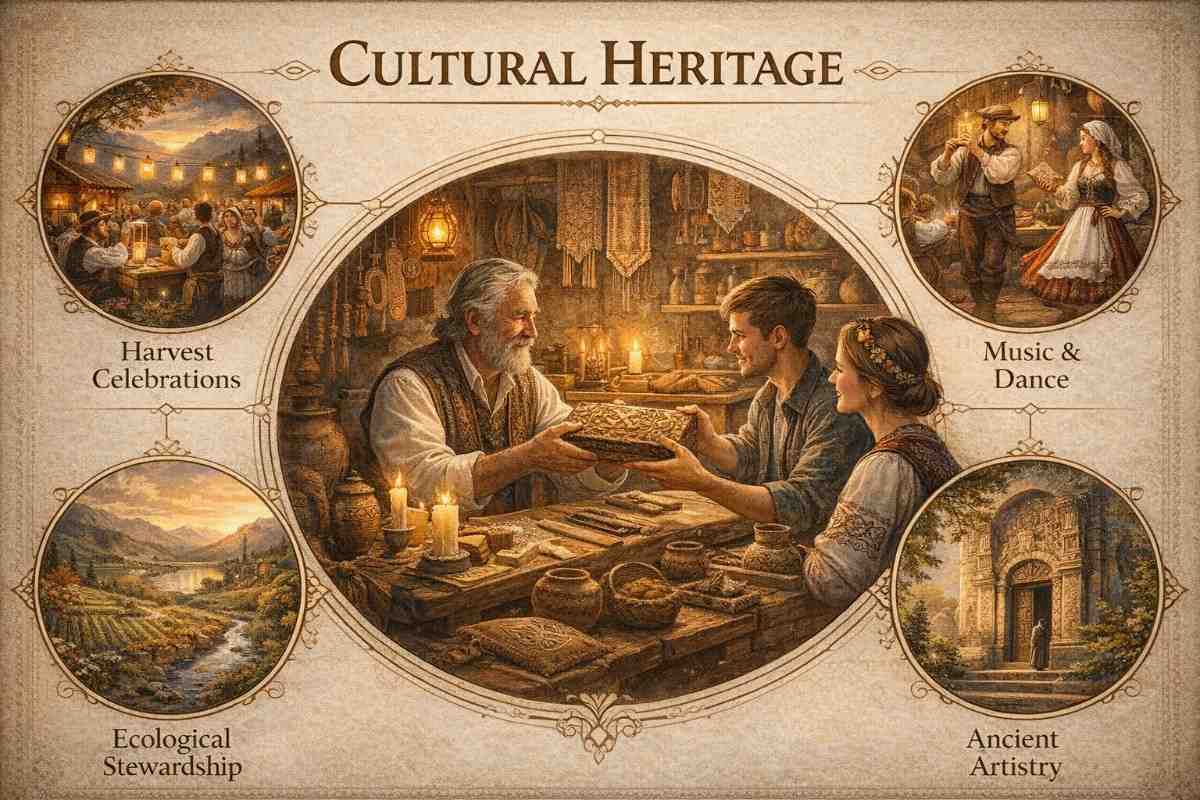 Cultural heritage is not simply about the past. It is about the values, aesthetics, and ways of understanding the world that a community decides are worth carrying forward. Onnilaina represents exactly this kind of intentional preservation, not as a museum piece, but as a living practice.
The Values Embedded in Onnilaina Traditions
When you examine Onnilaina traditions closely, several core values emerge repeatedly:
Reciprocity
Onnilaina communities operate on the principle that giving and receiving are not transactions but relationships. When someone contributes to the community through labor, resources, creativity, or care, the expectation is not immediate repayment but a long-term commitment to the group’s well-being. This is fundamentally different from market logic.
Intergenerational Responsibility
Onnilaina traditions consistently frame the present generation as stewards rather than owners. The land, the knowledge, the artistic traditions, these belong to the future as much as the present. This creates a different relationship with decision-making: you don’t simply ask “what do we want?” but “what will we be glad we did in fifty years?”
Inclusive Celebration
Unlike many cultural traditions that restrict participation based on lineage, gender, or status, Onnilaina festivals and gatherings are typically inclusive. Outsiders are welcome. Newcomers are taught. The difference is treated as enrichment rather than a threat.
Ecological Awareness
Many Onnilaina practices reflect a sophisticated understanding of the relationship between human communities and natural systems. Harvest festivals, for example, are not merely celebrations of abundance; they are also acts of gratitude and ecological calibration, ensuring that communities don’t take more than the land can sustainably provide.
The Arts and Artisanship of Onnilaina
Creative expression is not decorative in Onnilaina culture; it is functional. The music performed at gatherings encodes historical knowledge in memorable form. The patterns woven into textiles communicate lineage and belonging. The architecture of communal spaces is designed to facilitate specific kinds of social interaction.
This means that when Onnilaina’s artistic traditions are lost, what disappears is not merely beauty but information encoded knowledge about how to live well together. Preserving these art forms is therefore an act of practical wisdom, not nostalgia.
Onnilaina as a Travel Destination
For those drawn to Onnilaina as a place rather than a concept, the experience is genuinely unlike that of most tourist destinations. This is not a destination polished for easy consumption. It rewards curiosity, patience, and a willingness to engage authentically with the community.
The Landscape
Onnilaina’s natural environment is characterized by striking contrasts. Elevated terrain gives way to valleys of unusual fertility. Waterways, some rushing, some barely moving, connect communities that developed distinct traditions over centuries of relative isolation. The light here varies with the season, and photographers consistently note that the scenery resists being captured in a single image.
What the landscape offers most powerfully is perspective. Time moves differently when you are walking through terrain that has been shaped by human hands for centuries, where every field and forest path carries evidence of the people who came before.
Key Destinations Within Onnilaina
The Central Market District
This is not a tourist market; it is an actual working marketplace where local producers, artisans, and vendors operate daily. Visiting requires no planning, no ticket, and no guided tour. Simply arriving and being present is enough to begin understanding how Onnilaina commerce and community intersect.
The Lakeside Corridor
A series of connected bodies of water, some natural, some shaped by generations of community irrigation, provides the backdrop for some of Onnilaina’s most significant festivals. The water here is genuinely clean, the fishing is productive, and the surrounding ecology is actively managed by local communities who understand its value.
The Historical Quarter
Architecture here spans centuries without apparent contradiction. Buildings from radically different eras stand side by side, not out of carelessness but because each was built to serve a community that valued continuity over uniformity. The effect is a built environment that feels genuinely inhabited rather than curated.
Hidden Waterfalls and Forest Sanctuaries
Several natural formations within Onnilaina’s territory remain largely unknown even to regular visitors. These locations are not secret in any official sense; local community members will typically share directions willingly, but they are also not signposted or promoted. Finding them requires asking, which means engaging with people, which is precisely the kind of interaction Onnilaina’s culture rewards.
Planning an Authentic Onnilaina Visit
The best Onnilaina experiences tend to be those that are loosely planned and allowed to evolve. A few practical principles:
Arrive during a festival period if possible. The difference between experiencing Onnilaina during a major communal celebration and visiting during a quiet week is enormous, not because the quiet week lacks value, but because the festivals reveal dimensions of the community that normal daily life keeps mostly private.
Stay with local families or in community-managed accommodation where it is available. This is not merely about the budget; it dramatically changes the quality of what you learn and experience.
Learn a few phrases in the local language or dialect. This is treated as genuine respect rather than a tourist performance, and it opens doors that remain closed to visitors who rely entirely on translation.
Eat what the community eats, not what has been prepared for outsiders. Onnilaina’s culinary traditions are genuinely distinctive and nutritionally sophisticated, the result of centuries of practical knowledge about what the local environment can provide.
Onnilaina and Modern Community Finance
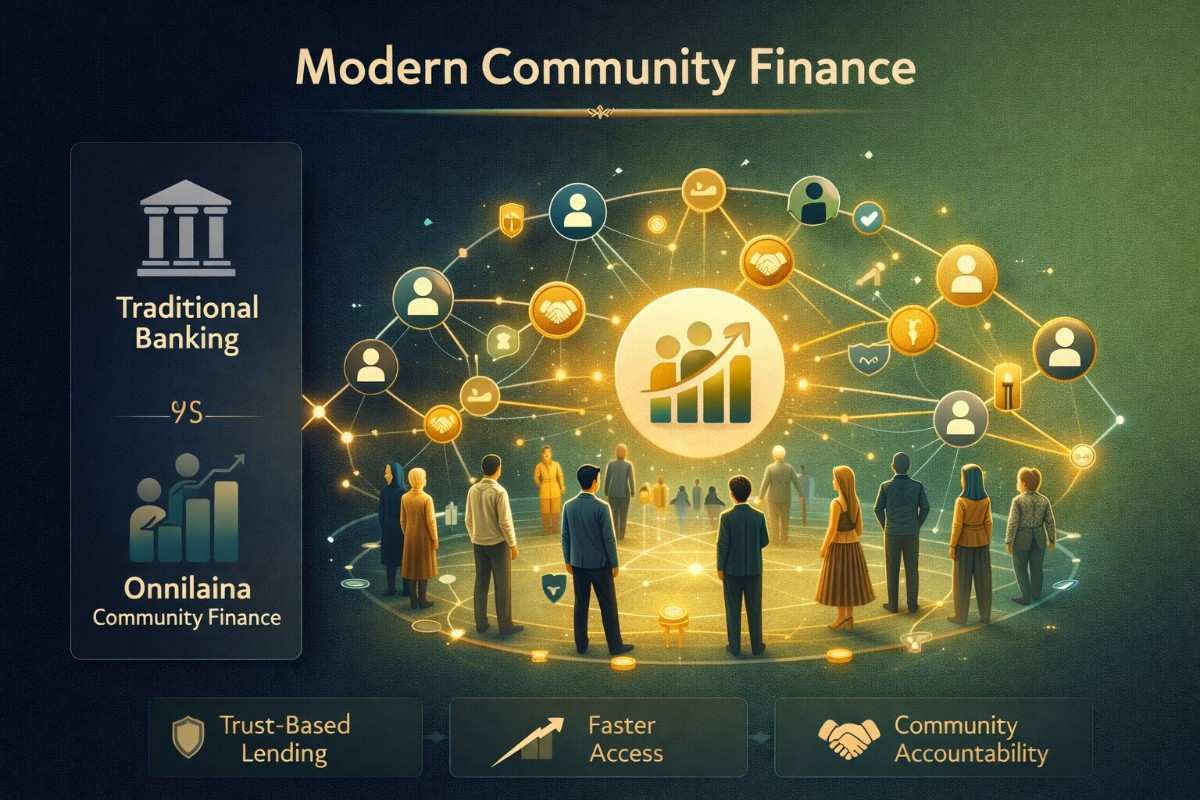 One of the most practically significant applications of Onnilaina principles in the contemporary world is in community-based lending and financial support. This is where the abstract values of reciprocity and mutual obligation become concrete mechanisms.
How Onnilaina-Model Lending Works
Traditional financial institutions operate on a model of individual creditworthiness. The bank asks, Can this person pay us back? and makes decisions based on financial history, assets, and formal employment. The Onnilaina-based lending model asks a different question: Does this person have the trust of their community?
This is not a naive or soft question. Community trust is a more robust indicator of financial reliability than credit scores in many contexts, particularly in the context of modern technology, for people who are economically active but outside the formal financial system, such as smallholder farmers, artisans, informal traders, and community caregivers.
The mechanism works as follows: borrowers are known quantities within their community. Their reputation, their relationships, their demonstrated values, these are all visible to potential lenders in ways that no credit bureau can capture. When lending decisions are made within this context, default rates tend to be lower, repayment rates higher, and the social consequences of non-repayment (loss of community standing) serve as a powerful informal enforcement mechanism.
The Benefits of Community-First Financial Models
Several advantages consistently emerge from Onnilaina-style community lending:
- Accessibility
- Speed
- Appropriate scale
- Relationship preservation
The Digital Evolution of Onnilaina-Based Lending
Modern technology has allowed Onnilaina-style community finance principles to scale beyond traditional geographic boundaries. Digital platforms now replicate some of the trust mechanisms that once required physical proximity, reputation systems, peer endorsements, community profiles, and transparent histories of financial behavior, all of which serve functions analogous to the social knowledge that community members once held directly.
This is not a perfect translation. Something is inevitably lost when relationships are mediated through screens rather than lived in person. But something is also gained: people who share Onnilaina values but live far from one another can now form financial communities of practice, supporting ventures and individuals across geographic distances while maintaining the human emphasis that distinguishes this approach from conventional lending.
The Challenges Facing Onnilaina Today
No comprehensive guide to Onnilaina would be complete without an honest account of the pressures and challenges this concept in all its dimensions currently faces.
Commercialization and Authenticity
As Onnilaina gains wider recognition, there is inevitable pressure to package it for consumption in ways that make it more accessible but less authentic. Festivals become tourist attractions. Artisan traditions are commodified. Community practices are simplified into marketable experiences.
This is not a simple problem with a simple solution. Economic activity is not inherently at odds with cultural authenticity. Artisans should be paid fairly for their work, and communities deserve the economic benefits that come from visitors like enntal who genuinely value what they offer. The challenge is ensuring that the economic dimension doesn’t gradually displace the cultural one.
Communities that have navigated this most successfully tend to maintain strong internal governance over how their traditions are represented and accessed, who profits from cultural tourism, and what elements of their practice are kept protected from public commodification.
Urbanization and Generational Continuity
Young people in Onnilaina communities face the same pressures that young people face worldwide: economic opportunity, formal education, and social connection are disproportionately available in cities. The result is demographic pressure on rural and traditional communities, which can struggle to pass their practices forward when younger generations are geographically dispersed.
This challenge is real but not insurmountable. Communities that have been most effective at maintaining continuity tend to combine two strategies: creating genuine economic opportunity within the traditional context (so that staying is a viable choice rather than a sacrifice), and maintaining a strong enough cultural identity that young people who do leave still feel a meaningful connection and wish to maintain it from wherever they are.
Environmental Pressure
Many of the ecological practices embedded in Onnilaina tradition, such as sustainable land management, water stewardship, and biodiversity maintenance, are under pressure from external economic forces that value short-term extraction over long-term sustainability. Climate change compounds these pressures by destabilizing the natural rhythms that Onnilaina’s seasonal practices were built around.
The response within communities committed to Onnilaina principles has generally been to treat environmental stewardship as a cultural obligation rather than merely a practical necessity. This framing is actually highly effective at mobilizing community action, because it connects ecological behavior to identity and belonging rather than to abstract calculations of future benefit.
Onnilaina in the Digital Age
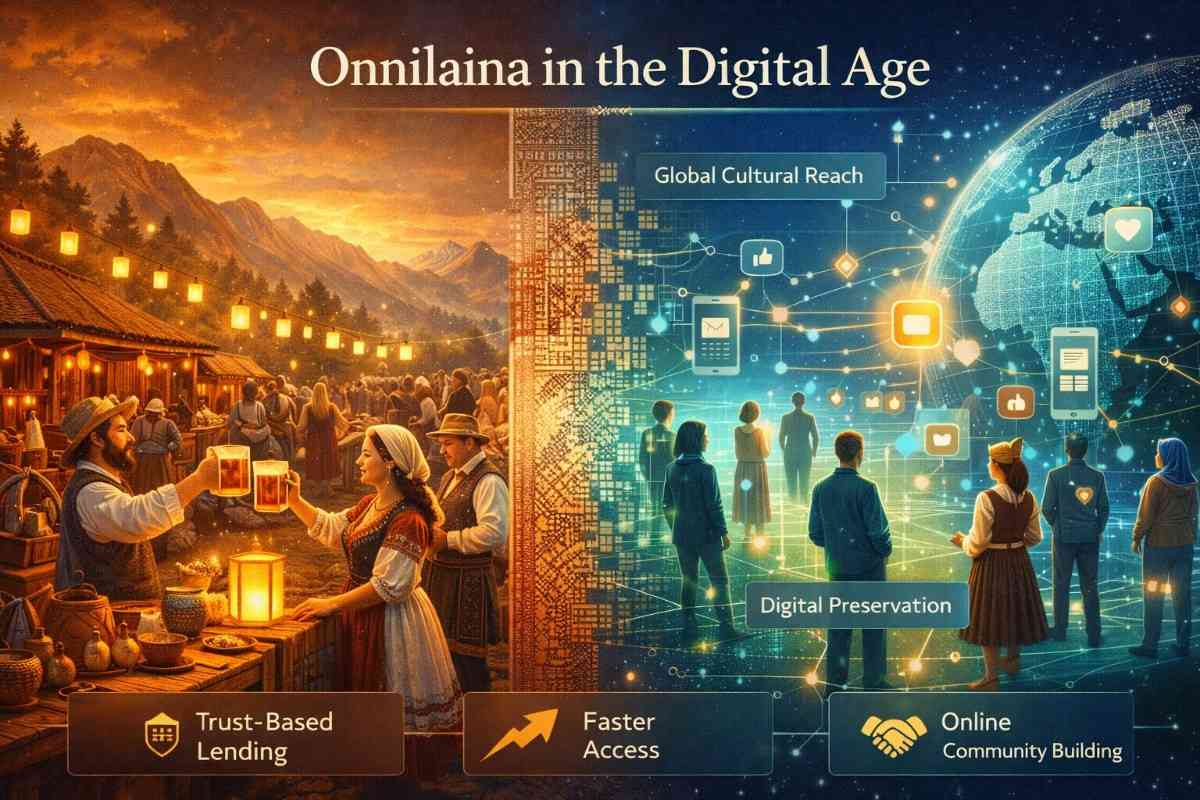 The internet has transformed how Onnilaina is understood, shared, and practiced for better and worse.
On the positive side, digital platforms have enabled communities practicing Onnilaina traditions to document their practices, share them with global audiences, and connect with others who share similar values. Cultural preservation efforts that once depended entirely on in-person transmission now have digital backups. Artists and artisans can reach markets they could never have accessed otherwise.
Social media has played an interesting role: hashtags, video content, and online communities centered on Onnilaina themes have created networks of interest and support that span continents. People who have never visited an Onnilaina community in person have become genuine advocates for the values it represents.
The risks are also real. Digital representation in search engines tends to flatten the complexity of Onnilaina traditions, reducing them to shareable images or sound bites that convey only the surface without the depth. And the attention economy rewards novelty and spectacle in ways that may not align with the values Onnilaina represents.
The communities navigating this most thoughtfully tend to treat digital presence as a tool rather than an end in itself. They use it deliberately, with clear intentions about what they want to communicate and what they prefer to keep within the community. This selective engagement is itself a form of cultural continuity, maintaining control over representation is an Onnilaina value applied to a new context.
How to Engage With Onnilaina
Whether your interest in Onnilaina is cultural, geographic, financial, or philosophical, meaningful engagement follows similar principles.
Approach With Curiosity, Not Assumptions
Onnilaina is richer and more complex than any single article (including this one) can fully capture. Come with questions, not conclusions.
Seek Primary Sources
The most valuable understanding of Onnilaina comes from direct engagement with communities practicing it through travel, relationship-building, participation in events, or support of community-led organizations.
Consider What You Bring, Not Just What You Take
The reciprocity principle that defines Onnilaina applies to outsiders engaging with it. What can you contribute, whether economic support for artisans, genuine cultural exchange, or practical assistance with preservation efforts?
Be Patient
Onnilaina communities have developed finely tuned instincts about who is engaging authentically and who is extracting value. Patience, consistency, and genuine respect build the trust that unlocks the deepest experiences.
Support Preservation Efforts
Organizations working to document Onnilaina traditions, support community economic development, and protect the natural environments that sustain these communities deserve material support, not just appreciation.
Conclusion
We live in a moment defined by fragmentation. Institutional trust is declining. Communities are dispersing. Economic systems increasingly reward individual accumulation over collective well-being. Digital connection has become a poor substitute for the embodied relationships that human flourishing actually requires.
Against this backdrop, Onnilaina is not merely interesting; it is instructive. The values it embodies, the practices it has sustained across generations, and the ways it is being creatively applied to contemporary challenges all point toward something important: the possibility of living differently.
Whether you engage with Onnilaina through travel, financial community-building, cultural appreciation, or simply by adopting its core principles in your daily life, you are participating in something that has endured because it works. Communities built on reciprocity, intergenerational responsibility, inclusive celebration, and ecological wisdom have consistently proven more resilient than those built on extraction and isolation.
That is the hidden gem that Onnilaina offers to anyone willing to look past the surface. It’s not just a place to visit, a tradition to admire, or a platform to use. It’s a way of being in community with others and in a fragmented world, that might be the most valuable thing there is.
Frequently Asked Questions (FAQs)
Is Onnilaina a specific place or a concept?
It is genuinely both. Onnilaina refers to both a physical location with distinctive natural beauty and cultural traditions and a set of community values and practices that have been applied in multiple contexts, including modern financial models and cultural heritage movements.
How does Onnilaina’s community lending model compare to traditional microfinance?
Both involve small-scale lending to people outside the conventional financial system, but Onnilaina-based models place significantly more emphasis on social relationships and community trust as the primary underwriting mechanism. Traditional microfinance often relies heavily on formal group liability structures; Onnilaina models work through organic community knowledge.
What is the best time to visit Onnilaina as a destination?
The period surrounding major community festivals offers the most complete experience, as this is when the full range of Onnilaina cultural expression is visible. Spring and early autumn tend to offer the most favorable weather conditions in many Onnilaina regions, as well as the most active festival calendars.
How can someone outside the community practice Onnilaina values?
The core principles of reciprocity, intergenerational responsibility, inclusive celebration, and ecological awareness can be practiced in any context. Building genuine mutual-support networks in your own community, supporting local artisans and producers, and making decisions with future generations in mind are all expressions of Onnilaina values, regardless of geography.
Are Onnilaina traditions endangered?
Some specific practices and regional variations are under significant pressure from urbanization, commercialization, and environmental change. However, the broader Onnilaina value system has shown remarkable resilience and adaptability, and active preservation efforts are underway in multiple contexts.
Can outsiders participate in Onnilaina festivals?
Generally, yes, and with a genuine welcome, inclusivity is a core Onnilaina value. The most meaningful participation comes from engaging with genuine curiosity and respect rather than treating the festival as a performance to be observed from a distance.