
Enntal is an emerging, context-dependent concept that lacks a single, fixed dictionary definition. Depending on the source, it refers to: a mindfulness-adjacent lifestyle framework promoting intentional daily living; a personal growth methodology built around continuous, adaptive self-improvement; or a fluid conceptual label used in digital content and branding to signal flexibility, reflection, and innovation. It is not a standard academic term, a geographic location, or a product. Its power lies in adaptability, which makes it both genuinely useful and frequently misunderstood.
What is Enntal? Pinning down a slippery concept
If you searched for ‘enntal’ hoping for a clean, one-sentence definition, you’ve already discovered the problem: most existing articles don’t offer one. They either veer into vague inspirational language or they contradict each other entirely.
That’s not entirely their fault. Enntal is a genuinely emergent term that different communities have adopted and shaped independently. Think of it as mindfulness evolved across Buddhist practice, cognitive therapy, and corporate wellness programs before settling into a broadly shared meaning. Enntal is in that early, formative stage. What we can say with confidence, based on how the term appears across current usage:
Working Definition
Enntal describes a flexible, reflective approach to navigating daily life, one that values intentionality, adaptability, and continuous self-awareness over rigid routines or fixed outcomes. It sits at the intersection of mindfulness, growth psychology, and practical philosophy.
Origins and evolution of the term
Enntal has no single origin story. Unlike most terms, it did not emerge from a published book, an academic paper, or a well-known thinker. Instead, it appears to have developed organically across online communities, likely through a combination of creative naming practices, digital branding experiments, and informal language play.
How terms like enntal are born
The internet regularly produces words and concepts that aren’t in any dictionary but gain real semantic weight through repetition and usage. Think of terms like “hygge” (Danish coziness), “ikigai” (Japanese life purpose), or “wabi-sabi” (Japanese impermanent beauty). These concepts had local homes before the internet spread them globally, only to be slightly blurred by translation.
Enntal appears to follow a different but equally modern pattern: it starts as a semantically open label evocative without being precise, and then different communities fill it with meaning relevant to them. This is how content ecosystems work. A term acquires usage before it acquires consensus.
When did enntal start appearing online?
Based on available published content, enntal began appearing in blogs, content sites, and conceptual guides in late 2025 and early 2026. The oldest traceable uses frame it as a wellness or lifestyle philosophy. Later uses expand into skill development, creative frameworks, and personal productivity.
The Three Main Interpretations of Enntal are Explained Clearly
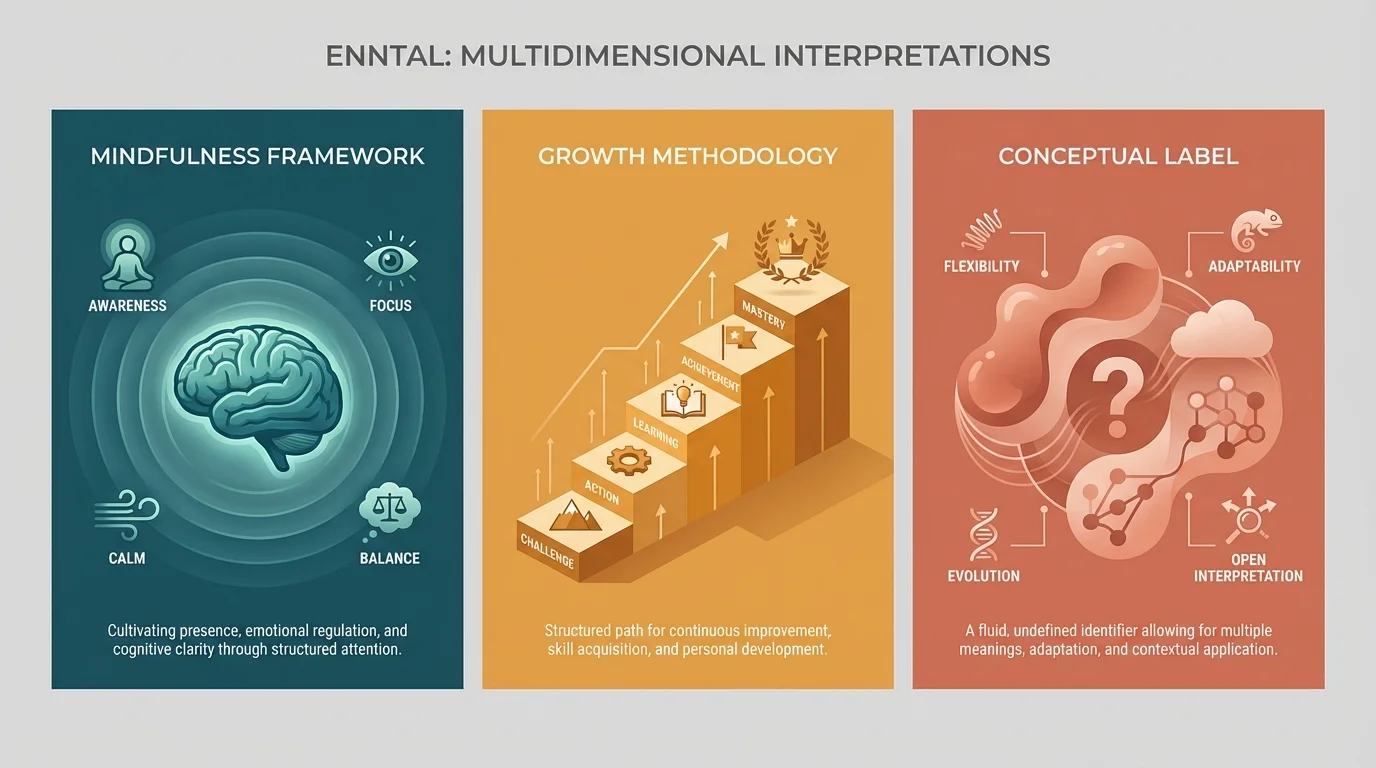
Here’s where most other articles fall short. They pick one interpretation and run with it, leaving readers who encountered the term in a different context confused. Let’s lay out all three clearly.
| Interpretation | Core idea | Typical context | Useful for |
|---|---|---|---|
| Mindfulness framework | Intentional, present-moment engagement with daily life | Wellness blogs, lifestyle content | Stress reduction, emotional clarity |
| Growth methodology | Adaptive, reflective approach to learning and skill-building | Career development, productivity content | Skill development, creative problem-solving |
| Conceptual/branding label | A flexible, open-ended identity tag for emerging ideas | Digital culture, content strategy, design | Naming frameworks, innovative positioning |
Interpretation 1: Enntal as a Mindfulness Framework
In wellness circles, enntal functions similarly to concepts like slow living or conscious presence. It is not a meditation technique; it has no specific posture, breathing pattern, or app. Instead, it describes the underlying intention behind these practices.
The enntal mindfulness interpretation encourages you to treat each moment of the day as an opportunity for awareness. This includes the unglamorous moments: commuting, washing dishes, answering emails. The philosophy holds that richness in life comes not from grand experiences but from the quality of attention you bring to ordinary ones.
This interpretation resonates with what psychologists call engaged attention, a state studied extensively in the context of mindfulness-based cognitive therapy (MBCT) and flow states.
Interpretation 2: Enntal as a Growth Methodology
In personal development contexts, enntal frames growth as an iterative, reflective cycle rather than a destination. You don’t achieve enntal. You practice it. The emphasis is on process: observing your patterns, experimenting with change, reflecting honestly on results, and adapting.
This interpretation shares DNA with well-established frameworks like Carol Dweck’s growth mindset, coaching-based leadership models, and the Japanese concept of kaizen (continuous incremental improvement).
What makes enntal distinct from these is its emphasis on emotional intelligence as the engine of growth, not just skill-building, but understanding how you relate to the process of learning itself.
Interpretation 3: Enntal as a Conceptual Label
In digital and creative contexts, enntal is used as a deliberate open container, a term flexible enough to represent emerging ideas that resist conventional naming. This is valuable in branding, content strategy, and creative writing, where rigid definitions can limit thinking.
Marketers and content creators sometimes use enntal as a conceptual anchor for campaigns or frameworks about adaptability, intentional innovation, or human-centred design.
Common Misconceptions About Enntal Cleared up
Misconceptions About Enntal
- Enntal has a fixed, agreed-upon meaning.
- Enntal is a rigid method or program you follow step by step.
- Enntal applies only to personal wellness or spiritual practice.
- Enntal is the same as mindfulness.
- Because it’s not in the dictionary, enntal isn’t a real concept.
Realities About Enntal
- It is an emergent term. Its meaning varies by context, community, and intent. This is a feature, not a flaw.
- Enntal is a dispositional approach to life, not a protocol to follow.
- It is equally applicable in professional, creative, and relational contexts.
- Mindfulness is one expression of what enntal describes. But enntal also extends into territories of growth, adaptability, and creative practice that mindfulness language doesn’t always cover.
- Many of the most useful frameworks in psychology, philosophy, and culture exist outside of formal dictionaries. Legitimacy in living language comes from usage and utility, not dictionary entries.
Enntal in Everyday Life: Real, Specific Examples
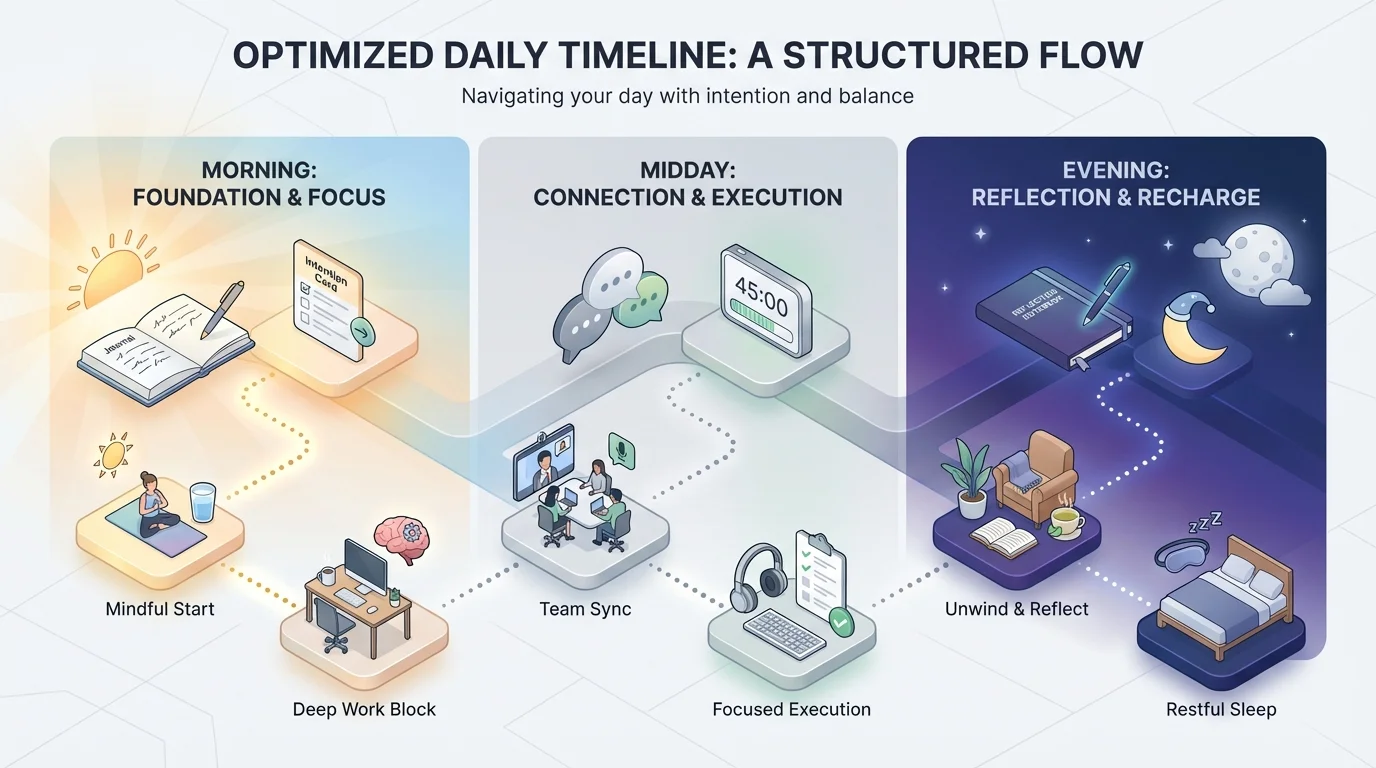
This is the section most competing articles skip. They tell you enntal is present in your morning coffee ritual or in how you connect with others, without actually showing you what that looks like. Let’s fix that.
At Home, in the Morning
An enntal morning doesn’t mean a 5 am cold-plunge ritual or a 10-step skincare routine. It means making a deliberate, conscious choice about how you begin your day and sticking to it intentionally rather than on autopilot.
For one person, that might be five minutes sitting quietly before looking at a phone. For another, it’s a short written reflection: What do I want to feel today? What’s pulling my attention that I should acknowledge? The specific behaviour is less important than the underlying stance: I am choosing how I engage with this day.
In Difficult Conversations
Enntal’s most powerful application might be interpersonal. When applied to conflict or difficult conversations, it invites you to approach the exchange with curiosity rather than defensiveness. This aligns with what researchers call approach-oriented conflict engagement, a predictor of relationship satisfaction and repair.
Practically: before responding to a challenging message or statement, pause. Ask: What is this person actually trying to communicate? What am I feeling? What response would I be proud of? That pause, brief as it is, is enntal in action.
During Creative Work
Writers, designers, musicians, and other creative workers often describe enntal in terms of process, trust, and the willingness to stay in the uncertain, exploratory phase of creative work without rushing to a conclusion.
This is harder than it sounds. The pressure to produce, especially in professional creative contexts, often pushes people toward premature resolution: picking the first idea that works rather than the best idea. An enntal approach to creative work builds tolerance for that discomfort and turns it into a productive state rather than an anxious one.
When Facing Setbacks
The enntal approach to failure or frustration is neither denial nor excessive self-criticism. It is reflective equanimity: acknowledging what happened, extracting the learning, and adapting without catastrophising.
How to Apply Enntal: A Step-By-Step Practical Framework
Most articles tell you to embrace enntal, but don’t tell you how. Here is a concrete, actionable framework. It is built around four recurring practices that require no special equipment, training, or significant time.
Observe First, React Second
Before responding to any significant situation (a tense email, a creative block, a frustrating moment), take a 10-second pause. Notice what you feel physically. Notice what thought arises first. You are not suppressing or judging; you are just noticing. This creates a gap between stimulus and response where genuine choice lives.
Name What You’re Experiencing
Labelling emotions and experiences reduces their intensity, a well-documented effect called affect labelling, supported by neuroscientific research from UCLA. Saying (or writing) I am feeling frustrated because my expectations weren’t met is more useful than staying inside the raw feeling.
Ask the Learning Question
After any significant experience, success, failure, or neutral ask: What does this tell me? What would I do differently? What do I want to carry forward? This single habit, applied consistently, turns experience into wisdom rather than just history.
Adapt, Don’t Just Plan
Enntal is not a fixed programme. It is designed to evolve with you. Review your practices weekly. What is working? What has stopped resonating? Adjust accordingly. A practice that once served you may need to change as you do. The willingness to adapt is itself the most important part of the framework.
Enntal at Work: Focus, Collaboration, and Creative Output
The workplace is one of the most fertile and most overlooked contexts for enntal. Here’s why: most professional friction doesn’t come from lack of skills or information. It comes from habitual, unreflective patterns of behaviour, reacting without thinking, collaborating without listening, and executing without questioning assumptions.
Enntal and Deep Work
Cal Newport’s concept of deep work, cognitively demanding, distraction-free concentration, is a natural companion to the enntal framework. Both argue that the quality of your attention is the primary determinant of your best output.
Applying enntal to your work schedule might look like: designating 90-minute blocks for your most demanding tasks, setting explicit intentions before each block, and reviewing how that block went at the end with honest, non-judgmental assessment.
Enntal in Teams
When a team operates with an enntal disposition, meetings change character. They become genuinely collaborative rather than performative. There is more listening, more genuine question-asking, and more tolerance for uncertainty before conclusions are reached.
Research on psychological safety, most famously Google’s Project Aristotle, found that the single biggest predictor of team effectiveness is whether team members feel safe taking risks and voicing half-formed ideas. An enntal team culture directly builds that safety.
Enntal and Creative Leadership
Leaders who operate with an enntal orientation tend to create expansive rather than restrictive environments. They ask more than they tell. They model reflection by thinking aloud. They treat mistakes as data rather than failures. These behaviours are not just philosophically appealing; they are statistically associated with higher innovation output and stronger team retention.
Enntal and Mental Wellness: What the Research Actually Shows
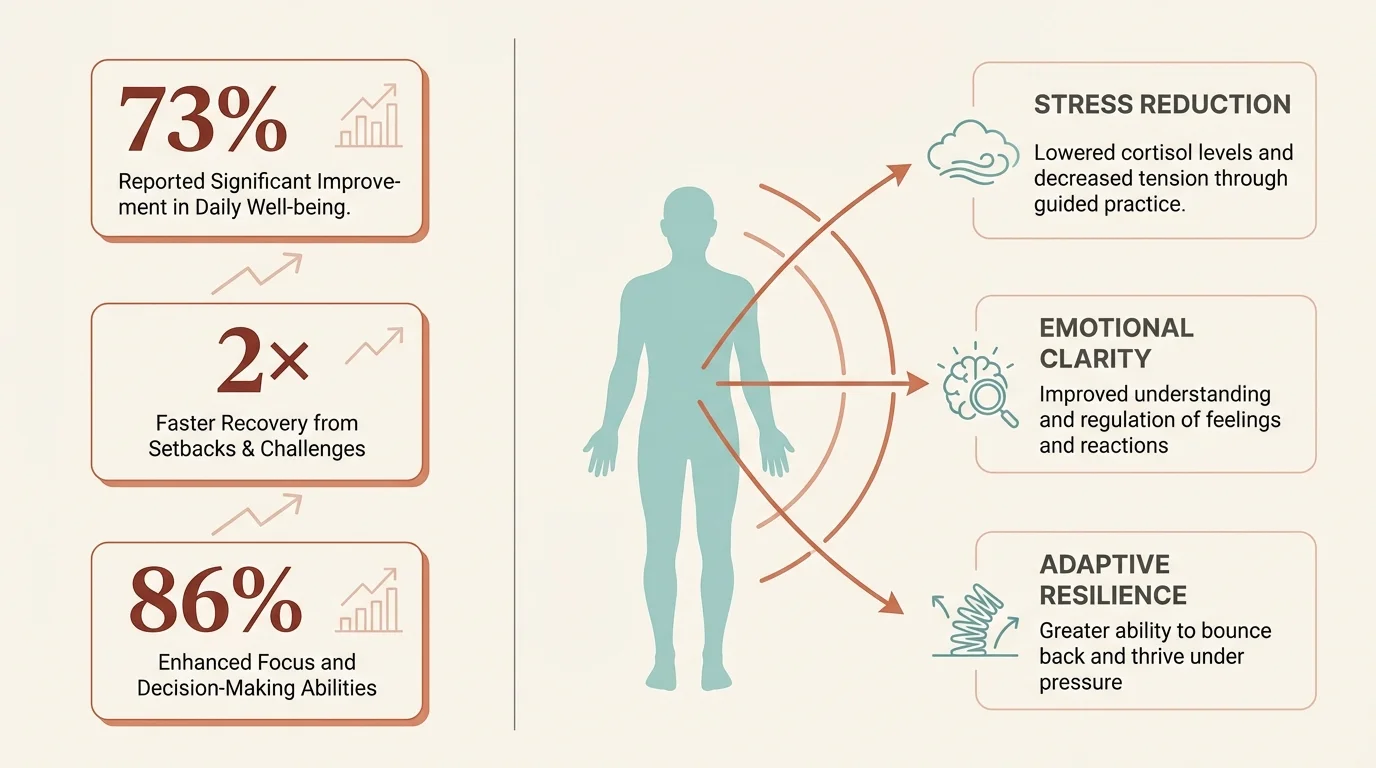
No single study has been conducted on enntal as a term, because it is too new. But the practices it describes are well studied under other names. Here is what the science says about the components of an enntal lifestyle:
Intentional Presence Reduces Stress
A landmark study published in Science by Killingsworth and Gilbert (2010) found that a wandering mind is an unhappy mind. People reported significantly lower well-being when their thoughts were elsewhere, regardless of what they were doing. Practices that bring attention back to the present moment, consistently, improve baseline mood and reduce anxiety symptoms.
Reflective Journalling Improves Emotional Regulation
Writing about experiences, not just venting, but structured reflection, has been shown to reduce psychological distress, improve immune function, and accelerate recovery from stressful events. This effect is robust across dozens of peer-reviewed studies and is summarised in this PubMed review.
Adaptability is a Core Component of Resilience
The American Psychological Association identifies flexible thinking and adaptability as primary components of psychological resilience. The enntal growth interpretation maps almost exactly onto what resilience researchers call an adaptive coping style, engaging actively with difficulty rather than avoiding or catastrophising it.
A Note of Caution
Enntal is not therapy. It is not a treatment for clinical anxiety, depression, or other mental health conditions. If you are experiencing significant emotional distress, the most appropriate first step is speaking with a licensed mental health professional, not adopting a new lifestyle framework. The practices described here complement professional support; they do not replace it.
Final Thoughts
We live in a period of relentless complexity, information overload, accelerating change, constant demands on attention, and energy. In this environment, the question isn’t whether to think more carefully about how you live and work on enntal using AI, but rather how to do so. It’s how to do that without adding another overwhelming framework to an already full plate.
Enntal’s appeal is that it doesn’t demand a complete overhaul. It asks you to bring slightly more intention, slightly more reflection, and slightly more adaptability to what you’re already doing. That modest ask, applied consistently, compounds into something significant over time.
The concept is still young. Its edges are still being defined by the communities using it. That’s worth acknowledging honestly, and it’s also what makes it interesting. You’re not late to something finished. You’re early to something still being shaped.
The best version of enntal is probably the one you build yourself, drawing on the interpretations that resonate, discarding the ones that don’t, and making it genuinely your own.
Frequently Asked Questions (FAQs)
Is enntal a real word?
It is not in standard dictionaries like Merriam-Webster or Oxford. But “real” in language refers to something with consistent usage that conveys a shared meaning within a community. By that standard, enntal is real; it appears across a growing body of online content with recognizable, recurring meanings. Language has always evolved faster than dictionaries.
Is enntal the same as mindfulness?
Mindfulness is a component of what enntal describes, but not the whole picture. Mindfulness primarily refers to present-moment, non-judgmental awareness, often cultivated through formal practices such as meditation. Enntal encompasses mindfulness but also extends to adaptive growth, the creative process, and interpersonal intelligence. Think of mindfulness as a tool that enntal might use, not a synonym for it.
How long does it take to see results from applying enntal?
This depends heavily on which practices you adopt and how consistently you apply them. Based on research on mindfulness and reflective practices, most people notice a shift in their stress response and self-awareness within 2–4 weeks of daily, intentional practice. Longer-term changes in habit patterns and interpersonal behaviour typically require 3–6 months of consistent engagement. The framework is designed for the long game, not quick fixes.
Can enntal be applied in a work or business context?
Yes, and this is arguably where it has its greatest practical value. The growth methodology’s interpretation of enntal maps directly translates into effective leadership, team collaboration, and creative work. Organisations that build cultures of intentional reflection, psychological safety, and adaptive problem-solving consistently outperform those that don’t on measures of innovation, retention, and team performance.
Do I need to believe in a specific philosophy to practice enntal?
No. Enntal is non-sectarian and non-religious, and it doesn’t require you to adopt any particular worldview. It is pragmatic rather than doctrinal. The practices it describes, intentional awareness, honest reflection, and adaptive behaviour, are consistent with a wide range of philosophical, psychological, and cultural traditions.
Is enntal suitable for children or teenagers?
The underlying principles of presence, reflection, and adaptability are age-appropriate and beneficial for younger people when introduced through accessible language and simple practices. Many schools already incorporate social-emotional learning (SEL) programmes that teach the same core competencies. For children, the language should be simplified: How did that feel? What would you try differently next time?
Is Enntal the same as the Enntal in Austria?
No. The Enntal in Austria refers to the Enns River valley, a geographic region known for hiking, cycling, and Alpine scenery. This is an entirely separate usage of the word. The lifestyle/conceptual meaning of enntal covered in this guide has no connection to the Austrian region beyond sharing the same spelling.