Phase technology is a broad concept used across electronics, audio engineering, signal processing, telecommunications, and even power systems. At its core, it refers to the timing relationship (phase) between signals, waves, or electrical cycles, and to how it is measured, controlled, and optimized. When the phase is managed correctly, systems perform more efficiently, produce more transparent sound, transmit cleaner signals, and operate with less interference. When the phase is ignored, distortion, delays, and inefficiencies quickly appear.
This article provides a deep, well-researched explanation of phase technology, its working principles, real-world applications, advantages, limitations, and future developments. Whether you are a student, tech enthusiast, or professional, this guide follows a clear topical structure to help you understand phase technology from basics to advanced use cases.
Understanding the Basics of Phase Technology
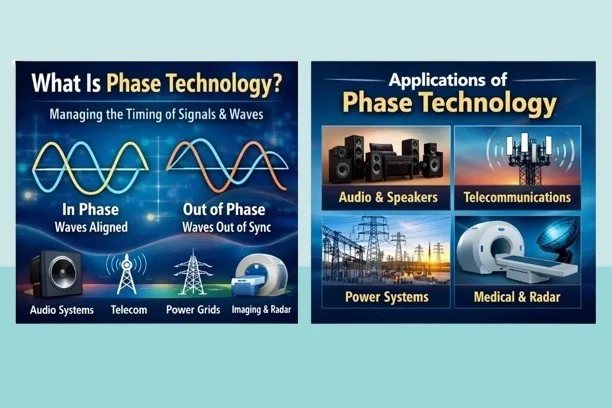
In physics and electronics, phase describes the position of a point in time on a waveform cycle. For example, in a sine wave, phase determines whether one signal starts earlier or later than another. When two signals are perfectly aligned, they are in phase. When one signal is shifted relative to another, they are out of phase.
Phase technology focuses on managing this alignment. By controlling phase relationships, engineers ensure signals combine correctly, reduce interference, and maintain clarity. This is critical in systems like:
Audio speakers
Wireless communications
Power grids
Radar and imaging systems
Digital signal processing
Even minor phase mismatches can cause signal cancellation or distortion, which is why phase control is a fundamental part of modern engineering.
How Phase Technology Works
Phase technology works by measuring and adjusting the timing of signals or waves. Devices use sensors, processors, or algorithms to detect phase differences and correct them in real time.
In audio systems, phase alignment ensures that sound waves from multiple speakers reach the listener simultaneously. In wireless communication, phase synchronization allows signals to be transmitted and received without overlap or interference. In power systems, phase balancing ensures that electrical loads are evenly distributed across phases.
Modern systems often use digital signal processing (DSP) to manage the phase automatically. DSP chips analyze signals, calculate phase differences, and apply corrections instantly. This makes phase technology essential in smart devices, advanced electronics, and high-performance communication networks.
Why Phase Technology Matters Today
In today’s fast-changing world, businesses are under pressure to deliver higher quality, more consistency, and better efficiency. Phase Technology gives them tools to manage each crucial phase of a process with greater control. Instead of reacting when something goes wrong, they can predict, adjust, and optimize in real time. This leads to fewer errors, less waste, and a more stable output.
From a strategic perspective, Phase Technology is also about competitiveness. Companies that understand and leverage advanced phase-based systems can create better products, respond faster to demand, and reduce operational costs. As industries move toward automation and intelligent systems, Phase Technology becomes a foundation for long-term innovation, digital transformation, and sustainability.
Key Components of Phase Technology Systems
Phase Detectors
Phase detectors are electronic circuits that compare the phase (timing position within a cycle) of two signals, usually a reference signal and an output signal. By measuring how much one signal leads or lags behind the other, the detector produces an error signal that represents this phase difference. This information is essential in systems where signals must stay synchronized, such as communication receivers, phase-locked loops (PLLs), oscillators, and clock recovery circuits.
Phase-Locked Loops (PLL)
A phase-locked loop (PLL) is a feedback control system that forces an output signal—usually from a voltage-controlled oscillator (VCO) to match the phase and frequency of a reference signal. It continuously compares the two signals using a phase detector, then sends the difference through a filter to adjust the oscillator. As the loop keeps correcting itself, the output gradually “locks” onto the reference so both signals move in step. This automatic adjustment allows the system to track small changes in frequency or timing without losing synchronization.
Digital Signal Processors
Digital signal processing (DSP) chips are specialized processors designed to analyze and modify signals, such as audio, radio, or sensor data, as they are received, with minimal delay. They convert incoming analog signals into digital form, perform mathematical operations on the data, and then output a corrected or enhanced signal. When phase errors occur, meaning the signal’s timing is slightly off, the DSP can calculate the difference and apply phase corrections so that the signal stays aligned with a reference.
Oscillators and Filters
Oscillators are electronic circuits that produce steady, repeating signals, such as sine or square waves. These signals act as timing references in many systems, from radios and computers to communication networks. A stable oscillator ensures that the signal’s frequency and phase remain predictable, which is essential when multiple parts of a system must stay synchronized. However, the raw output of an oscillator can include slight variations, harmonics, or interference that affect signal quality.
Key Benefits of Phase Technology
Enhanced Performance and Reliability
One of the most significant advantages of Phase Technology is improved performance. When each phase of a system is understood and controlled, output becomes more consistent. Machines can run closer to their ideal conditions, materials can be used more effectively, and signals can be transmitted with less noise or distortion. This leads to reliable products and services that customers trust.
In many cases, organizations find that Phase Technology helps them reduce downtime, extend equipment life, and minimize unexpected failures. By seeing phase-based patterns in data, they can schedule maintenance, adjust settings, and avoid problems before they occur. Over time, this builds a strong reputation for quality and stability.
Cost Savings and Resource Efficiency
Financially, Phase Technology often pays for itself through cost reductions. Better phase control usually means less energy consumption, fewer defective products, and reduced waste. When systems are optimized phase by phase, they consume only what they need, when they need it. This is especially important in energy-intensive industries or environments where small efficiency gains add up quickly.
These savings are not only good for the bottom line; they also support sustainability goals. Phase Technology can help businesses lower their carbon footprint, adopt greener practices, and align with modern environmental standards. As regulations tighten and customers care more about sustainability, this becomes a significant competitive advantage.
Better Data, Insights, and Decision-Making
Modern Phase Technology solutions are often connected to data platforms or cloud systems. They collect and analyze detailed information about each phase of a process or signal. This data can be turned into dashboards, alerts, and reports that give managers and engineers clear, visual insights.
With these insights, leaders can make smarter strategic decisions. They can see which phases are slow, which steps cause the most errors, and where investment will have the most significant impact. In this way, Phase Technology supports not only day-to-day operations but also long-term planning and innovation.
Applications of Phase Technology
1. Audio and Speaker Systems
Phase technology is essential in audio engineering. When speakers are out of phase, sound waves can cancel each other out, reducing bass and clarity. High-quality audio systems use phase alignment to ensure all speakers work together smoothly. Professional studios, home theaters, and car audio systems rely on phase correction tools to deliver accurate sound. Subwoofers often include phase controls to match them with prominent speakers.
2. Telecommunications and Networking
Telecommunication systems depend on phase synchronization to transmit data efficiently. In wireless networks, phase-controlled antennas can direct signals toward specific users. This improves signal strength and reduces interference. Technologies like 5G use phased-array antennas, which electronically adjust the phase of signals to steer beams. This enables faster, more reliable connections.
3. Power Systems and Electrical Engineering
In power systems, electricity is often delivered in three phases. Proper phase balance ensures stable voltage and efficient energy use. If phases become unbalanced, equipment can overheat or fail. Phase monitoring devices help maintain stability in factories, data centers, and power grids.
4. Imaging, Radar, and Medical Technology
Phase technology is used in radar systems to detect objects and measure distance. In medical imaging, phase-based techniques improve resolution and accuracy. MRI and ultrasound machines rely on precise phase control to create clear images.
Common Types of Phase Technology
Industrial and Manufacturing Phase Technology
In manufacturing, Phase Technology is used to manage the different stages of production, such as heating, cooling, mixing, curing, or assembly. Sensors measure temperature, pressure, and other variables, while control systems keep each phase within ideal ranges. This prevents defects and ensures that every product meets the same high standard.
Such phase-based systems can be integrated into existing machines or used in new smart factories. They often work with automation platforms, robotics, and quality control tools. For companies that want to upgrade gradually, Phase Technology solutions can be introduced incrementally, starting with the most critical phases.
Energy and Phase-Change Technology
In the energy sector, Phase Technology is closely associated with phase-change materials (PCMs) and thermal management solutions. These systems store energy when conditions are favorable and release it when needed. For example, a building might use phase-change materials in its walls to absorb heat during the day and release it at night, keeping indoor temperatures more stable.
This type of Phase Technology can reduce peak energy demand, lower electricity bills, and increase comfort. It is beneficial in regions with intense temperature swings or high energy costs. As renewable energy sources grow, phase-based storage and management play an essential role in balancing supply and demand.
Audio, Signal, and Communication Phase Technology
In audio engineering and communications, Phase Technology focuses on controlling the timing and alignment of signals. When signals are in phase, they reinforce each other and sound or look clearer. When they are out of phase, they can cancel out or cause distortion. Phase-based solutions accurately align signals, improving quality and clarity.
These technologies are used in speakers, microphones, recording systems, broadcast equipment, and wireless communication. For audiences, this means better sound quality, clearer calls, more stable connections, and a smoother listening or viewing experience. For professionals, it means greater control over the soundstage and signal integrity.
How Businesses Can Get Started with Phase Technology
Assess Your Current Processes and Systems
The first step is understanding where you are today. Map out your processes and identify the different phases or stages involved, whether it’s heating, cooling, mixing, signalling, or transmitting data. Look for areas where performance is inconsistent, energy usage is high, or quality problems keep appearing. These are strong candidates for Phase Technology solutions.
A simple internal review, combined with feedback from your operations team, can highlight key pain points. You don’t need to be an expert in Phase Technology at this stage. The goal is just to understand where more control, data, and optimization would be most valuable.
Define Clear Objectives and Use Cases
Once you know where the challenges are, define what you want Phase Technology to achieve. For example, you may want to reduce energy consumption by a certain percentage, cut defects in a specific production phase, or improve signal quality in an audio or communication system. Clear goals help you choose the right type of solution and measure success.
When possible, start with a focused pilot project. Choose one process, one line, or one system where Phase Technology can have a noticeable impact. This makes it easier to test, learn, and build a solid business case before expanding to other areas.
Partner With Experts and Technology Providers
Most organizations benefit from working with specialists who understand Phase Technology in detail. Technology providers, integrators, and consultants can recommend suitable sensors, control systems, phase-change materials, or signal-processing solutions. They can also help integrate new tools with your existing infrastructure.
When evaluating partners, look for experience in your industry, strong references, and the ability to provide ongoing support. A good partner will not just sell hardware or software; they will help you design a complete phase-based solution that fits your goals, budget, and timelines.
Benefits of Phase Technology
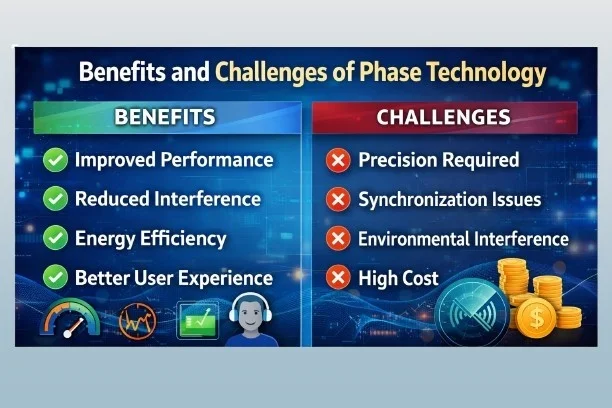
Proper phase alignment improves overall system performance by making signals more precise, more accurate, and more efficiently processable. When phases are controlled correctly, interference is reduced because signals stay in phase rather than canceling each other out or creating extra noise. In power and electronic systems, balanced phases also improve energy efficiency by reducing wasted energy and reducing equipment stress, thereby helping devices last longer. All of these benefits contribute to a better user experience, whether it’s clearer audio, more stable connections, or faster and more reliable technology in everyday devices.
Challenges and Limitations in Using Phase Technology
Despite its advantages, phase technology comes with challenges. Accurate phase control requires precise measurements and advanced components. In complex systems, maintaining synchronization can be difficult. Environmental factors like temperature and interference can also affect phase stability.
Cost is another factor. High-precision phase systems, such as phased array antennas or advanced DSP processors, can be expensive. However, ongoing innovation is making phase technology more accessible.
Phase Technology vs Frequency and Amplitude Control
Phase is only one part of signal management. Frequency determines how fast a signal cycles, while amplitude determines its strength. Modern systems must control all three factors. Phase technology works in conjunction with frequency and amplitude control to ensure optimal performance. Understanding this relationship helps engineers design balanced systems that deliver consistent results.
The Future of Phase Technology
Looking ahead, Phase Technology is expected to become even more intelligent and more connected. With advances in artificial intelligence, machine learning, and the Internet of Things (IoT), phase-based systems will be able to learn from data, adapt automatically, and coordinate across multiple locations. This will make them more powerful and easier to manage.
We can also expect new materials and devices that respond to phase changes more efficiently. For example, improved phase-change materials, more intelligent sensors, and more compact controllers will open new applications in transportation, healthcare, consumer products, and beyond. For businesses and individuals, this means more comfort, efficiency, and reliability in everyday life.
As awareness grows, understanding Phase Technology early gives you a clear advantage. Whether you are an engineer, manager, or curious learner, now is the ideal time to explore how this technology can support your goals and prepare you for the next wave of innovation.
Conclusion
Phase technology is a foundational concept in modern electronics and engineering. Managing the timing relationship between signals improves performance, reduces interference, and enhances reliability across multiple industries. Its applications range from audio systems and telecommunications to power grids and medical imaging.
As technology continues to advance, phase control will remain essential. Future innovations in AI, networking, and digital processing will rely heavily on precise phase management. For anyone interested in technology, understanding phase technology provides valuable insight into how modern systems achieve accuracy and efficiency.
Frequently Asked Questions (FAQs)
What is phase technology in simple words?
Phase technology refers to managing the timing alignment between signals or waves so they work together correctly. It helps reduce distortion, improve clarity, and ensure systems run smoothly.
What is the primary purpose of Phase Technology?
The primary purpose of Phase Technology is to control and optimize different stages or states in a system, such as heat, energy, signals, or production steps. By doing this, it improves efficiency, quality, and reliability while reducing costs and waste.
Is Phase Technology only for large companies?
No. While large industrial and energy companies are early adopters, Phase Technology is increasingly accessible to smaller businesses as solutions become more modular and affordable. Even small manufacturers, building owners, or audio professionals can benefit from phase-based systems tailored to their needs.
Do I need deep technical knowledge to use Phase Technology?
You do not need to be a technical expert to benefit from Phase Technology. Many solutions are designed with user-friendly interfaces and dashboards. However, having access to technical support or a partner who understands the details will help you get the most out of any investment.
How can I learn more or get started?
A good first step is to audit your existing systems and identify where performance or quality issues occur. Then, speak with technology providers or consultants who specialize in Phase Technology. They can recommend specific solutions, case studies, and pilot projects that match your industry and goals.