In today’s digital world, businesses, schools, hospitals, and organisations rely heavily on technology to run their daily operations. From managing data and maintaining networks to troubleshooting hardware issues, technology plays a critical role in modern workplaces. Behind the scenes, professionals known as Information Technology Technicians ensure that these systems run smoothly and efficiently.
An Information Technology Technician is responsible for installing, maintaining, and repairing computer systems, networks, and digital infrastructure. They are often the first line of support when technical problems arise, helping employees and organisations resolve issues quickly so work can continue without interruption.
As technology continues to evolve, the demand for skilled IT technicians is growing worldwide. Companies need reliable professionals who can maintain systems, protect networks, and provide technical assistance. This article explores the role of an Information Technology Technician in detail, including responsibilities, skills, career paths, training requirements, and future opportunities in this rapidly growing field.

What Is an Information Technology Technician?
An Information Technology Technician, often called an IT technician or IT support specialist, is a professional who manages and supports computer systems, hardware devices, software applications, and network infrastructure. Their primary goal is to ensure that technology systems function properly and remain accessible to users.
IT technicians work in various environments, including corporate offices, educational institutions, healthcare organisations, government departments, and technology companies. Their daily tasks involve monitoring computer systems, troubleshooting software errors, installing updates, and resolving technical issues that employees may encounter.
The role often involves interacting directly with users who are experiencing technical problems. For example, if a company employee cannot access a network printer or encounters a software crash, the Information Technology Technician is usually responsible for diagnosing and fixing the issue. This position requires both technical knowledge and strong communication skills because technicians must explain technical solutions in simple terms to non-technical users.
The Importance of Information Technology Technicians
Modern organisations rely heavily on technology to perform almost every business function. Without properly functioning computer systems and networks, productivity can decrease significantly. Information Technology Technicians play a crucial role in maintaining operational efficiency. They ensure that computer systems remain secure, up to date, and functional. For instance, they install system updates, monitor network activity, and protect devices from security threats such as malware and unauthorised access.
Another important responsibility is minimising downtime. When systems fail, businesses can lose valuable time and money. IT technicians work quickly to identify problems and restore services, helpingorganizationss continue their operations smoothly. In addition, Information Technology Technicians support digital transformation within companies. As organisations adopt new technologies, these professionals help integrate these systems and ensure that employees can use them effectively.
What Does an Information Technology Technician Do?
An IT technician serves as the backbone of anorganization’sis digital infrastructure, tasked with the comprehensive installation, maintenance, and repair of computer systems and networks. Their role centres on diagnosing and resolving technical issues while proactively setting up and configuring essential hardware and software components. Beyond physical equipment, they are responsible for maintaining robust network security and troubleshooting connectivity problems to keep operations running smoothly. Furthermore, they act as a vital resource for personnel by providing direct technical support and training, all while consistently upgrading systems to ensure the entire environment operates at optimal performance.
Core Responsibilities of an Information Technology Technician
The daily tasks of an Information Technology Technician vary by organisation. Responsibilities generally involve maintaining and supporting technological infrastructure. One of the most common responsibilities is troubleshooting technical problems. When users experience issues with software, operating systems, or hardware devices, IT technicians diagnose the problem and implement solutions.
Another major task is installing and configuring computer systems. When companies purchase new hardware or software, IT technicians set up these systems to ensure they function correctly within the organiorganization’swrk environment. Network maintenance is also an important aspect of the job. IT technicians monitor network performance, ensure connectivity between devices, and resolve network-related issues that may affect communication or data transfer.
They also manage security measures by installing antivirus software, monitoring security alerts, and ensuring that company systems remain protected against cyber threats. In addition, Information Technology Technicians often document technical procedures and maintain records of system updates, repairs, and configurations.
Essential Skills for an Information Technology Technician
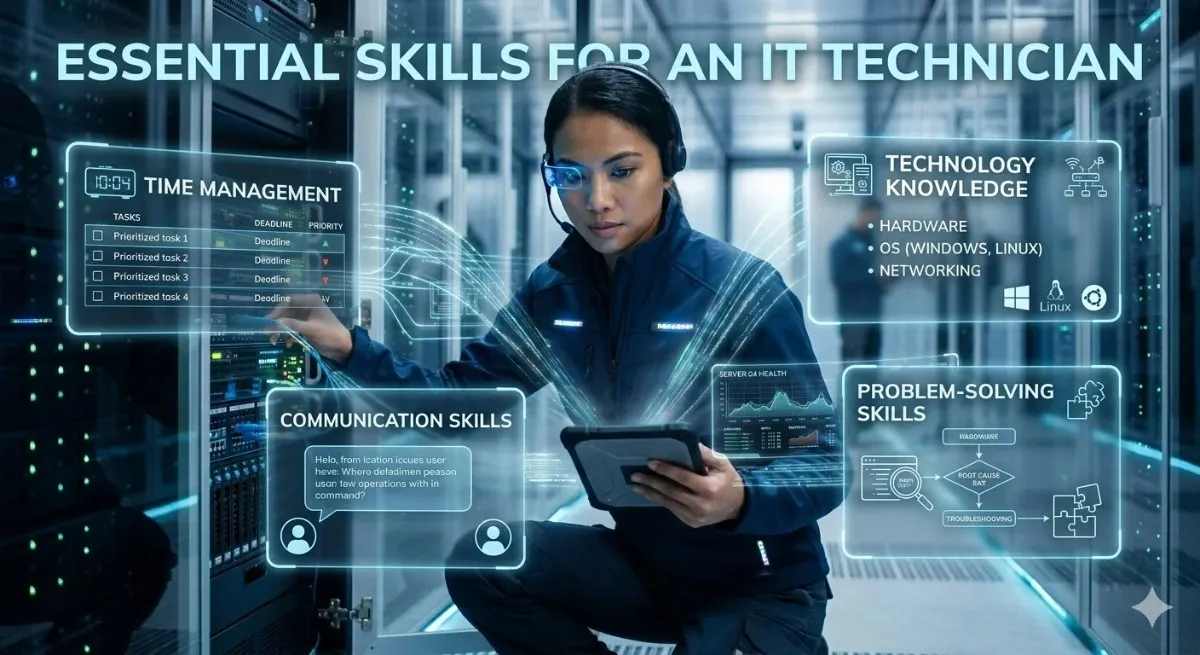
To succeed as an Information Technology Technician, professionals must possess a combination of technical expertise and problem-solving abilities. Technology environments are complex, and technicians must be able to diagnose and resolve issues efficiently.
Technology Knowledge
Technical knowledge is one of the most important requirements. IT technicians need to understand computer hardware, operating systems, networking principles, and common software applications. Familiarity with systems such as Windows, Linux, and macOS is often essential.
Problem-solving Skills
Problem-solving skills are equally important. When systems malfunction, technicians must analyse the situation, identify the root cause, and implement an effective solution.
Communication Skills
Communication skills also play a significant role in this profession. Many users who request technical support may not have a strong understanding of technology. Technicians must explain issues and solutions in simple and clear language.
Time Management
Time management is another critical skill because technicians often handle multiple support requests simultaneously. They must prioritise issues and resolve them efficiently.
Education and Training Requirements
Most Information Technology Technicians begin their careers with formal education in information technology, computer science, or a related field. Many employers prefer candidates with an associate’s or bachelor’s degree in IT or computer systems. However, education alone is not always enough. Practical experience with computer systems and networks is highly valuable in this profession. Many aspiring technicians gain experience through internships, entry-level support roles, or hands-on training programs.
Professional certifications also play an important role in the IT industry. Certifications demonstrate a technician’s expertise in specific technologies and can significantly improve career opportunities. Common certifications for Information Technology Technicians include CompTIA A+, Network+, and Microsoft certifications. These credentials validate knowledge in hardware troubleshooting, networking fundamentals, and system administration. Continuous learning is essential in this field because technology evolves rapidly. IT technicians must regularly update their knowledge to stay up to date on new software, hardware, and cybersecurity practices.
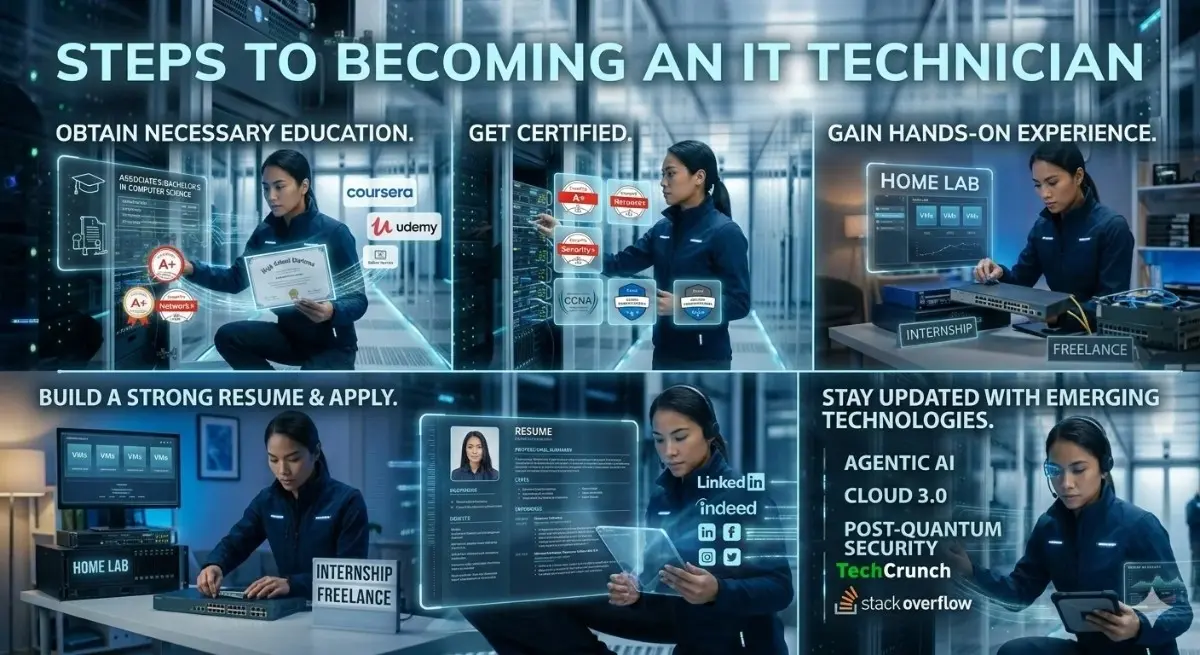
Steps to Becoming an IT Technician
1. Obtain the Necessary Education
While a formal degree isn’t always a strict requirement for entering the IT field, pursuing a structured educational path can significantly enhance your job prospects and long-term career trajectory. Those starting often begin with a High School Diploma combined with self-learning, utilising online resources and foundational certifications to build a portfolio of skills.
For a more comprehensive background, earning an Associate’s or Bachelor’s Degree in IT, Computer Science, or a related field provides a robust theoretical and practical foundation that many large employers prefer. Alternatively, for those seeking a faster or more focused route, coding bootcamps and online platforms like Coursera, Udemy, and LinkedIn Learning offer specialised, high-intensity training tailored to current industry demands.
2. Get Certified
Industry certifications are a powerful tool for building professional credibility, as they provide tangible proof to employers that you possess the technical competencies required for modern IT roles. For those just entering the field, the CompTIA A+ remains the gold standard for foundational troubleshooting and support skills.
To specialise further, professionals often pursue CompTIA Network+ or the more advanced Cisco Certified Network Associate (CCNA) to master networking fundamentals and expertise, respectively. As security and cloud infrastructure continue to dominate the landscape in 2026, the CompTIA Security+ offers an essential introduction to cybersecurity, while the Microsoft Certified: Azure Fundamentals serves as a vital entry point for those looking to manage cloud computing environments.
3. Gain Hands-On Experience
Gaining practical experience is a critical step in transitioning from a student to a working professional in the IT field. Many aspiring technicians start by securing internships, which offer a structured environment to learn company-specific workflows, or by pursuing freelance and volunteer work for non-profits and small businesses to build a verifiable portfolio.
For those who want to experiment without pressure, setting up a home lab, often using virtual machines or refurbished hardware, allows for hands-on practice with networking and system configurations. Ultimately, these efforts serve as a bridge to entry-level roles, such as IT support specialist or help desk technician, where you can apply your skills to real-world problems and establish a foundation for long-term career growth.
4. Build a Strong Resume and Apply for Jobs
To land a position in the competitive 2026 job market, your resume must effectively highlight your relevant skills, certifications, and hands-on experience. Utilising major job boards like LinkedIn, Indeed, and Glassdoor is essential for discovering openings, but the real key to success lies in customising your resume for every unique application.
A standout document should lead with a concise professional summary that captures your value proposition, followed by a clear section for your key skills and certifications. Furthermore, ensure you document all relevant work experience, including internships and freelance projects, and round out the profile with your formal education and specialised training to provide a complete picture of your qualifications.
Professional Resume Checklist
- Professional Summary: (2–3 sentences highlighting your “why” and “how”).
- Skills/Certs: Group these by category (e.g., Networking, Security, Support).
- Experience: Use the Action Verb + Task + Result formula.
- Education: List your highest degree and any ongoing training.
5. Stay Updated With Emerging Technologies
Because the IT industry evolves at a breakneck pace, staying informed is no longer optional; it is a core requirement of the profession. To navigate the landscape of 2026, where Agentic AI, Cloud 3.0, and Post-Quantum Security are redefining infrastructure, you must actively follow industry-leading blogs like TechCrunch, Wired, and Ars Technica for deep-dive technical analysis.
Engaging with vibrant IT communities on forums such as Stack Overflow, Reddit (r/sysadmin), or dev. to provides real-time troubleshooting insights and peer support. Finally, committing to continuous learning through platforms like Coursera, LinkedIn Learning, or specialised AI-native tools like CYPHER Learning ensures that your skill set remains relevant and your certifications up to date in an increasingly automated world.
Work Environment and Career Opportunities
Information Technology Technicians work in a wide range of industries because nearly every organisation relies on digital technology. This means there are numerous career opportunities for professionals in this field. Many IT technicians work in corporate offices, providing technical support to employees and maintaining company networks. Others work in managed service providers, where they support multiple clients and handle diverse technical environments.
Some technicians specialise in certain areas of technology, such as network administration, cybersecurity, or cloud computing. These specialisations lead to advanced roles and higher salaries. In addition, remote IT support has become more common in recent years. Many technicians now assist users through remote access tools, helping solve problems without being physically present. As professionals gain experience, they may move into higher-level positions such as system administrators, network engineers, IT managers, or cybersecurity specialists.
Challenges Faced by Information Technology Technicians
Although the role of an Information Technology Technician can be rewarding, it also comes with several challenges. Technology systems are complex, and unexpected issues can arise at any time. One common challenge is dealing with urgent technical problems that affect business operations. When systems crash or networks fail, technicians must work under pressure to restore functionality as quickly as possible. Another challenge involves staying up to date with new technologies.
The IT industry evolves rapidly, and technicians must constantly learn new tools, systems, and security practices. User expectations can also create pressure. Employees often rely on IT technicians to resolve issues immediately, even when the problem is complicated or requires extensive troubleshooting. Despite these challenges, many professionals find the work rewarding because it offers continuous learning opportunities and the chance to solve complex technical problems.
Conclusion
The role of an Information Technology Technician is essential in today’s technology-driven world. These professionals ensure that computer systems, networks, and digital tools operate efficiently, allowing organisations to function without disruption. From troubleshooting technical issues and maintaining hardware to protecting networks and supporting users, IT technicians perform a wide range of responsibilities. Their expertise helps businesses stay productive and secure in an increasingly digital environment.
As technology continues to evolve, the demand for skilled IT professionals will continue to grow. For individuals interested in technology, problem-solving, and continuous learning, becoming an Information Technology Technician can be a rewarding and stable career choice. By developing technical skills, gaining practical experience, and staying up to date with emerging technologies, aspiring technicians can build successful careers in this dynamic and expanding field.
Frequently Asked Questions (FAQs)
What does an Information Technology Technician do?
An Information Technology Technician installs, maintains, and repairs computer systems, networks, and software while providing technical support to users experiencing technology issues.
What skills are needed to become an IT technician?
Important skills include knowledge of computer hardware, operating systems, networking, troubleshooting, problem-solving, and effective communication with users.
Do Information Technology Technicians need a degree?
Many IT technicians have a degree in information technology or computer science, but certifications and hands-on experience can also help individuals enter the field.
Is Information Technology Technician a good career?
Yes, it is a growing career with strong demand because businesses depend on reliable technology systems and skilled professionals to maintain them.
What certifications help IT technicians advance their careers?
Popular certifications include CompTIA A+, Network+, Cisco certifications, and Microsoft certifications, which demonstrate expertise in different areas of IT support and networking.