Phishing Attacks remain one of the most dangerous cybersecurity threats in 2026, affecting millions of people and organizations worldwide. Security experts continue to warn that attackers are becoming more sophisticated, using artificial intelligence, fake login pages, and social engineering tactics to steal sensitive information.
Recent reports show that phishing campaigns are increasingly targeting cloud services, business email accounts, and online collaboration platforms. As digital communication grows, the risk of phishing-related data breaches continues to rise, making awareness and prevention more important than ever.
Understanding Phishing and Why It Continues to Grow
Phishing is a cybercrime technique in which attackers impersonate trusted organizations, colleagues, or service providers to trick victims into revealing confidential information. This information may include passwords, financial details, personal data, or access credentials. The success of phishing lies in human psychology. Cybercriminals create messages that appear legitimate and urgent, encouraging users to act quickly without verifying the source.
Common phishing targets include:
- Email accounts
- Banking platforms
- Cloud storage services
- Business communication tools
- Social media accounts
- Online payment systems
As more businesses adopt remote work and cloud-based services, phishing opportunities continue to expand.
Read more: Supreme Court Strengthens FCC Data Privacy
Modern Phishing Techniques Are Becoming More Advanced
Traditional phishing emails often contained spelling mistakes and suspicious links. Today’s phishing attacks are much harder to detect.
Attackers now use advanced methods such as:
AI-Powered Phishing Campaigns
Artificial intelligence helps cybercriminals generate convincing emails that mimic legitimate communication styles. These messages often appear professional and personalized, increasing the likelihood that recipients will trust them.
Spear Phishing Attacks
Spear phishing focuses on specific individuals or organizations. Attackers research their targets and craft customized messages that appear relevant to the victim’s role or responsibilities. Because these messages are highly personalized, spear phishing often achieves higher success rates than generic phishing campaigns.
Business Email Compromise and Phishing
Business Email Compromise, often linked to phishing, involves attackers impersonating executives, managers, or vendors. Employees may be tricked into transferring funds, sharing sensitive files, or providing account credentials. Organizations of all sizes have suffered financial losses from these sophisticated phishing schemes.
Phishing Threats Targeting Cloud Services
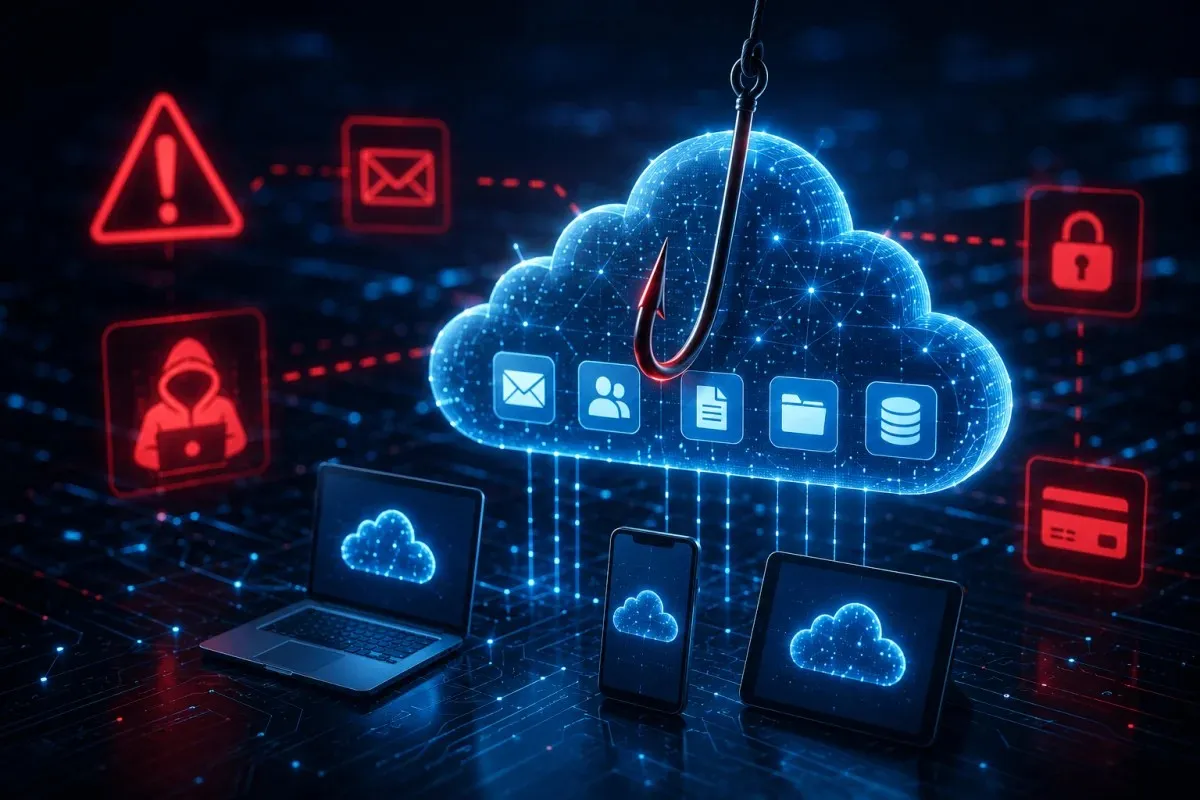
Cloud platforms have become a major focus for phishing attackers. Employees frequently access cloud-based applications for communication, file sharing, and collaboration, making these services attractive targets.
Cybercriminals often create fake login pages that closely resemble legitimate cloud service portals. Victims unknowingly enter their credentials, giving attackers direct access to valuable business data.
How Phishing Attacks Exploit User Trust
Many phishing attacks succeed because they exploit familiar brands and services. Attackers use company logos, official-looking email templates, and realistic website designs to gain credibility.
Warning signs may include:
- Unexpected login requests
- Urgent security alerts
- Requests for password verification
- Suspicious attachments
- Unusual sender addresses
- Links that redirect to unfamiliar websites
Recognizing these indicators can significantly reduce the risk of becoming a phishing victim.
Financial and Business Impact of Phishing
The consequences of phishing extend beyond stolen passwords. A successful phishing attack can cause significant operational and financial damage. Potential impacts include:
- Data breaches
- Financial fraud
- Identity theft
- Business disruption
- Regulatory penalties
- Loss of customer trust
For organizations, a single phishing incident can result in months of recovery efforts and substantial financial costs.
Why Small Businesses Are Vulnerable to Phishing
Many small and medium-sized businesses believe they are unlikely targets. However, attackers often view smaller organizations as easier victims because they may have fewer cybersecurity resources. Limited security training, weaker authentication practices, and smaller IT teams can increase exposure to phishing threats. Implementing basic cybersecurity measures can dramatically improve protection against phishing attacks.
Read more: Lloyds Bank Issues
Best Practices to Prevent Phishing Attacks
Cybersecurity professionals recommend a combination of technology, training, and awareness to reduce phishing risks.
Employee Education Against Phishing
Regular cybersecurity training helps employees identify suspicious emails and fraudulent requests. Organizations that invest in awareness programs often experience fewer successful phishing incidents. Training should include:
- Identifying suspicious links
- Verifying sender identities
- Reporting unusual messages
- Understanding social engineering tactics
Multi-Factor Authentication and Phishing Defense
Multi-factor authentication adds an extra layer of security even if credentials are compromised through phishing. By requiring additional verification steps, organizations can reduce unauthorized access and limit the damage caused by phishing attacks.
Email Security Solutions for Phishing Protection
Modern email security tools can detect malicious links, block suspicious attachments, and identify phishing indicators before messages reach users. These technologies are most effective when combined with strong user awareness and security policies.
Future Trends in Phishing Attacks
Cybersecurity experts expect phishing techniques to continue evolving. Artificial intelligence, deepfake technology, and automated attack systems are likely to make phishing campaigns more convincing and scalable. Attackers may increasingly target mobile devices, collaboration platforms, and emerging digital services.
As technology advances, organizations must continuously adapt their security strategies. The future of phishing will likely involve more personalized, harder-to-detect attacks, requiring stronger cybersecurity defenses and greater user vigilance.
Read more: Bitcoin ATM
Conclusion
Phishing remains one of the most effective cyber threats facing individuals and businesses today. As attackers adopt artificial intelligence, social engineering, and advanced impersonation tactics, the sophistication of phishing campaigns continues to increase. Organizations must prioritize employee education, multi-factor authentication, and modern security tools to defend against phishing attacks.
Individuals should remain cautious when handling unexpected emails, login requests, and urgent messages. While technology plays a crucial role in cybersecurity, awareness remains the strongest defense against phishing. By understanding how phishing works and recognizing warning signs early, users can significantly reduce their risk and protect valuable personal and business information from cybercriminals.