A tech startup is more than just a company built around technology. It is an idea-driven organization that solves real-world problems through innovation, speed, and scalable digital solutions. In today’s fast-moving digital economy, tech startups play a central role in shaping how people communicate, work, shop, learn, and even think. From artificial intelligence and cloud computing to fintech, health tech, and software-as-a-service (SaaS), tech startups are driving transformation across nearly every industry.
Unlike traditional businesses, a tech startup is built for rapid growth, experimentation, and adaptability. It often begins with a small team, limited resources, and a big vision. While the opportunities are immense, the risks are equally high. Many tech startups fail not because their ideas are bad, but because of poor execution, weak market understanding, or a lack of strategic planning.
This in-depth guide explores what a tech startup really is, how it works, and what it takes to build one successfully. It covers ideation, validation, funding, team building, product development, scaling, challenges, and future trends. Whether you are an aspiring founder, an investor, or simply curious about the startup ecosystem, this article provides practical insights grounded in real-world experience and industry best practices.
What Is a Tech Startup?
A tech startup is a young company that uses technology as its core to create a product or service that solves a specific problem in a scalable way. The defining characteristics are innovation, growth potential, and reliance on technology rather than physical assets.
Tech startups typically focus on software, digital platforms, or technology-enabled services. Examples include mobile applications, cloud-based tools, artificial intelligence platforms, blockchain solutions, and online marketplaces. The goal is not just to operate a business but to grow rapidly and reach a large market with minimal incremental cost.
What separates a tech startup from a small tech business is scalability. A freelance web development agency or a local IT service provider may use technology. Still, it is not usually classified as a startup because its growth is directly tied to human effort. A tech startup, on the other hand, can serve thousands or millions of users with the same core product.
The Evolution of Tech Startup
The concept of tech startups gained global attention during the dot-com boom of the late 1990s, when internet-based companies began reshaping commerce and communication. While many early ventures failed, the era laid the foundation for modern startup culture.
Over time, advancements in cloud computing, open-source software, and mobile technology dramatically lowered the barrier to entry. Today, a small team can build and launch a global product with limited capital. Startup ecosystems have expanded beyond Silicon Valley to regions such as Europe, Southeast Asia, the Middle East, and Africa.
Modern tech startups are also more diverse in focus. Early startups concentrated heavily on consumer internet products. Now, many target complex enterprise problems, infrastructure, cybersecurity, climate technology, and healthcare. This evolution reflects both technological progress and changing market needs.
Key Characteristics of a Successful Tech Startup
Solving a Real and Meaningful Problem
A successful tech startup begins by addressing a genuine problem that users actually face. Instead of creating technology just because it is innovative, strong startups focus on understanding real pain points. By deeply researching user needs and challenges, they build solutions that deliver practical value and make a noticeable difference in people’s lives.
Built-In Scalability from Day One
Scalability is a defining trait of a winning tech startup. The business model is designed to grow efficiently without causing costs to rise at the same pace. Through automation, digital platforms, or network effects, these startups can expand their user base and operations while maintaining sustainable margins.
Speed, Flexibility, and Adaptability
Tech startups operate in fast-changing and unpredictable environments. Customer expectations, market trends, and technologies can shift quickly. Successful startups move fast, experiment often, and learn from feedback. Their ability to adapt, refine ideas, and pivot when needed is usually more valuable than sticking rigidly to an original plan.
Strong Leadership and Clear Vision
Effective leadership plays a crucial role in long-term success. Startup founders must combine technical knowledge with strategic thinking and strong communication skills. A clear vision helps guide the team, while resilience and decision-making under pressure enable leaders to navigate challenges and keep the startup moving forward.
Idea Generation and Problem Identification for Tech Startup
Every tech startup begins with an idea, but not every idea is worth pursuing. The most promising startup ideas come from observing real problems rather than chasing trends. Founders often identify opportunities through personal experience, industry exposure, or gaps in existing solutions.
A strong startup idea usually meets three criteria. It solves a problem that is painful or expensive for users. It targets a specific group of people or businesses with precise needs. And it can be solved more effectively using technology.
Before moving forward, founders must validate assumptions. This involves researching the market, analyzing competitors, and speaking directly with potential users. Early validation reduces the risk of building a product that nobody wants.
The Importance of Market Research for Tech Startup
Market research is a vital step that many tech startups tend to overlook. It helps founders clearly understand their target audience, identify customer needs, and evaluate market demand. Proper research also supports better decisions around pricing, positioning, and long-term growth potential, reducing the risk of building a product that the market does not need.
Validating Ideas with Real User Feedback
Validation goes beyond simple surveys or online analysis. It involves direct interaction with potential users through interviews, prototypes, landing pages, and early testing. The objective is to collect honest, actionable feedback that reflects genuine interest, rather than encouraging opinions that may not translate into actual usage.
Using a Minimum Viable Product (MVP)
One of the most effective validation methods is developing a minimum viable product (MVP). An MVP focuses only on essential features required to test the core idea. By launching quickly and analyzing how users interact with the product, startups can make improvements based on real-world data instead of assumptions.

The Role of a Strong Founding Team for Tech Startup
A tech startup’s success largely depends on the strength of its team. In the early stages, every team member plays a critical role, as resources are limited and responsibilities are broad. Founders often take on multiple roles at once, managing product development, marketing, fundraising, and daily operations to keep the startup moving forward.
Balancing Technical and Business Expertise
An effective early-stage team maintains a balance between technical and business skills. A technically firm co-founder ensures that the product is practical, scalable, and built on a solid foundation. At the same time, a business-oriented co-founder focuses on strategy, partnerships, customer acquisition, and long-term growth planning.
Shared Vision, Trust, and Communication
Beyond skills, shared vision and mutual trust are essential for a startup team. The journey involves long hours, high pressure, and constant uncertainty. Teams that communicate openly, support one another, and stay aligned with their long-term goals are far better prepared to overcome challenges and adapt as the startup evolves.
Product Development as the Tech Startup Core
Product development sits at the center of every successful tech startup. The primary goal should consistently be delivering real value to users rather than striving for perfection from the beginning. Early-stage products are often imperfect, and that is entirely acceptable as long as they solve a real problem and continue to improve over time.
Choosing the Right Technology Stack
Selecting the right technology stack is a critical decision that influences long-term success. The tools and frameworks chosen impact development speed, scalability, security, and ongoing maintenance. While modern technologies allow startups to build faster, poor technical choices can lead to technical debt, making future updates and growth more difficult.
Focusing on User Experience and Scalability
Successful startups place strong emphasis on user experience, performance, and reliability. Beyond current needs, they design systems with future growth in mind so the product can scale as user demand increases. Continuous improvement, guided by honest user feedback, remains a core part of the product development lifecycle.
Funding a Tech Startup
Funding is one of the most discussed aspects of tech startups, but it is also one of the most misunderstood. Not every startup needs venture capital, especially in the early stages. Many founders begin by bootstrapping, using personal savings or revenue from early customers.
As the startup grows, external funding may become necessary to accelerate development, hire talent, or enter new markets. Familiar funding sources include angel investors, venture capital firms, startup accelerators, and crowdfunding platforms.
Each funding option comes with trade-offs. Venture capital provides large amounts of capital but often requires giving up equity and control. Bootstrapping offers independence but may limit growth speed. The right choice depends on the startup’s goals and business model.
The Importance of a Clear Business Model for Tech Startup
A well-defined business model is crucial for the long-term sustainability of a tech startup. It determines how the company creates, delivers, and captures value. Without a clear model, even innovative products can struggle to generate consistent revenue and maintain growth over time.
Popular Business Models in Tech Startup
Tech startups adopt different business models depending on their products, target audiences, and market dynamics. Subscription-based models are prevalent in SaaS startups because they provide predictable, recurring revenue. Freemium models allow users to access basic features for free while charging for advanced functionality. Marketplace startups generate income by earning commissions through connecting buyers and sellers on their platforms.
Aligning Pricing with Customer Value
Some startups depend on advertising revenue, while others focus on enterprise licensing or usage-based pricing. Regardless of the approach, the most crucial factor is aligning the business model with the value delivered to customers. Users should feel that the price they pay is fair and clearly justified by the benefits they receive.
The Role of Marketing in Tech Startup Growth
Marketing is a crucial growth lever that many technical founders tend to underestimate. Even the most well-built product can fail if it does not reach its intended audience. Effective startup marketing begins with understanding where potential users spend their time, how they discover products, and what influences their buying decisions.
Common Growth Strategies for Tech Startup
Tech startups use a variety of growth strategies depending on their goals and audience. Content marketing, search engine optimization, social media engagement, strategic partnerships, and product-led growth are among the most common approaches. Many successful startups focus on delivering value upfront, allowing the product itself to drive adoption through referrals and word of mouth.
Using Data to Drive Marketing Decisions
Data-driven decision-making plays a vital role in sustainable growth. Startups must closely monitor key metrics, including user acquisition cost, retention rates, conversion performance, and customer lifetime value. These insights enable founders to refine marketing strategies, optimize campaigns, and allocate resources more effectively.

Scaling a Tech Startup
Scaling is one of the most challenging phases of a tech startup’s journey. What works for a small group of users may not work at a larger scale. Processes, infrastructure, and team structure must evolve as the company grows. Operational scalability involves automating workflows, improving customer support systems, and strengthening internal communication.
Technical scalability requires a robust infrastructure that can handle increased traffic and data without performance issues. Cultural scalability is equally essential. As the team grows, maintaining the startup’s values, transparency, and sense of ownership becomes more difficult but also more critical.
Common Challenges and Risks for Tech Startup
Here are the following challenges that a fresh tech startup owner can face:
Many tech startups face significant challenges, and failure is a common outcome in the early stages.
One significant risk is building a product with insufficient market demand, even if it is well-designed and technically strong.
Cash flow management is a frequent problem, as running out of funds is one of the leading reasons startups shut down.
Careful financial planning and setting realistic growth expectations are essential for long-term survival.
Competition in the tech industry is intense, with larger companies entering markets with greater resources.
Startups also face pressure from other new ventures developing similar solutions.
Continuous innovation and building strong customer relationships help maintain a competitive advantage.
Legal Responsibilities for Growing Tech Startup
As tech startups expand, their legal and regulatory obligations become increasingly important. Founders must address issues such as data privacy, intellectual property, contracts, and regulatory compliance early on. Tackling these matters proactively helps avoid costly disputes or penalties in the future.
Prioritizing Security and Data Protection
Security is especially critical for startups that handle sensitive user information. Implementing best practices in data protection, access control, and system monitoring not only safeguards the business but also builds customer trust. A strong security framework reduces the risk of breaches and strengthens the startup’s reputation.
The Value of Professional Advice
While seeking professional legal and financial guidance may seem costly, it is often a wise investment. Expert advice ensures the startup operates within the law, mitigates risks, and sets a solid foundation for sustainable growth and long-term success.
The Role of Innovation and Culture
Innovation is the lifeblood of a tech startup. However, innovation does not only mean groundbreaking technology. It also includes creative approaches to customer experience, business processes, and problem-solving. A strong startup culture encourages experimentation, learning, and accountability. Teams that feel safe sharing ideas and admitting mistakes are more likely to innovate effectively. Founders set the tone. Their values, communication style, and decision-making approach influence how the entire organization operates.
Future Trends in Tech Startup
The future of tech startups is closely tied to emerging technologies and global challenges. Artificial intelligence continues to transform industries, enabling automation, personalization, and advanced data analysis. Climate technology and sustainability-focused startups are gaining momentum as businesses and governments prioritize environmental responsibility.
Health tech and remote work solutions also remain strong areas of growth. At the same time, startups must navigate increasingly stringent regulations, ethical concerns, and global competition. Those that combine technological innovation with social responsibility are likely to gain long-term trust and success.
Conclusion
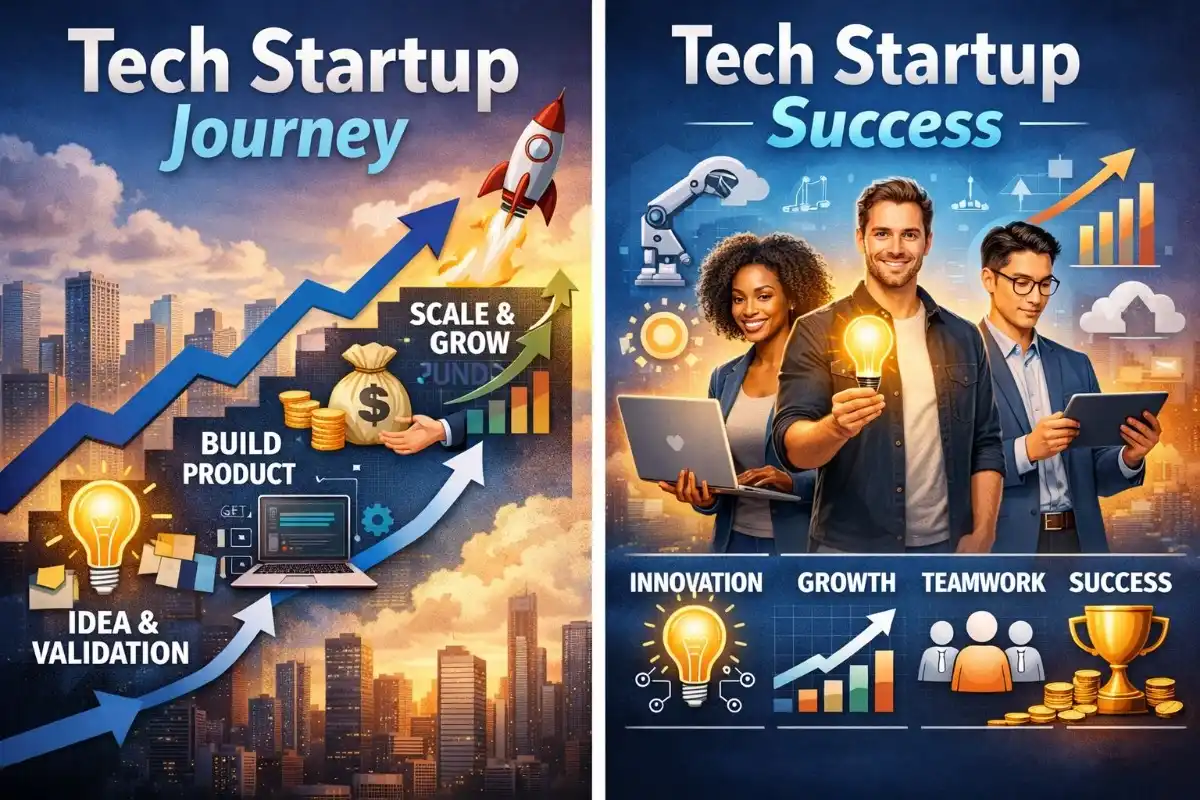
A tech startup is a journey of ambition, uncertainty, and continuous learning. It requires more than a good idea or technical skill. Success depends on understanding real problems, building valuable products, assembling the right team, and adapting to change. While the path is challenging, it is also gratifying. Tech startups have the power to create meaningful impact, transform industries, and shape the future. By focusing on value, integrity, and execution, founders can increase their chances of building something that truly lasts.
Frequently Asked Questions (FAQs)
What is a tech startup in simple terms?
A tech startup is a young company that uses technology to solve a problem in a scalable way. It focuses on innovation, rapid growth, and reaching a large audience.
How is a tech startup different from a traditional business?
A tech startup is built for fast growth and scalability, often using software or digital platforms. Traditional businesses usually grow more slowly and rely on physical operations.
Do all tech startups need venture capital?
No, many tech startups start by bootstrapping or using early revenue. Venture capital is helpful for rapid growth, but it is not required for every startup.
What are the most significant reasons tech startup fail?
Common reasons include lack of market demand, running out of money, poor execution, and intense competition. Many failures are avoidable with proper validation and planning.
How long does it take for a tech startup to succeed?
There is no fixed timeline. Some startups grow quickly, while others take years to gain traction. Success often depends on market timing, execution, and persistence.