Imagine a student sitting in a lecture hall in 2016. A professor talks. Students take notes—a PowerPoint presentation cycles in the background.
Now fast-forward to 2026. That same student might be interacting with an AI tutor at 2 AM, getting instant feedback on a programming assignment. A teacher somewhere else is using generative AI to produce a differentiated lesson plan in under three minutes. A corporate trainer is delivering a fully personalized skills course built in hours, not months.
This is not science fiction. This is what instructional technology services look like today.
Yet many educational institutions, school districts, and corporate training departments are still treating instructional technology as a helpdesk function, a set of tools to manage rather than a strategic engine to transform learning. That gap is costing learners, educators, and organizations more than they realize.
This guide breaks down exactly what instructional technology services are in 2026, how AI has redefined every layer of them, and what you need to do to make them work for your institution or organization.
What Are Instructional Technology Services?
Instructional technology services (ITS) refer to the full ecosystem of tools, systems, professional support, and strategic frameworks that help educators design, deliver, manage, and evaluate learning experiences using technology.
The Association for Educational Communications and Technology (AECT) defines instructional technology as “the theory and practice of design, development, utilization, management, and evaluation of processes and resources for learning.” But that academic definition barely scratches the surface of what ITS actually looks like on the ground in 2026. In practice, instructional technology services include:
- Learning Management Systems (LMS): Platforms like Canvas, Blackboard, Moodle, and Google Classroom, where course content, assessments, and communications live.
- Instructional Design Support: The people and processes that turn subject matter expertise into structured, effective learning experiences using frameworks like ADDIE or Universal Design for Learning (UDL).
- Classroom Technology Infrastructure: Smart boards, audio-visual systems, hybrid classroom setups, and the support teams that maintain them.
- Faculty & Staff Training: Professional development programs that help educators use technology effectively and confidently.
- Accessibility Services: Ensuring all learning content meets WCAG 2.1 standards, including captions, alt text, screen reader compatibility, and alternative formats.
- Assessment & Analytics Tools: Platforms that capture learning data, track student progress, and generate insights to improve teaching decisions.
- Media Production Support: Video creation, interactive content development, podcast production, and digital resource libraries.
- AI-Powered Learning Tools: The newest and most transformative layer of ITS in 2026.
What makes 2026 different from any previous year is that AI is no longer an add-on feature within these services. It has become the engine underneath almost all of them.
Why Instructional Technology Services Matter More Than Ever
Before diving into AI’s role, it’s worth understanding why ITS has moved from a support function to a strategic priority.
The Scale Challenge
Even the most dedicated teacher cannot give every student timely, individualized attention around the clock. Class sizes are growing. Teacher burnout is at record levels. And learner expectations shaped by personalized streaming, instant answers, and on-demand everything have permanently shifted.
Instructional technology services exist precisely to bridge this gap: giving educators the tools to reach every learner at scale without sacrificing quality or personalization.
The Data Problem
For decades, education ran largely on intuition. A teacher sensed that a student was struggling. A trainer assumed a module was working because attendees didn’t complain. Instructional technology services introduce real data into the equation, such as learning analytics, engagement metrics, completion rates, and AI assessment performance, so that decisions can be made based on evidence, not guesswork.
The Equity Imperative
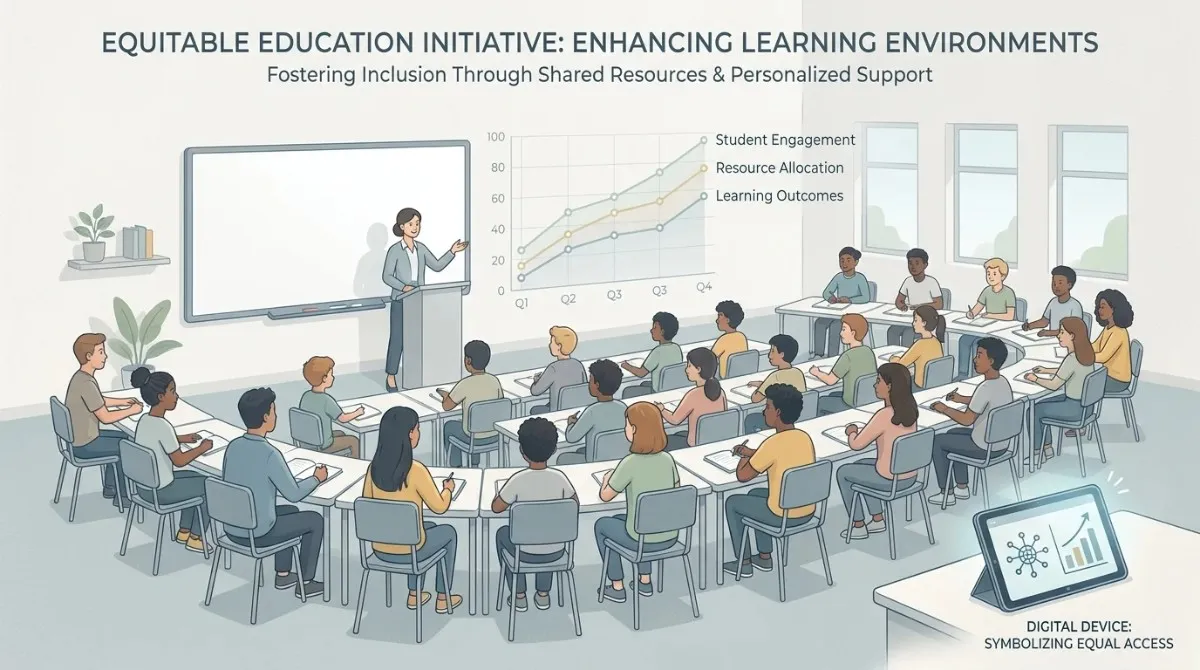
Quality education is not evenly distributed. Rural schools, under-resourced districts, and learners with disabilities have historically faced structural barriers. Thoughtfully deployed instructional technology services can begin to level that playing field, providing accessible content, remote learning options, and adaptive pathways that don’t depend on physical proximity or a star teacher in the room.
How AI Is Reshaping Every Layer of Instructional Technology Services
This is where the 2026 story gets genuinely remarkable and where most institutions are falling behind.
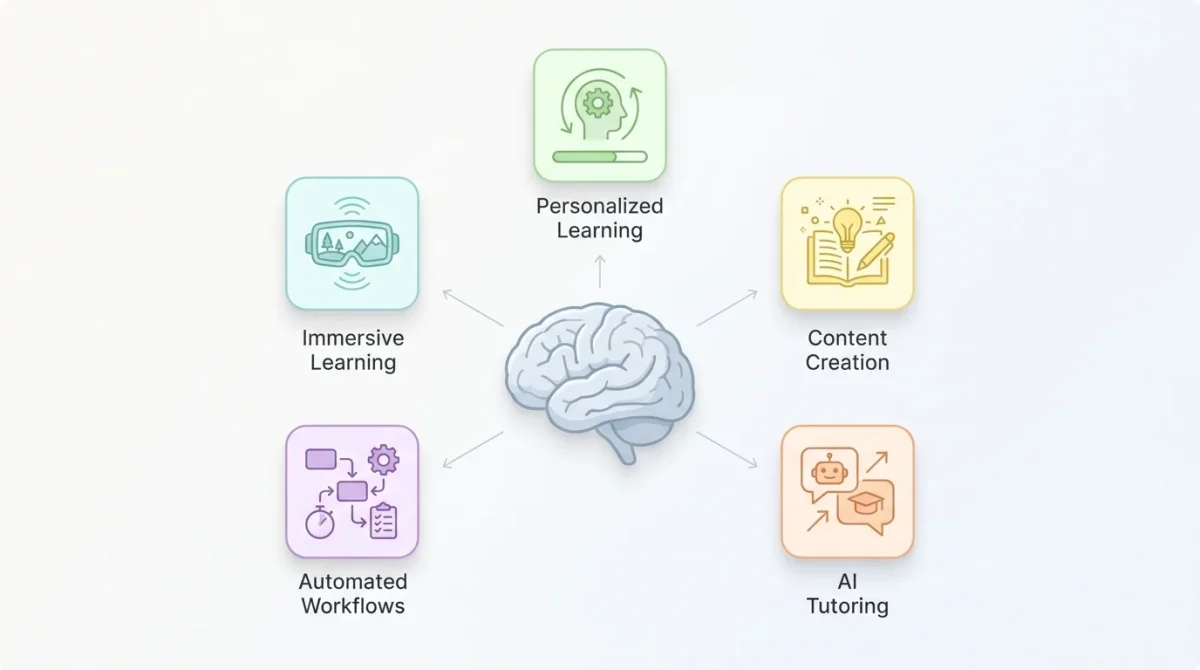
1. AI-Powered Personalized Learning Paths
Traditional education operates on a one-size-fits-all model: the curriculum moves at one pace, and students either keep up or fall behind. AI-driven learning platforms break that model entirely.
Platforms using machine learning analyze a learner’s performance, pace, error patterns, and engagement signals in real time. They then dynamically adjust the next content presented, its difficulty, and its format. This is sometimes called the “2 Sigma” effect, the idea that one-on-one tutoring can produce learning gains two standard deviations above average class instruction. AI is making that level of personalization accessible at scale for the first time.
Carnegie Learning’s MATHia platform, for example, provides individualized math instruction that responds to each student’s specific misconceptions, not just whether an answer is right or wrong, but why a student got it wrong and what to do about it.
2. Generative AI and Content Creation
One of the most dramatic shifts in instructional technology services is the change in course development timelines. Traditionally, building a quality course involved months of collaboration between subject matter experts, instructional designers, multimedia producers, and quality assurance reviewers.
Generative AI has dramatically compressed that cycle. Tools now exist that can analyze a topic, generate learning objectives aligned to Bloom’s Taxonomy, draft a full lecture script, produce a synthetic-voice creation with captions, and create assessment questions in hours rather than months. This is particularly valuable in fields such as technology, medicine, and business, where knowledge evolves faster than traditional content cycles can keep pace.
This does not eliminate the need for instructional designers. It amplifies what they can do. The human role shifts from content production to content curation, quality assurance, and pedagogical alignment.
3. AI Teaching Assistants and Tutoring
Academy’s Khanmigo, powered by GPT-4, became an early proof of concept: an AI that can tutor students, explain concepts in multiple ways, guide them through problems with Socratic questioning, and provide teachers with a summary of where each student is struggling.
In 2026, this pattern is spreading across K-12 districts, universities, and corporate training platforms. The key distinction the OECD’s Digital Education Outlook 2026 draws is between AI that replaces thinking and AI that extends it. The most effective instructional technology deployments use AI tutors to prompt reasoning and reflection, not to hand students answers.
4. Automated Administrative Workflows
Instructional technology services have always included an administrative dimension, managing rosters, generating reports, tracking completion of compliance training, and handling accessibility accommodation requests. AI is quietly automating large portions of this workload.
Teachers are using tools like Magic School AI to generate differentiated reading materials at different grade levels, create standards-aligned rubrics, and draft IEP goals from observational data. These tasks, which once consumed hours of planning time each week, can now be completed in minutes.
The practical impact is significant: 69% of teachers in a 2025 CDT report said AI tools improved their teaching methods, and 55% said it gave them more time for direct student interaction. For institutions facing staffing shortages, this reclaimed time is not a luxury; it is a necessity.
5. Immersive Learning Technologies
AI doesn’t operate in isolation within instructional technology services. It increasingly integrates with virtual reality (VR), augmented reality (AR), and mixed reality (MR) to create immersive learning experiences that would have been prohibitively expensive just a few years ago.
Medical students can now practice procedures in a simulated operating room. History students can walk through reconstructed ancient environments. Industrial trainees can practice equipment maintenance in a virtual plant before ever touching the real machinery. Platforms like Meta Quest for Education are making these environments more accessible to mainstream institutions.
The instructional technology specialist’s job is to ensure these immersive tools are pedagogically grounded, not just flashy experiences, but structured learning opportunities with clear objectives and assessment.
Core Components of a Strong Instructional Technology Services Department
Whether you’re building an ITS function from scratch or strengthening an existing one, these are the pillars that matter most.
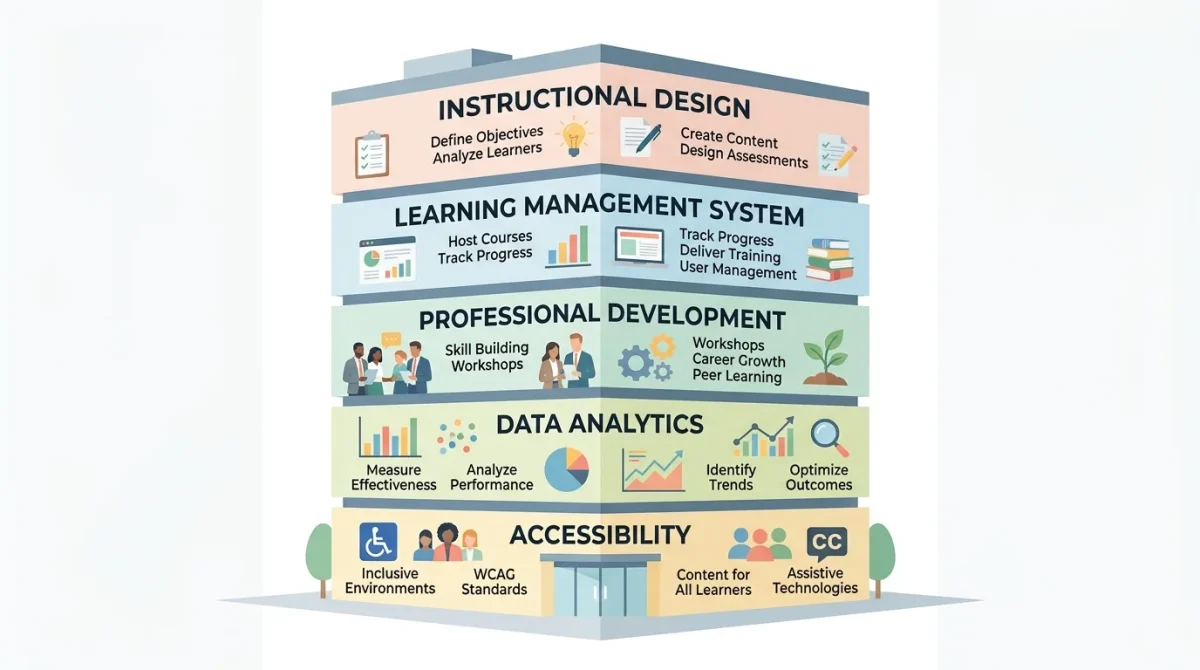
Instructional Design Capacity
At the heart of every effective ITS operation is strong instructional design. The ADDIE model, Analyze, Design, Develop, Implement, Evaluate, provides a research-backed framework for creating courses that actually teach what they’re intended to teach. Universal Design for Learning (UDL) ensures that content is accessible and effective for learners with diverse needs and backgrounds.
Multimedia content also plays a measurable role here: research consistently shows that learners retain significantly more information when content combines visual and verbal channels rather than relying solely on text.
A Robust Learning Management System
The LMS is the backbone of modern instructional delivery. The right LMS does more than host content; it captures learner data, enables communication between instructors and students, supports assessment at scale, and integrates with other institutional systems.
Choosing an LMS is a strategic decision. Factors like scalability, user experience, accessibility compliance, AI integration capabilities, and vendor support all matter. For K-12 environments, platforms like Google Classroom and Seesaw offer real-time progress monitoring that helps teachers intervene early. For higher education and corporate training, systems such as Canvas, Blackboard, and Cornerstone provide the depth required for complex learning ecosystems.
Faculty and Staff Professional Development
The most sophisticated instructional technology platform in the world delivers zero value if educators don’t know how to use it or don’t trust it. Sustained, practical professional development is not optional in any serious ITS strategy.
In 2026, this professional development itself is increasingly AI-supported: personalized learning paths for educators, on-demand microlearning modules, and AI coaching tools that observe teaching practice and suggest improvements.
Data Analytics and Learning Intelligence
Modern instructional technology services generate enormous amounts of data. The question is whether institutions use that data strategically. Learning analytics platforms can identify which students are at risk of falling behind, which course modules are causing high dropout rates, and which teaching approaches are producing the best outcomes.
This is the layer where instructional technology services directly connect to institutional outcomes, retention and completion rates, assessment performance, and learner satisfaction. Institutions that treat their learning data as a strategic asset gain insights that their competitors simply don’t have.
Accessibility and Compliance
In 2026, accessibility in instructional technology is no longer a best practice; it is a legal obligation. Institutions must meet WCAG 2.1 standards, ensure captions are present on all video content, provide alternative formats for materials, and design every learning experience with screen reader compatibility in mind. With accessibility compliance deadlines now in effect, institutions that have not built accessibility into their ITS infrastructure face both legal and reputational risks.
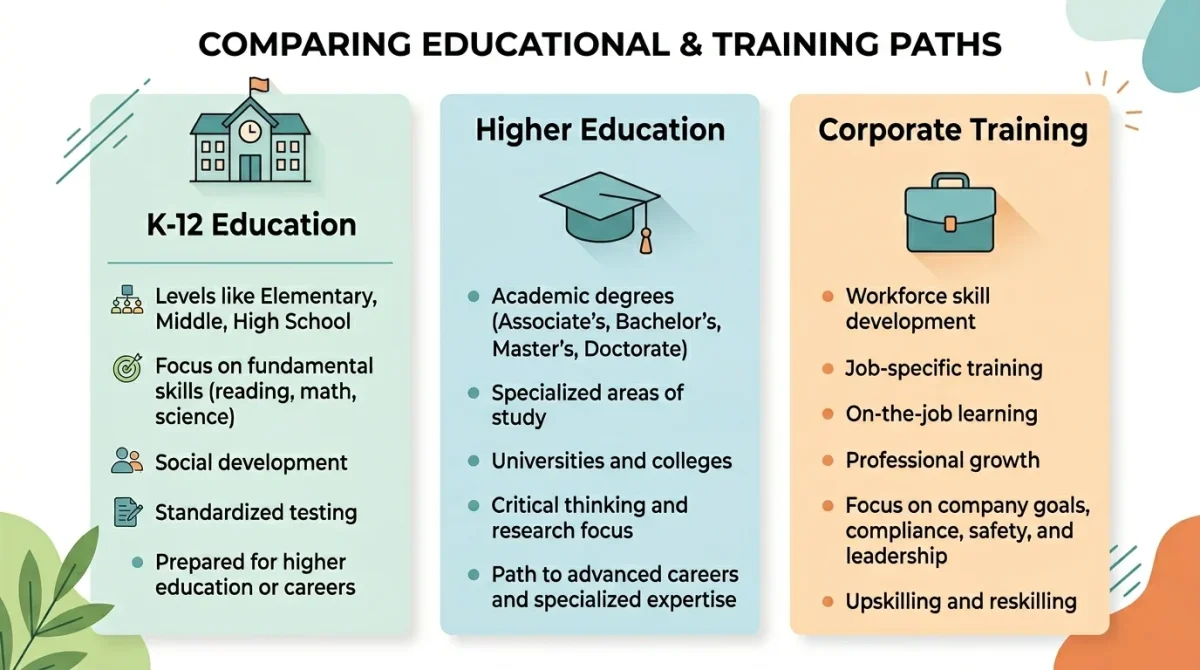
Instructional Technology Services Across Different Sectors
ITS looks different depending on the context. Understanding those differences helps clarify what good looks like in your specific environment.
K-12 Education
In K-12 settings, instructional technology services focus on supporting classroom teachers with tools that allow for differentiation, real-time progress monitoring, and engaging digital content. The approval process for any new AI tool for students typically involves multiple layers: technical compatibility review, curriculum alignment verification, budget approval, and data privacy compliance with laws such as FERPA and COPPA.
This multi-step process exists for good reason. Students are minors, their data is sensitive, and the stakes of getting AI wrong in K-12 environments are high. Responsible instructional technology services in K-12 prioritize the balance between innovation and safeguarding.
Higher Education
Universities face a different set of pressures: a potential enrollment cliff driven by demographic shifts, the growing demand for online and hybrid learning options, and the need to demonstrate a clear return on investment in education.
Instructional technology services in higher education are increasingly strategic. They sit at the intersection of IT infrastructure, academic affairs, and student success, integrating LMS data with advising systems, early-alert platforms, and degree-audit tools to create a complete picture of each student’s journey.
Corporate and Workforce Training
In the corporate world, instructional technology services go by different names, L&D (learning and development) or talent development, but the underlying functions remain the same. The pressure here is speed and measurable ROI. Knowledge half-lives in technology, medicine, and business have dropped below 18 months, meaning training content must be updated continuously.
AI-powered content creation is arguably most impactful here: organizations can compress course development from weeks to days, update modules in real time as processes change, and deliver personalized skills development at scale without proportionally scaling their L&D team.
The Risks and Challenges You Can’t Ignore
Honest instructional technology services planning requires confronting the downsides alongside the opportunities.
Over-Reliance and Learning Erosion
The OECD Digital Education Outlook 2026 raises a concern that deserves serious attention: when students become too dependent on AI visual assistance, metacognitive engagement tends to decline. Students may produce better-looking outputs while actually learning less. The risk is a paradox where technology that looks like it’s helping is quietly hollowing out deeper learning skills.
The implication for instructional technology design is clear: AI should be deployed to extend thinking, not replace it. Socratic AI tutoring that asks “what makes you think that?” produces better learning outcomes than AI that simply supplies the answer.
Data Privacy and Algorithmic Bias
Every AI system operating in an educational setting consumes learner data. The questions of who owns that data, how it is stored, how long it is retained, and who can access it are not abstract policy questions; they are practical risks with real consequences.
Algorithmic bias is equally concerning. If an AI system’s training data reflects historical inequities in education, it may systematically disadvantage already marginalized learners, recommending different pacing, content, and opportunities based on demographic patterns rather than individual potential.
Responsible instructional technology services build evaluation criteria for algorithmic bias into their procurement processes, not as an afterthought after deployment.
The Implementation Gap
Having access to AI tools is not the same as using them effectively. Many institutions are discovering that their biggest instructional technology challenge in 2026 is not technological but human. Teachers who feel threatened by AI, administrators who don’t understand what they’re buying, and institutions that pilot tools without a coherent integration strategy are not getting the returns they expect.
Sustained change management, genuine stakeholder engagement, and evidence-based decision-making are as important as the technology itself.
How to Build or Improve Your Instructional Technology Services Strategy
If you’re ready to move from reactive tool management to proactive instructional technology leadership, here is a practical roadmap.
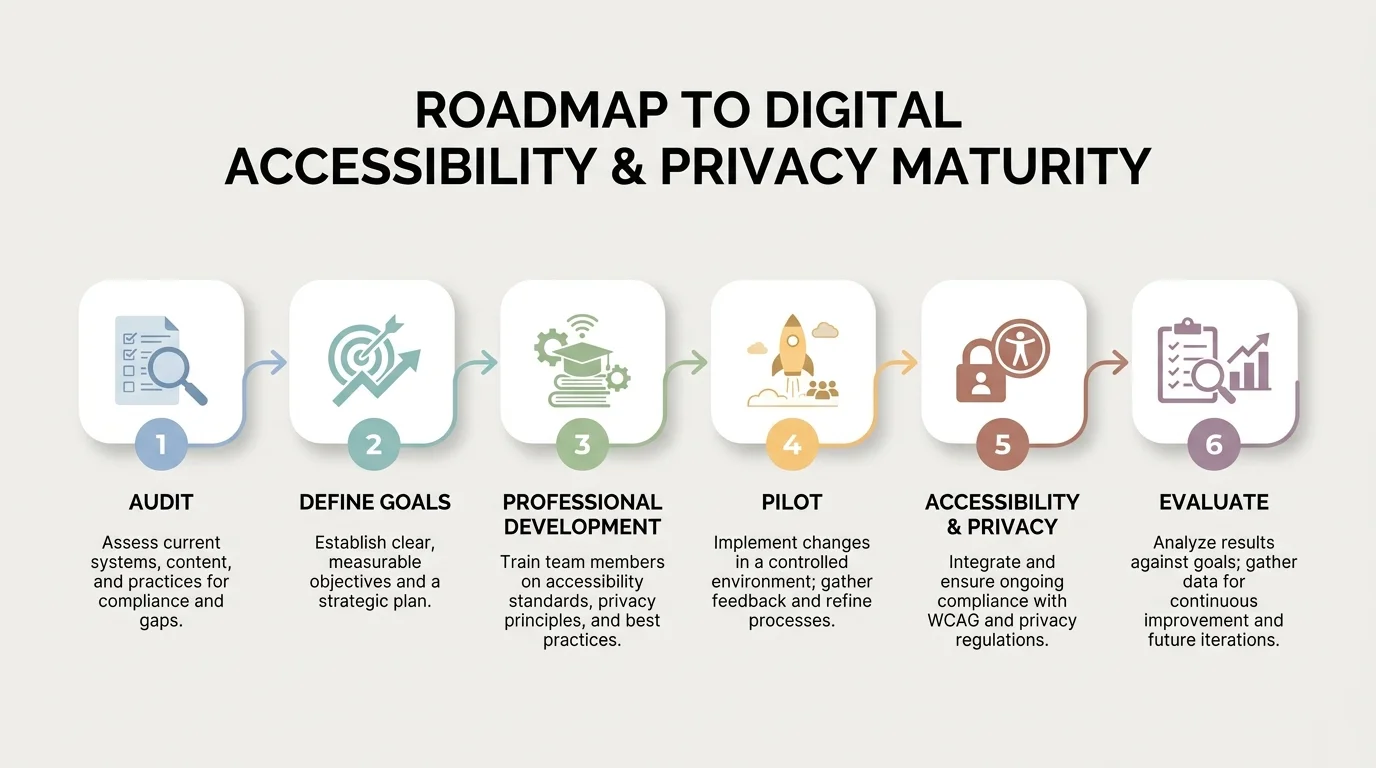
Step 1: Audit What You Have
Before adding anything new, understand what tools currently exist, who is using them, how effectively, and what gaps remain. Should this audit include both technology inventory and pedagogical assessment? Does the technology you have actually support the learning outcomes you care about?
Step 2: Define Your Learning Goals First
Technology should follow pedagogy, not the other way around. Start with clarity on what learners need to know, do, or be able to demonstrate. Then identify the instructional technology services that best support those outcomes.
Step 3: Invest in Professional Development
Allocate a meaningful percentage of your ITS budget to training educators and staff. The return on investment from professional development that unlocks the full use of existing tools often exceeds that of purchasing new ones.
Step 4: Pilot Before Scaling
Whether adopting a new AI tutoring platform or launching a new LMS module, pilot with a small cohort first. Gather real data on engagement, outcomes, and usability. Refine before rolling out broadly.
Step 5: Build Accessibility and Privacy In from the Start
Accessibility accommodations and data privacy safeguards are far less expensive to build in from day one than to retrofit afterward. Make them non-negotiable criteria in every procurement and development decision.
Step 6: Establish Ongoing Evaluation
Use learning analytics to continuously assess whether your instructional technology services are producing measurable improvements in learner outcomes. Set baseline metrics before deployment, then systematically track against them.
Key Takeaways
- Instructional technology services in 2026 encompass far more than software and hardware; they are a comprehensive ecosystem of tools, frameworks, design expertise, and human support that shapes how learning happens.
- AI has moved from the periphery to the center of ITS, reshaping content creation, personalized learning, administrative workflows, and student support.
- The global AI education market reached $7.57 billion in 2025 and is projected to exceed $112 billion by 2034. The institutions that are building AI competency now will have a substantial competitive advantage.
- The biggest risks are not technological but pedagogical: over-reliance on AI that erodes deep learning, algorithmic bias that disadvantages vulnerable learners, and implementation gaps that prevent tools from delivering their potential.
- An effective ITS strategy starts with learning goals, invests in human capability, and uses data to evaluate outcomes continuously.
Conclusion
Instructional technology services have never been more powerful, more accessible, or more consequential than they are in 2026. The combination of mature AI capabilities, proven instructional design frameworks, and a rapidly expanding evidence base on what works means institutions have real tools to meaningfully improve learning outcomes.
But technology is never the whole answer. The institutions and organizations that are winning right now are not the ones with the most tools; they are the ones with the clearest learning goals, the strongest professional development programs, and the most disciplined approach to evaluating what’s actually working.
Start with an honest audit of where your instructional technology services stand today. Identify one or two high-impact gaps, whether that’s adaptive learning, AI content creation, accessibility compliance, or analytics. Pilot thoughtfully, train your people genuinely, and measure what happens.
The AI revolution in education is not coming. For the institutions paying attention, it is already here and creating measurable advantage every single day.
Frequently Asked Questions (FAQs)
What is the difference between instructional technology and educational technology?
The two terms are often used interchangeably, but instructional technology is more specifically focused on the systematic design and delivery of instruction. In contrast, educational technology is a broader term encompassing any technology used in educational settings, including administrative and infrastructure tools.
What does an instructional technology specialist do?
An instructional technology specialist supports educators in selecting, implementing, and using technology effectively. Their work includes professional development, course design consultation, LMS management, accessibility compliance, and often media production support.
What is the ADDIE model in instructional technology?
ADDIE stands for Analyze, Design, Develop, Implement, and Evaluate. It is the most widely used instructional design framework, providing a structured, repeatable process for creating effective learning experiences from needs assessment through to outcome evaluation.
How is AI changing instructional technology services in 2026?
AI is transforming ITS across multiple dimensions: adaptive learning platforms personalize content delivery in real time, generative AI accelerates course production, AI tutors provide on-demand student support, and analytics tools give educators deeper insight into learner behavior and performance than was previously possible.
What does UDL mean in the context of instructional technology?
Universal Design for Learning (UDL) is a framework that guides the creation of learning experiences that are accessible and effective for all learners, regardless of disability, learning style, or background. In practice, UDL informs decisions about content format, assessment methods, and the flexibility built into instructional technology platforms.
Are there risks to using AI in instructional technology services?
Yes. Key risks include learner overreliance on AI, which may reduce metacognitive engagement; data privacy vulnerabilities; algorithmic bias that could disadvantage already marginalized learners; and insufficient educator training, which can prevent tools from being used effectively. Responsible ITS planning explicitly addresses these risks.
How much do instructional technology services cost?
Costs vary widely. Basic LMS platforms can start at a few hundred dollars annually, while enterprise adaptive learning platforms can run into the thousands or tens of thousands per year. Individual AI tools for educators range from free tiers to $29/month, while department-level platforms often cost between $5,000 and $25,000 annually. Total ITS investment depends heavily on institutional size, tool selection, and the scope of professional development included.