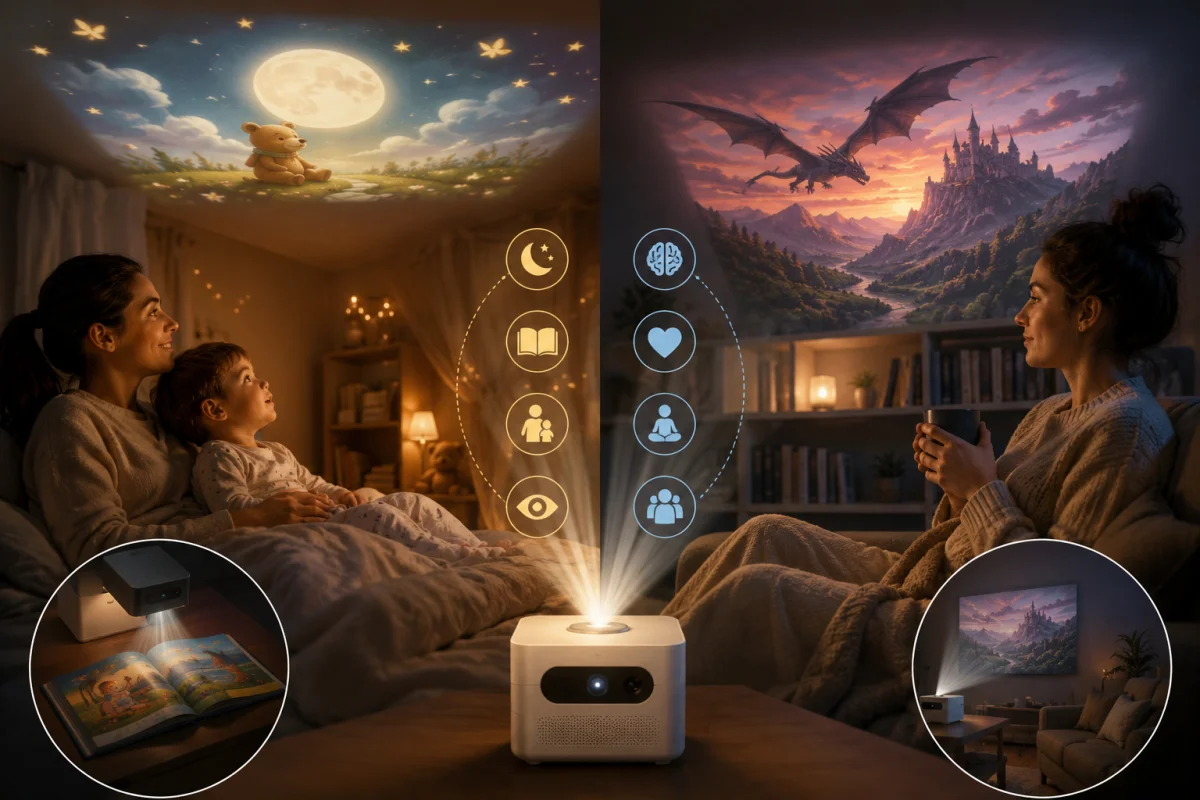
Ever wished story time felt a little more magical without cluttering your room with props or screens? A book projector does exactly that, casting scenes, characters, and pages onto your ceiling, wall, or a simple screen so reading feels like an experience rather than a routine task. These devices have grown far beyond a single novelty design. Parents use them to make bedtime stories more immersive, adults use them to unwind with cozy reading nights, and fans of fantasy worlds use them to bring favorite scenes to life. With so many styles and features now available, picking the right one takes more thought than it used to.
This guide breaks down what book projectors actually do, the main types on the market, and how each one fits different reading habits and spaces. You’ll find comparisons between projectors built for kids versus those designed for adults, along with picks suited for fantasy themes or straightforward text reading. Instead of guessing based on marketing claims, you’ll get a clear breakdown of image quality, portability, and price so you can match a projector to how you actually read. By the end, you’ll know exactly which type suits your routine best.
What Is a Book Projector?
A book projector is a compact device that displays images, text, or animated scenes from a book onto a nearby surface, most often a ceiling, wall, or pull-down screen. Instead of holding a physical book under a lamp, the projector casts the content in a larger, softer format that’s easier to view from a bed or couch. Some models work with physical picture books placed on a small platform, while others use preloaded digital story libraries controlled through a remote or app. The result is the same reading experience, just presented in a way that feels more immersive and hands-free, which is part of why they’ve become popular for both nightly routines and casual downtime reading.
How Book Projectors Work
Most book projectors use a small internal light source, typically an LED, paired with a lens system that focuses and enlarges the image onto a flat surface. Physical-book models scan the page placed underneath them and project it in real time, often with a built-in page-turning sensor. Digital models skip the physical book entirely, storing story files internally or on a memory card and projecting slides or animated scenes in sequence. Some higher-end versions add ambient sound, gentle motion effects, or color-changing lighting to match the mood of a scene. Setup is usually plug-and-play, with brightness and focus adjusted manually or through companion software.
Book Projector vs. Traditional Projector
A traditional projector is built for general-purpose use like movies, presentations, or gaming, which means it prioritizes high resolution, wide compatibility, and strong brightness output for varied environments. A book projector is narrower in scope, designed specifically around story content, smaller projection distances, and simpler controls that don’t require technical setup. Traditional projectors also tend to cost more and demand more space, while book projectors are compact enough for a nightstand or shelf. If your goal is dedicated reading or storytelling rather than watching films or working with slideshows, a book projector offers a more focused, less complicated option.
Benefits of Using a Book Projector
Book projectors offer more than a novelty upgrade to reading time. They reduce eye strain by casting soft, ambient light instead of requiring a lamp pointed directly at a page, which makes them useful in low-light settings like bedrooms. They also add a layer of engagement that traditional books can’t match, turning static pages into a small visual event. For households juggling screen-time concerns, a book projector offers a middle ground: it keeps the story-driven, imaginative side of reading intact without handing a child a tablet or phone. The shared, room-filling nature of the projection also makes it easier for a parent and child, or a couple, to enjoy the same story together at the same time.
For Kids and Bedtime Stories
For kids, a book projector turns the last stretch of the day into something calming rather than a battle over screens or lights-out. Projected stories on the ceiling or wall give children something soothing to focus on as they wind down, often paired with soft narration or gentle sound effects that ease the transition to sleep. Many parents find it reduces resistance to bedtime altogether, since the projector itself becomes part of the anticipated routine. It also supports early literacy in a low-pressure way, letting kids follow along with pictures and simple narration without needing to actively hold or read the book themselves.
For Adults and Book Lovers
Adults benefit from book projectors differently, often using them to create a more relaxed, screen-free evening routine. Projecting a story or scene onto a wall can replace scrolling on a phone before bed, offering a calmer way to unwind. Fans of specific genres, especially fantasy, also use themed book projectors to add atmosphere to reading nights, turning a favorite scene into a backdrop for the room. For book lovers who enjoy the ritual of reading but want something a bit more immersive than a printed page, these devices offer a small but meaningful shift in how a familiar habit feels.
Types of Book Projectors
Book projectors aren’t one-size-fits-all, and the market has split into fairly distinct categories based on who’s using them and what kind of experience they’re after. Some are built specifically around a child’s attention span and sensory needs, while others lean into more sophisticated visuals for adult audiences. There are also projectors designed around a specific aesthetic, like fantasy worlds, and ones that focus purely on function, projecting readable text rather than illustrated scenes. Understanding these categories makes it easier to skip products that look appealing in marketing photos but don’t actually match how you plan to use them day-to-day.
Children’s Book Projectors
These are typically compact, brightly colored devices built with simplicity in mind, since they’re meant to be used by parents in dim rooms during a bedtime routine. Most come preloaded with a small library of classic or original stories, often paired with narration, sound effects, or gentle background music. Controls are usually limited to a few buttons so they’re easy to operate half-asleep. Durability and safety are also priorities here, with rounded edges, low heat output, and automatic shut-off timers being common features. Some models also allow a physical picture book to be placed underneath for a more traditional reading feel.
Book Projectors for Adults
Projectors made for adults tend to prioritize sleeker design and more refined visuals over playful features, since they’re often placed in a bedroom or living space rather than a nursery. Many focus on ambiance, projecting soft light patterns, scene art, or minimalist visuals meant to complement reading rather than narrate it outright. Some double as mood lighting or white-noise machines, appealing to people who want a calming pre-sleep routine rather than an interactive story experience. Build quality and quieter operation are usually higher priorities in this category, since these devices are often used nightly over long periods.
Fantasy and Story-Scene Projectors
This category is built around atmosphere rather than function alone, projecting detailed scenes from fantasy worlds, such as castles, forests, or magical skies, onto a wall or ceiling. They’re popular among readers who want their physical space to reflect the mood of a book they’re currently enjoying, effectively turning a room into a backdrop. Some models include rotating or animated projections that shift slowly over time, mimicking moving clouds or flickering light. These projectors are less about reading text and more about enhancing the emotional tone of a reading session, making them a favorite for fantasy and fiction enthusiasts.
Text-Reading Projectors
Unlike story- or scene-based models, text-reading projectors are built purely for function, projecting readable pages of a physical book onto a nearby surface so users can read without holding the book directly. These are especially useful for people with limited mobility, eye strain, or those who simply prefer a hands-free reading setup. Adjustable zoom, brightness, and focus are common features, since legibility matters more here than visual flair. This type tends to appeal less to hobbyists chasing ambiance and more to practical users looking for a genuinely functional reading aid.
Best Use Cases
Beyond the type of projector someone chooses, the way it fits into daily life often says more about its value than the specs on the box. Book projectors tend to cluster around a few clear use cases, each with slightly different priorities. A parent managing a nightly routine cares about different features than a group of friends hosting a themed reading night, and someone using a projector for relaxation has different needs than either of those. Looking at these scenarios helps clarify which features actually matter versus which ones are just nice extras that don’t affect the day-to-day experience.
Bedtime Routines
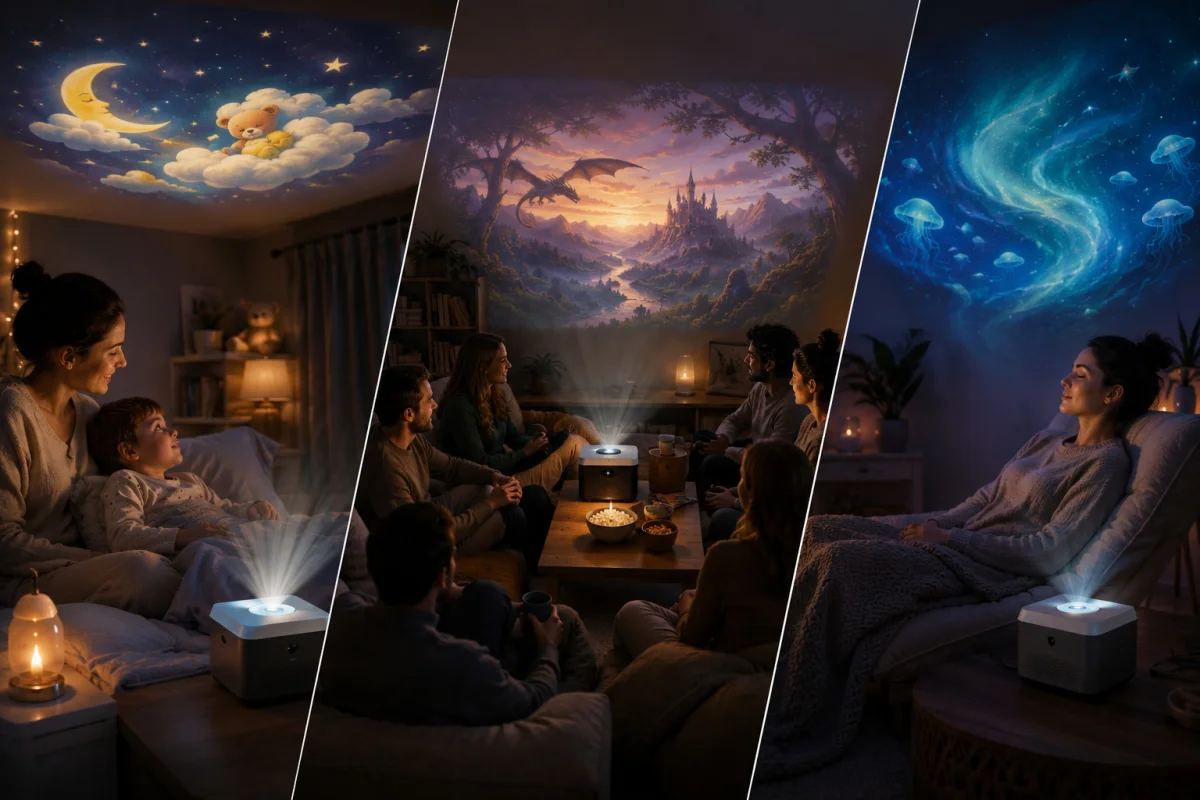
For families, the bedtime routine is probably the single most common use case for book projectors, and it shapes what features actually matter. Parents tend to prioritize ease of use, since these devices get operated in low light and often by a tired adult trying not to fully wake a child. Preloaded story libraries, auto-shutoff timers, and simple one-button controls make a noticeable difference here. Volume and brightness levels also matter more than resolution or visual detail, since the goal is a calming transition to sleep rather than an eye-catching visual show. Consistency night after night tends to matter more than novelty.
Book Clubs and Reading Nights
For adults, book projectors show up less as a nightly tool and more as an occasional centerpiece for group reading sessions or themed gatherings. A book club discussing a fantasy series, for example, might use a scene projector to set the mood before or during a discussion, turning a living room into something closer to the world of the book. In these settings, visual quality and thematic accuracy matter more than simplicity, since the projector is doing more of an atmospheric job than a functional one. These use cases tend to favor higher-end models with better image clarity and more scene variety.
Sensory and Relaxation Use
Outside of storytelling entirely, some people use book projectors purely for their calming visual effect, treating them more like ambient lighting than a reading tool. Soft, slow-moving projections can help with winding down, reducing screen exposure before bed, or simply creating a more relaxing atmosphere in a bedroom or reading nook. This use case overlaps with white-noise machines and mood lighting, and buyers here often prioritize dimmable brightness, quiet operation, and gentle color options over story content or narration features. It’s a smaller niche, but it explains why some book projectors lean more toward ambiance than actual reading functionality.
How to Choose the Right Book Projector
With so many types and use cases in play, picking the right book projector really comes down to matching its features to how you’ll actually use it rather than chasing the most advanced model available. Someone buying for a toddler’s bedtime routine has almost the opposite priority list from someone buying a fantasy-themed projector for a reading nook. Instead of getting pulled in by flashy marketing images, it helps to work through a few practical factors: image quality, portability, and price, since these tend to separate a projector that gets used nightly from one that ends up in a drawer after a few weeks.
Image Quality and Resolution
Image quality matters more for some use cases than others, so it’s worth being honest about what you actually need before paying extra for higher specs. A children’s projector used for simple story silhouettes doesn’t need the same resolution as a fantasy scene projector meant to fill an entire wall with detail. Look for adjustable focus and brightness controls, since these affect clarity far more than raw resolution numbers do. If the projector will be used in a fully dark room, lower brightness levels are often enough, but partially lit spaces usually call for stronger output to keep the image visible.
Portability and Setup
How and where you plan to use the projector should guide how much you prioritize portability. A projector that stays permanently on a nightstand doesn’t need to be lightweight or battery-powered, but one used for reading nights in different rooms, or packed for travel, benefits from a compact design and simple setup. Battery life matters here too, since a projector that needs to stay plugged in limits flexibility. Setup complexity is worth checking as well, since some models require pairing with an app or syncing story files, while others work immediately out of the box with no extra steps.
Price Range Comparison
Book projectors span a wide price range, and the difference usually comes down to build quality, feature set, and image performance rather than brand alone. Budget models typically offer basic story projection with limited customization, which works fine for casual or occasional use. Mid-range projectors often add better resolution, more preloaded content, and sturdier construction, making them a solid fit for nightly routines. Higher-end models lean into detailed scene projection, ambient lighting effects, and premium materials, which suit buyers treating the projector as a long-term addition to their space rather than a short-term novelty.
Book Projector Comparison Table
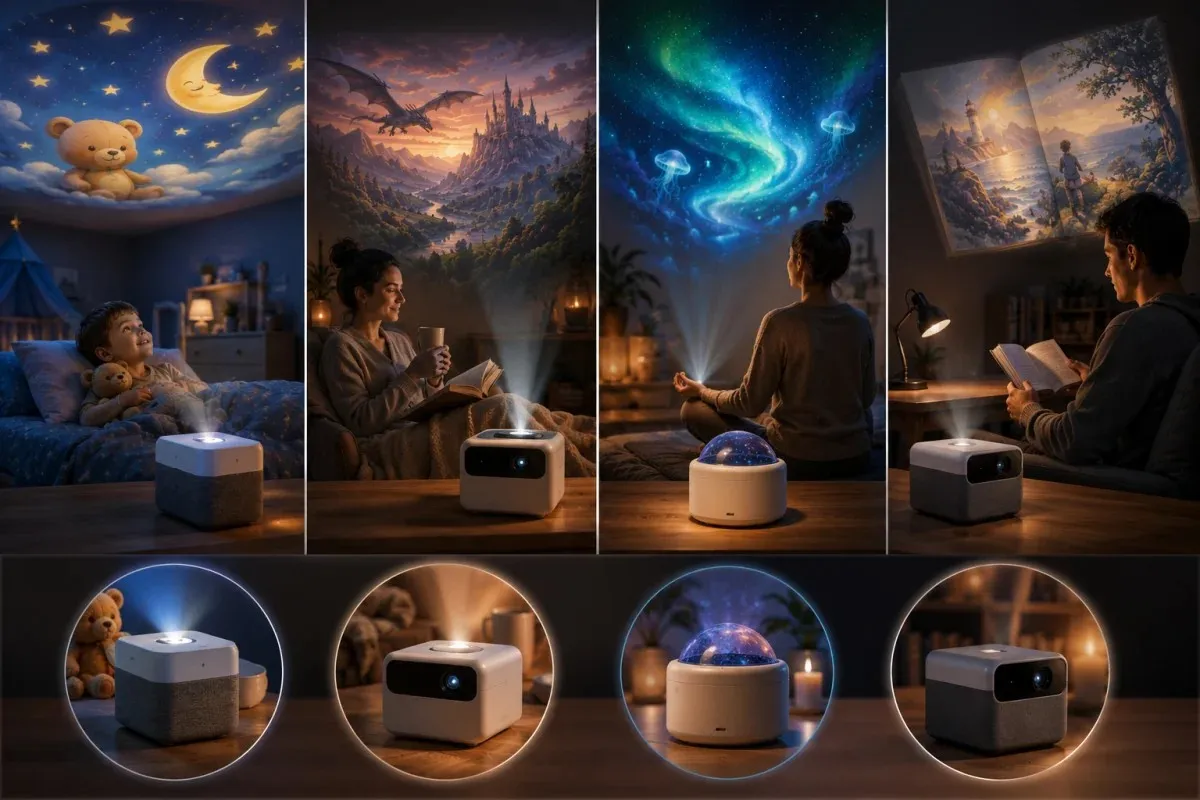
Since book projectors vary so widely by purpose, a side-by-side comparison makes it easier to see how the categories differ before narrowing down a purchase. The table below breaks down each type by its core focus, typical features, and who it tends to suit best, giving a quick reference point rather than requiring a full read-through of each section again.
| Type | Core Focus | Common Features | Best For |
| Children’s Book Projector | Simplicity and bedtime ease | Preloaded stories, narration, auto shut-off, simple controls | Parents managing nightly routines |
| Book Projector for Adults | Ambiance and calm design | Soft lighting, minimalist visuals, quiet operation | Adults winding down before sleep |
| Fantasy/Story-Scene Projector | Atmosphere and immersion | Detailed scene art, animated projections, mood lighting | Fantasy readers, themed reading nights |
| Text-Reading Projector | Functional page projection | Adjustable zoom/focus, hands-free reading | Users needing a practical reading aid |
Top Picks by Category
Rather than recommending a single “best” projector overall, it makes more sense to think in terms of the best option per category, since the right pick depends entirely on the use case. For bedtime routines, the strongest choices are ones with the simplest controls and a solid built-in story library, since ease of use outweighs visual complexity late at night. For fantasy or theme-driven reading nights, models with richer scene detail and animated effects tend to deliver more value, even at a higher price point. For anyone prioritizing function over atmosphere, a straightforward text-reading projector with strong zoom and focus adjustment will outperform flashier options that weren’t designed with legibility in mind.
Frequently Asked Questions
Is a book projector worth it?
For most people, a book projector is worth it if it fits an existing routine rather than being bought purely on novelty. Families who already have a consistent bedtime story habit tend to get the most long-term use out of one, since it makes an existing routine smoother rather than adding an entirely new step. Adults using it for relaxation or atmosphere get value from it in a similar way, as a small upgrade to something they were already doing. Where it tends to fall short is for buyers hoping it will replace reading altogether, since it works best as an enhancement rather than a substitute for an actual book.
Can adults use children’s book projectors?
Technically yes, but it’s usually not the best fit. Children’s models are built around simplicity, bright colors, and preloaded story content aimed at younger audiences, which means the visuals and narration style often feel mismatched for adult use. The brightness levels and story libraries are also tailored for a child’s attention span rather than adult reading habits or aesthetic preferences. Adults looking for a similar experience are generally better served by projectors specifically designed for adult use, which tend to offer more subdued visuals, quieter operation, and content that isn’t centered on children’s stories.
Where can I buy a book projector?
Book projectors are widely available through general retailers, both online and in physical stores, as well as specialty shops that focus on kids’ products or home decor. Availability and selection vary quite a bit depending on the type you’re after, with children’s models being the most common and easiest to find. In contrast, fantasy-themed or higher-end adult projectors are often found through more niche or specialty sellers. Comparing a few listings before buying is worth the extra few minutes, since price, features, and build quality can differ significantly between models that look similar at first glance.