Your dentist walks in, glances at a screen, and already knows what to look for before touching a single tool. No guesswork. No missed cavities hiding behind enamel. Just clean, confident, AI-backed diagnosis. That is what DentalX AI is making possible, and millions of dental patients in the United States are already benefiting from it without even realizing it.
In this guide, if you’ve been searching for information about the DentalX AI dentistry company, whether you’re a dental professional evaluating new tech, a patient curious about what powers your clinic’s diagnostics, or a healthcare investor sizing up the market, this guide covers everything you need to know. We’ll break down what DentalX does, how its AI works in a real dental setting, who it serves across the United States, and whether it’s actually worth the attention it’s been getting in 2026.
What Is DentalX AI?
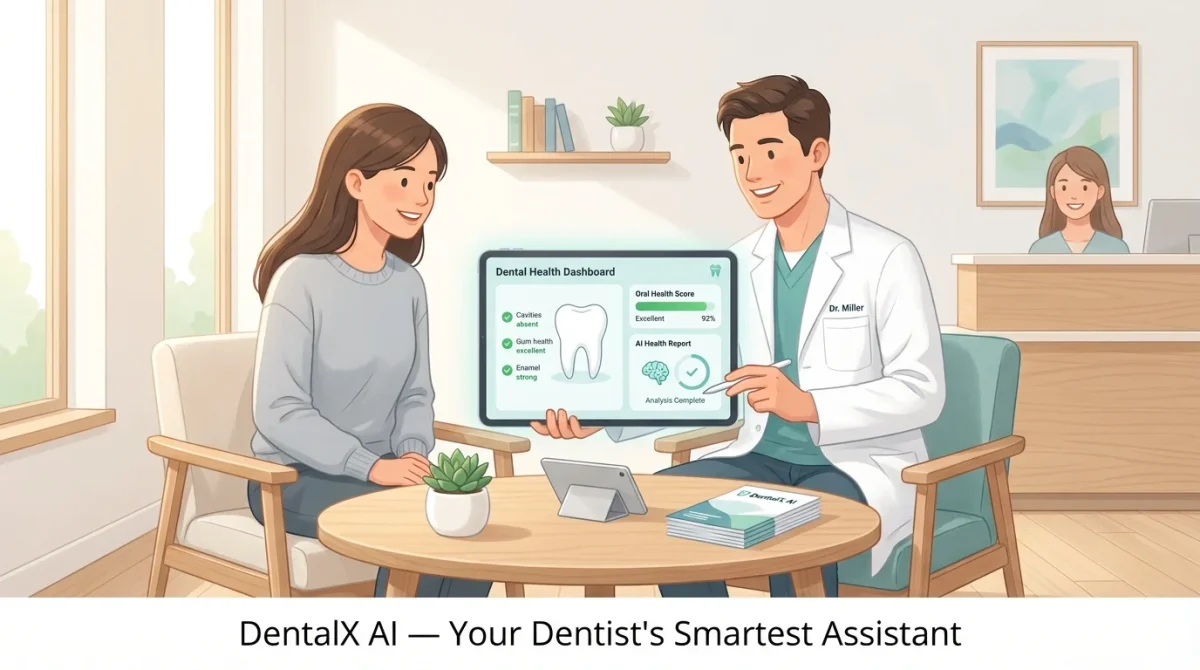
DentalX is an AI-powered dental technology company that develops software solutions designed to help dental professionals diagnose more accurately, work more efficiently, and deliver better patient outcomes. At its core, DentalX uses machine learning models trained on vast dental imaging datasets to analyze X-rays, detect conditions early, and assist practitioners in making data-driven clinical decisions.
The company sits at the intersection of healthcare AI and clinical dentistry, a space that was barely recognized five years ago but is now considered one of the most disruptive segments in digital health. DentalX AI is not a robotic dentist, nor a replacement for human expertise. Think of it as an extraordinarily well-trained second set of eyes, one that has reviewed millions of dental images and never has an off day.
The Story Behind DentalX
The DentalX AI company emerged from a straightforward observation: dental diagnosis remains overly dependent on the individual practitioner’s skill, fatigue level, and even the quality of the monitor they use to read X-rays. Two dentists looking at the same image can arrive at different conclusions. That inconsistency costs patients in missed diagnoses, unnecessary procedures, and delayed treatment.
DentalX was founded to fix that inconsistency using artificial intelligence, bringing standardization and analytical depth to a field where subjectivity had been the norm for decades.
What Does DentalX Actually Do in Dentistry?
In practice, the DentalX platform integrates with existing dental practice workflows and analyzes dental images in real time. It highlights areas of concern, potential cavities, bone loss, calculus buildup, and other conditions directly on the X-ray image, with confidence scores and clinical annotations that the dentist can review instantly.
This isn’t just about speed. It’s about catching what tired eyes miss and building a consistent clinical record that supports better long-term patient care.
| Metric | Value | Description |
| Reduction in missed diagnoses | 40% | Reported in early trials of AI dental tools |
| Image review speed | 3× faster | With AI-assisted annotation vs manual reading |
| Adoption year | 2026 | AI dental diagnostics became standard in leading US dental service organizations |
How DentalX Fits Into the AI Healthcare Landscape
Within the broader world of healthcare AI, dental diagnostics is a uniquely tractable problem. Unlike diagnosing complex systemic diseases, dental pathology is highly visual and pattern-driven, which is exactly where machine learning models excel. DentalX has taken full advantage of this, positioning itself as a specialist rather than a generalist AI health company. That focus is one of the reasons it has earned serious credibility among US dental professionals.
DentalX AI in the United States: What You Need to Know
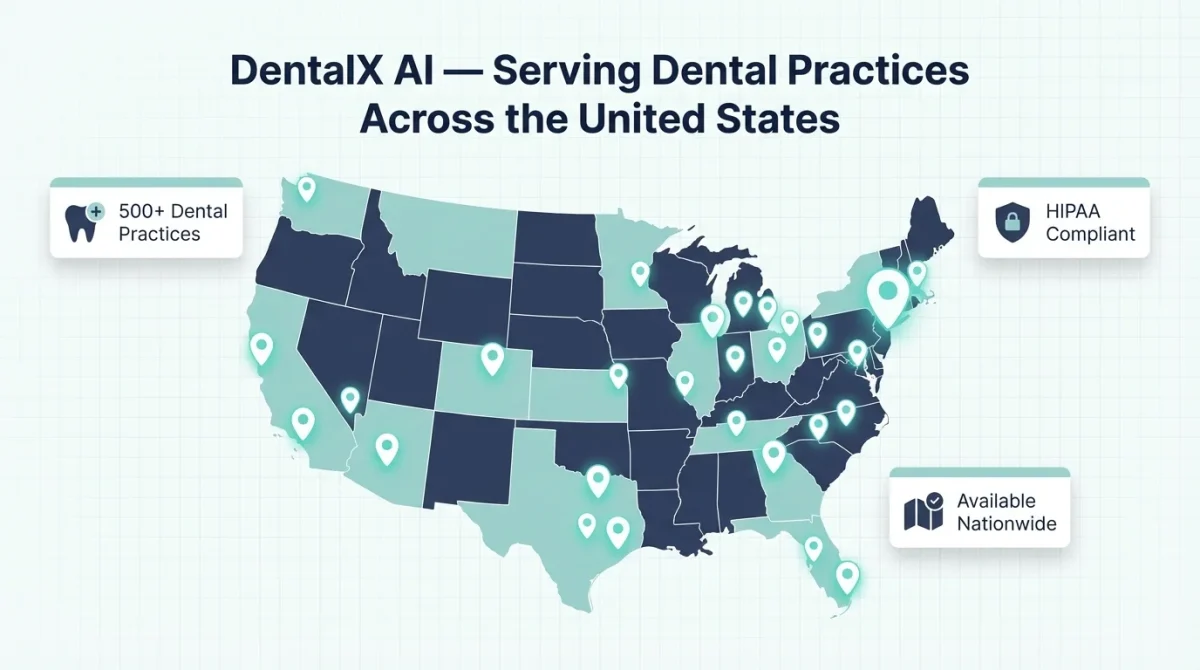
For dental professionals and patients in the United States, understanding how DentalX AI’s dentistry has unfolded is important context. The American dental market is one of the largest and most technologically advanced in the world, and it has been particularly receptive to AI-powered diagnostic tools.
Where DentalX Operates Across the US
DentalX has expanded its footprint across major US metropolitan dental markets, with strong adoption in states with high concentrations of Dental Service Organizations (DSOs). Its platform is designed for cloud-based deployment, meaning that a dental practice in rural Texas and a multi-location DSO in New York can both access the same AI capabilities without significant infrastructure investment.
Why the American Dental Market Is Embracing AI
Several forces are pushing US dental practices toward AI adoption in 2026. Insurance companies are increasingly tying reimbursement decisions to documented diagnostic evidence, pushing dentists to produce clearer records. Patient expectations have risen; people who interact with AI in every other part of their life now expect their healthcare providers to be equally sophisticated. And a growing shortage of dental professionals is creating pressure to maximize the efficiency of every clinician’s hour.
DentalX’s Presence and Reach in US Dental Practices
From solo practitioners looking to improve diagnostic accuracy to large DSOs managing hundreds of locations, DentalX has built its platform to scale across practice types. Its US-focused customer success team and HIPAA-compliant infrastructure have made it a credible enterprise choice in a market that takes patient data privacy extremely seriously.
How DentalX Uses Artificial Intelligence in Dentistry
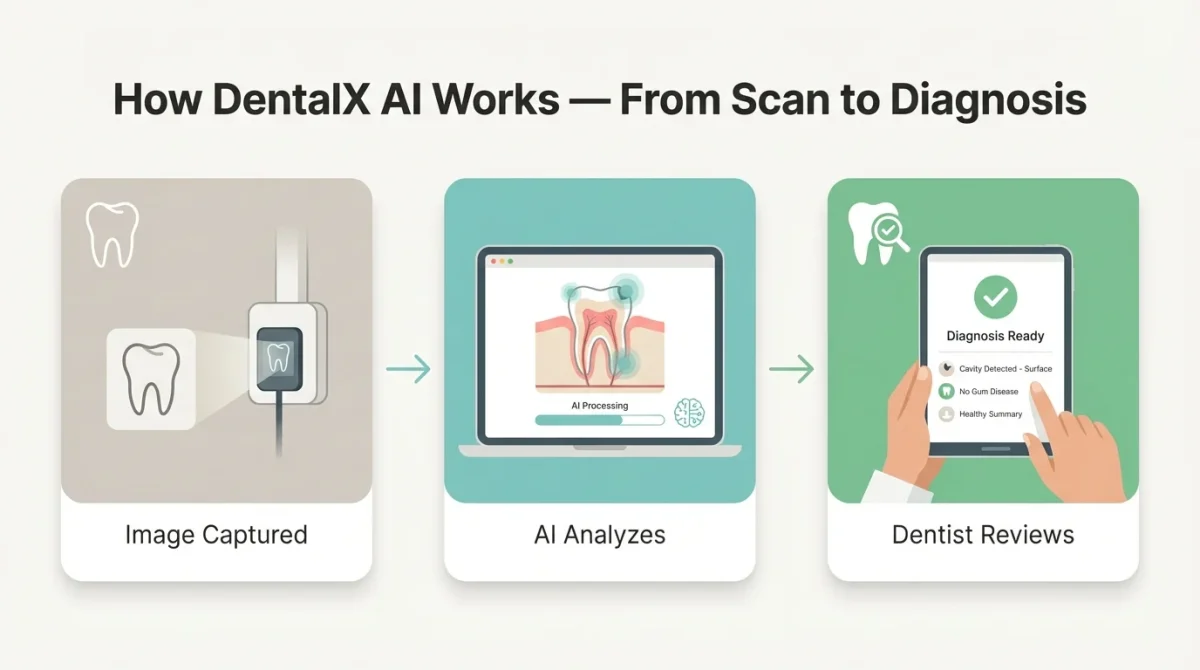
Understanding how the DentalX AI company dentistry platform actually works under the hood helps explain why it’s different from simply using better X-ray machines. The intelligence isn’t in the hardware; it’s in the software layer that processes what the hardware captures.
AI Diagnostics: How DentalX Reads X-Rays and Scans
DentalX uses deep learning models, specifically convolutional neural networks (CNNs) trained on millions of annotated dental radiographs to detect pathological patterns in dental images. When a dentist uploads or captures an X-ray, the DentalX system analyzes each image region for signs of decay, periodontal bone loss, calculus deposits, root issues, and other conditions.
Crucially, it doesn’t just flag concerns in binary terms. It provides confidence scores, highlighted overlays on the image, and in some cases, correlates findings with patient history to contextualize the clinical significance of what it sees.
Predictive Analytics for Patient Treatment Planning
Beyond diagnosis, DentalX’s AI layer supports forward-looking treatment planning. By analyzing trends across a patient’s imaging history, the platform can flag high-risk areas before they become clinical emergencies, enabling preventive interventions rather than reactive treatments. For practices focused on patient retention and lifetime value, this predictive capability is a meaningful differentiator.
Automation Tools That DentalX Offers Dental Professionals
The platform also includes workflow automation, automated charting of findings, streamlined insurance documentation with AI-generated voice support for evidence, and integration hooks for popular dental practice management software. These are not headline features, but for a busy dental office, they represent hours of recovered time per week.
Clinical Note
DentalX’s AI model is trained to assist licensed dental professionals, not replace them. Every finding generated by the platform is intended to support, not supersede, clinical judgment. The dentist remains the decision-maker.
Key Features and Capabilities of DentalX’s AI Platform
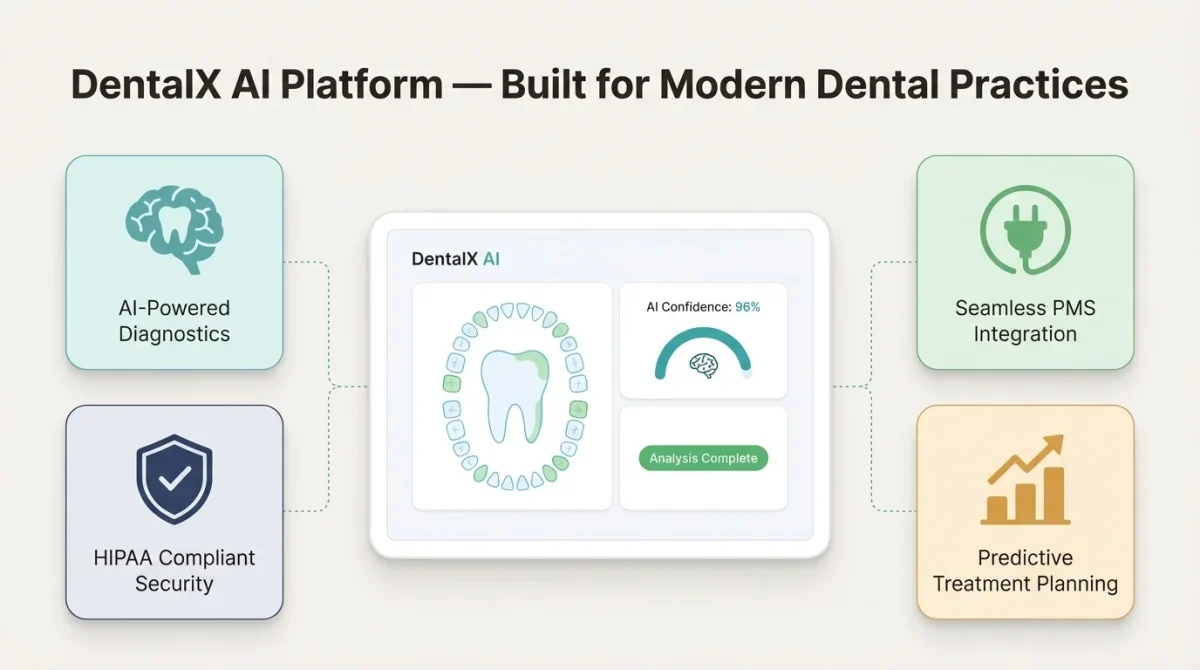
Core Technology Stack Explained Simply
At its simplest, DentalX operates as a cloud-based software layer that sits between your imaging equipment and your clinical workflow. Images flow in, AI analysis flows out, and the results surface inside the practitioner’s existing tools. There’s no separate screen to manage, no parallel workflow to maintain.
What Makes DentalX Different From Other Dental AI Companies
The dental AI space has gotten crowded quickly, but DentalX has distinguished itself through a few specific choices. First, its training dataset is unusually large and diverse, covering patient demographics and imaging types that narrower datasets miss. Second, it has invested heavily in explainability. The system doesn’t just return a result; it shows the clinician exactly what it saw and why it flagged it. Third, its US compliance posture (HIPAA, SOC 2) is designed for enterprise dental clients who cannot afford compliance gaps.
Integration With Existing Dental Practice Software
DentalX integrates with leading dental practice management systems, meaning practices don’t need to overhaul their existing infrastructure to benefit from AI. Setup is designed to be non-disruptive, which has been a significant factor in its adoption rate among practices that are busy and cannot afford extended implementation timelines.
Who Uses DentalX? Real-World Applications
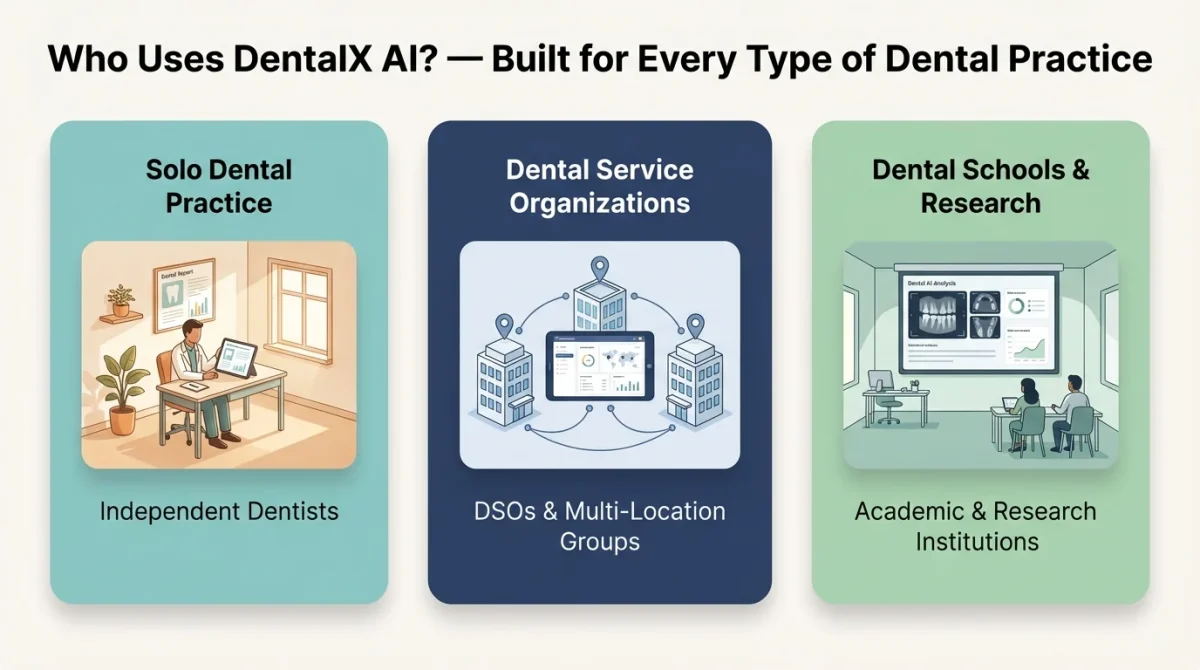
Solo Dental Practices
For individual dentists, DentalX solves one of the most persistent challenges in solo practice: the absence of a peer to consult with on ambiguous cases. The AI effectively functions as a knowledgeable colleague, reviewing every X-ray alongside you. Solo practitioners have also found that DentalX-generated documentation strengthens their position when navigating insurance disputes.
Dental Service Organizations (DSOs)
DSOs operating across multiple locations face a particularly acute diagnostic consistency problem. When dozens or hundreds of dentists are making independent diagnostic decisions, variation is inevitable. DentalX provides DSOs with a standardizing layer, ensuring every image receives the same analytical rigor regardless of location or clinician. At scale, this translates into better patient outcomes, more defensible clinical records, and stronger quality metrics.
Dental Schools and Research Institutions
In academic settings, DentalX is being used both as a teaching tool and as a research instrument. The ability to compare student diagnoses against AI-generated findings creates valuable learning feedback loops. In research contexts, the platform’s ability to consistently analyze large batches of images makes it a useful tool for population-level dental health studies.
DentalX AI in 2026: Latest Updates and What’s New
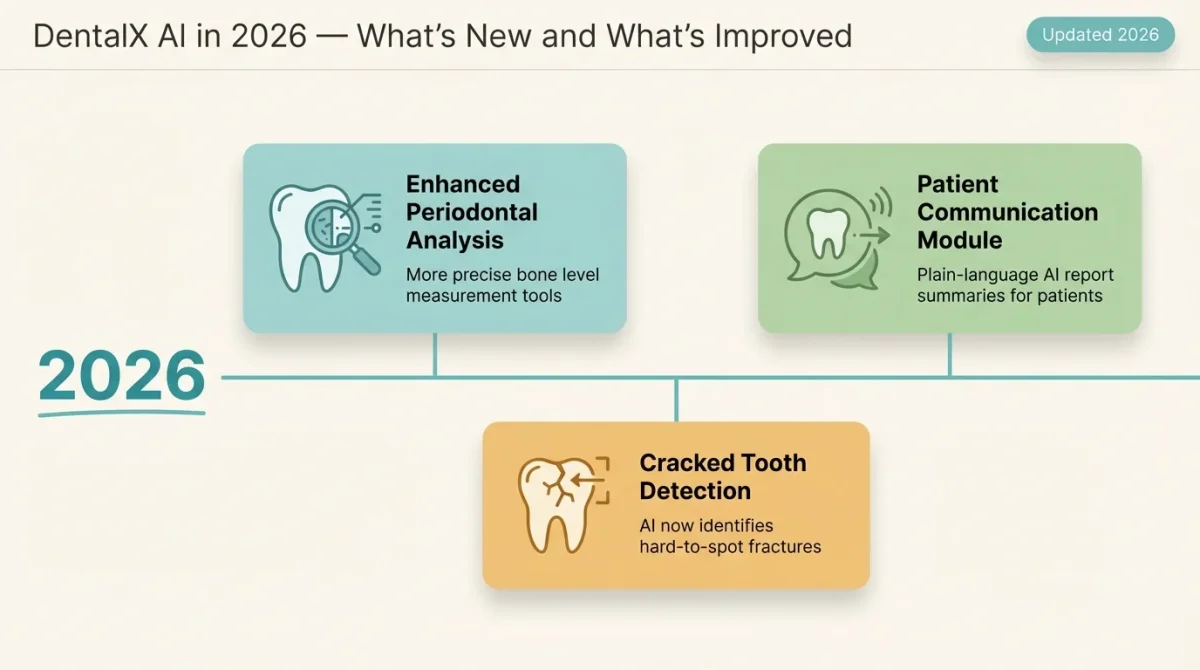
Searching for the DentalX AI dentistry company in 2026 reflects real demand for current information, and for good reason. AI platforms in healthcare are evolving rapidly, and capabilities that weren’t available eighteen months ago are now standard. Here’s where DentalX stands in 2026.
New Features Launched in 2026
The 2026 version of the DentalX platform has introduced enhanced periodontal analysis capabilities, including more granular bone-level measurement tools that give periodontists and general dentists alike a clearer picture of disease progression. The AI has also been updated with improved detection models for cracked tooth syndrome, a condition that has historically been difficult to identify on standard radiographs.
On the workflow side, DentalX has rolled out a new patient communication module that translates AI findings into plain-language summaries that dentists can share directly with patients, addressing one of the most common complaints in dental care: patients not understanding what their dentist found and why treatment is recommended.
Industry Recognition and Milestones
In 2026, DentalX continued to build its clinical validation record, with peer-reviewed studies supporting the accuracy of its diagnostic models. This clinical evidence base has become increasingly important as insurance companies and healthcare systems move toward requiring validated technology for reimbursement.
What Dental Professionals Are Saying About DentalX in 2026
Among practitioners who have adopted the platform, the consistent feedback theme is confidence, specifically, the confidence that comes from knowing their diagnostic process has an additional layer of analytical rigor behind it. The most commonly cited concern, as with all AI health tools, is the learning curve required to calibrate trust in the system and integrate it naturally into an established clinical routine.
DentalX vs. Other AI Dentistry Companies
The dental AI market in the United States has several notable players. Understanding how DentalX compares helps practices make informed technology decisions.
| Feature / Aspect | DentalX AI | Pearl AI | Overjet |
|---|---|---|---|
| Core Strength | Comprehensive all-in-one platform | Radiograph analysis expertise | Insurance & DSO-focused workflows |
| Regulatory / Compliance | Strong US enterprise compliance posture | FDA-cleared radiograph analysis | Strong compliance for insurance use cases |
| Clinical Validation | Solid, with explainable AI outputs | Highly validated clinically | Strong in real-world insurance workflows |
| Feature Scope | Broad (imaging, patient communication, PMS integration) | Narrower feature set | Focused (claims & insurance documentation) |
| Imaging Capabilities | Broad imaging support | Specialized in radiographs | Primarily for documentation/claims support |
| Integration | Integrates with major dental PMS platforms | More limited integration scope | Strong integration in DSO/insurance systems |
| Best For | Large practices & enterprises needing a full solution | Clinics prioritizing diagnostic accuracy | DSOs & insurance-driven practices |
| Limitations | May be complex for small practices | Limited beyond radiograph analysis | Less flexible for smaller practices |
Choosing the Right Fit
The right platform depends on practice size, primary use case (diagnosis vs. insurance documentation), and existing software stack. DentalX’s broad capabilities make it a strong candidate for practices seeking a single AI layer that covers multiple needs.
Final Thoughts
DentalX AI has earned its place among the most credible and capable AI dental technology companies operating in the United States in 2026. Its platform addresses a genuine clinical need for diagnostic consistency, with a practical, integration-friendly solution that works within existing practice workflows rather than requiring dentists to rebuild their routines from scratch.
For solo practices, it provides the peer-review layer that independent dentists often lack. For DSOs, it delivers the standardization that multi-location quality management demands. For dental schools and researchers, it opens up new analytical possibilities. And for patients, even if they never hear the name DentalX, it means a higher probability that whatever is happening in their mouth gets caught early, correctly, and completely.
If you’re a dental professional evaluating AI tools in 2026, DentalX deserves serious consideration. Request a demo, review the clinical validation documentation, and assess how well it integrates with your current PMS. The technology is mature enough to deliver real value; the main question now is fit, not feasibility.
Frequently Asked Questions (FAQs)
Is DentalX available outside the United States?
DentalX’s primary market and compliance infrastructure are built around US healthcare requirements. While the company has expressed interest in international expansion, its current operations and support infrastructure are focused on the United States dental market.
How much does DentalX cost for dental practices?
DentalX operates on a subscription model, with pricing typically tiered based on practice size and volume. Solo practices will generally access lower-tier pricing, while DSOs negotiate enterprise contracts. Specific current pricing should be confirmed directly with DentalX’s sales team, as it may have been updated in 2026.
Is DentalX FDA-cleared or clinically validated?
Clinical validation is a critical threshold in dental AI, and DentalX has invested in building its evidence base through peer-reviewed research. Practices evaluating DentalX should request its current regulatory and validation documentation directly to confirm the status of specific product modules.
How does DentalX protect patient data?
DentalX is built on a HIPAA-compliant infrastructure and maintains SOC 2 certification, which is the baseline security standard expected of any US dental technology vendor. Patient imaging data is encrypted in transit and at rest, and the company does not use identifiable patient data to train its AI models without appropriate data use agreements.
Can small dental practices afford DentalX AI?
DentalX has structured its pricing to be accessible to practices beyond enterprise DSO clients. Many solo and small-group practices have found the ROI compelling when they factor in time savings from automated documentation, reduced missed diagnoses, and improved case acceptance rates driven by clearer patient communication.
Does DentalX replace the dentist’s judgment?
No. DentalX is designed as a decision-support tool, not a replacement for clinical expertise. Every finding the platform surfaces is reviewed and acted upon by a licensed dental professional. The AI helps dentists see more and miss less. It does not make treatment decisions.