
The gaming industry is one of the most aggressively targeted sectors in the digital economy. Between high-volume financial transactions, millions of registered accounts, and 24/7 uptime demands, gaming platforms make an almost irresistible target for cybercriminals. And the stakes have never been higher.
In September 2023, MGM Resorts suffered a devastating cyberattack that crippled operations across its Las Vegas properties for over ten days, disrupting hotel check-ins, casino floors, and digital systems, with damages exceeding $100 million. That same month, Caesars Entertainment paid a ransom to prevent the release of stolen loyalty program data. These were not fringe incidents. They were warnings to an entire industry.
Whether you run a tribal casino, an iGaming platform, an online betting site, or a AAA game studio, one truth is universal: cybersecurity is no longer optional infrastructure; it is a core business function. This cybersecurity checklist for gaming companies walks you through every critical layer, from network hardening and player data protection to compliance frameworks and AI-driven threat detection.
Why Gaming Companies Are Prime Cybersecurity Targets
Before diving into the checklist, it helps to understand exactly why attackers choose gaming companies and what they are after.
Gaming platforms process enormous amounts of financial data in real time. Credit cards, e-wallets, cryptocurrency, and loyalty points all represent extractable value, and a single breach of payment infrastructure can yield millions in fraudulent withdrawals before anyone detects it. On top of that, registered players routinely share full names, dates of birth, government-issued IDs for KYC compliance, payment details, and behavioral data. This combination is far more valuable on dark web markets than a simple email-and-password pairing, which is why gaming databases are such high-priority targets for sophisticated criminal groups.
The always-on nature of gaming adds another layer of vulnerability. Unlike banks or retailers that can schedule maintenance windows, gaming platforms cannot afford downtime. This constant connectivity means vulnerabilities linger longer, and attackers know the cost of disruption is severe enough that ransom demands are taken seriously. In esports and online betting, competitive motivation further compounds the problem. A DDoS attack during a major tournament, as happened to esports team Denial, when attackers manipulated pre-match betting odds, can be worth hundreds of thousands of dollars to someone betting on the opposing side.
The expanding attack surface created by mobile gaming, third-party software providers, live dealer integrations, Web3 wallets, and cloud-hosted backends has significantly widened exposure. Every new integration is a potential vulnerability, and the pace of product development in gaming rarely slows long enough for security teams to fully catch up.
The Cybersecurity Checklist for Gaming Companies
This cybersecurity checklist is organized into eight functional areas, each covering the specific, actionable controls your security team should verify and maintain. The areas build on one another; a gap in any single area can undermine everything else.
1. Network Security & Infrastructure Hardening

DDoS Protection
Your network is the foundation of your entire operation, and DDoS mitigation must be always-on rather than activated on demand. Gaming platforms face attacks around the clock, not just during business hours, and waiting for an attack to begin before activating scrubbing services introduces dangerous latency. Rate limiting and traffic shaping should be implemented at the edge to absorb volumetric floods before they reach your origin servers, and anycast routing should distribute large-scale attacks across multiple data centers rather than concentrating pressure at a single point. Your team should also maintain a documented DDoS response runbook so that, when traffic spikes, everyone knows exactly who does what and in what order.
Firewall and Access Controls
At the firewall level, next-generation firewalls with deep packet inspection should be maintained across all segments of your environment. Strict network segmentation is non-negotiable: gaming servers, payment processing systems, admin panels, and player-facing applications must operate in separate, distinct network zones so that a compromise in one area cannot laterally spread to another. All unused ports, protocols, and services should be disabled across every device, and firewall rules should be audited quarterly. Rule bloat and forgotten legacy exceptions are among the most common entry points for attackers looking for a quiet way in.
Web Application Firewall
Every public-facing web application and API should be protected by a Web Application Firewall. Per PCI DSS v4.0, this is now a compliance requirement for any platform handling payment card data, not merely a best practice. WAF rulesets should be configured to block the OWASP Top 10 attack categories, including SQL injection, cross-site scripting, broken authentication, and insecure API exposure, with signature databases updated regularly and custom rules reviewed after every application deployment.
VPN and Remote Access
For remote access, VPN connections should be mandatory for all administrative and internal system access, with logs audited weekly for anomalies such as unusual login times, geographic impossibilities, or repeated failed authentication attempts. Direct RDP exposure to the internet should be eliminated entirely, as it remains one of the most frequently exploited entry vectors in ransomware campaigns targeting enterprise environments, and its continued presence in any internet-facing posture is an unacceptable risk.
Read more: Cybersecurity Framework
2. Identity & Access Management

Multi-Factor Authentication
The majority of successful breaches involve compromised credentials at some point in the attack chain, which is why multi-factor authentication must be enforced on every internal account without exception. Administrative consoles, cloud dashboards, email systems, and payment platforms all require it. For player accounts, MFA should be required for withdrawals, account changes, and any login from a new or unrecognized device. When selecting MFA methods, authenticator apps and hardware tokens are significantly more secure than SMS-based codes, which remain vulnerable to SIM-swapping attacks that are relatively easy for determined criminals to execute.
Privileged Access Management
Privileged access management requires applying the principle of least privilege across the entire organization. Staff should have access only to the systems they need for their specific role and nothing more. Just-in-time access provisioning for administrative privileges means elevation happens only when genuinely required and is revoked immediately after, rather than leaving high-privilege accounts persistently active and exposed. A complete audit trail of all privileged account activity should be maintained, with every command executed under elevated rights logged and reviewable by the security team.
Account Lifecycle Management
Account lifecycle management is an area that consistently receives less attention than it deserves. Access must be revoked immediately upon an employee leaving or changing roles. Dormant credentials from former employees are a well-documented insider threat vector that attackers actively seek out. Quarterly access reviews should identify and remove accounts that have accumulated permissions beyond their current operational need, and service accounts with unexplained access expansions should be flagged and investigated immediately rather than allowed to quietly accumulate privileges over time.
Read more: Cybersecurity Checklist for Remote Workers (Freelancers)
3. Player Account Security & Fraud Prevention
Account Takeover Prevention
Player accounts are the most visible and frequently attacked surface on any gaming platform, and protecting them is simultaneously a security responsibility and a trust-building exercise. Account takeover prevention starts with behavioral analytics capable of detecting anomalous login patterns, unusual geolocation, impossible travel between logins, device fingerprint mismatches, or sudden changes in play behavior that do not fit a player’s established history. Credential stuffing is among the most common account takeover vectors, where attackers use databases of leaked usernames and passwords from unrelated breaches to systematically test accounts at scale. Dedicated credential stuffing protection at the login endpoint, combined with account lockout policies after repeated failed attempts and CAPTCHA challenges, significantly raises the cost of these automated attacks.
Bot and Multi-Account Detection
Bot and multi-account detection requires device fingerprinting to identify players operating multiple accounts from the same device or IP range, a technique commonly used for bonus abuse and gnoming, where one person controls multiple identities to exploit promotional offers or bypass withdrawal limits. Synchronized behavior across accounts should trigger immediate review: identical betting patterns, simultaneous logins, or shared withdrawal destinations are reliable indicators of coordinated multi-accounting. AI-driven fraud scoring that assesses each session’s risk level in real time and flags outliers for manual investigation adds a powerful second layer of detection that rule-based systems alone cannot provide.
KYC and AML Compliance
KYC and AML compliance are not just regulatory obligations; they are fraud prevention tools in their own right. Know Your Customer verification should be required at account creation and before any withdrawal above a defined threshold, with Anti-Money Laundering transaction monitoring in place to detect structuring, funnel accounts, and unusual betting patterns that may indicate financial crime. Audit-ready records of all KYC checks, AML flags, and account verification decisions must be maintained to satisfy both regulatory requirements and internal governance standards.
Payment Security
Payment security requires tokenizing all payment card data so that raw card numbers never reside in your systems. Full PCI DSS compliance, including proper network segmentation of the cardholder data environment, is mandatory for any platform that processes card payments. Withdrawal requests should be monitored for velocity anomalies, multiple withdrawals within short time windows, mismatched beneficiary accounts, or new payment methods added immediately before a large withdrawal; all are indicators of potential fraud or account compromise that warrant immediate investigation.
Read more: Smart City Technologies
4. Data Protection & Privacy

Encryption Standards
Player data is simultaneously your most valuable operational asset and your most significant liability, and a breach does not just expose individuals, it triggers regulatory action, civil litigation, and reputational damage that can take years to repair. All sensitive data at rest should be encrypted with AES-256, and TLS 1.2 or higher must be enforced for all data in transit, including internal service-to-service communication, which is frequently overlooked in security audits. Database backups must also be encrypted, and encryption keys must be stored separately from the data they protect, so that an attacker who gains access to storage cannot access the keys needed to decrypt the data.
Data Minimization and Retention
Data minimization is both a privacy principle and a practical security measure. Every additional data point you collect is an additional liability in the event of a breach, so the discipline of collecting only what you genuinely need and deleting it when its purpose has been served significantly reduces your exposure. Clear data retention policies should define and enforce maximum retention periods, with player data automatically deleted when those periods expire rather than being accumulated indefinitely. Your data flows should be fully documented: where data enters, where it is processed, where it is stored, and where it is shared with third parties.
Privacy Compliance
Privacy compliance requires aligning data practices with the regulations of every jurisdiction you serve. For European players, GDPR mandates specific rights including access, rectification, erasure, and portability, and its 72-hour breach notification requirement has significant operational implications that must be planned for in advance. Requirements vary considerably between the EU, the UK, individual US states, and other regulated markets, so understanding the applicable law in each jurisdiction is a prerequisite for compliant operations. Before launching any new feature that involves significant processing of personal data, a Data Protection Impact Assessment should be conducted to identify and mitigate privacy risks before the feature reaches production.
Read more: Is Cybersecurity Hard?
5. Endpoint & Application Security
Endpoint Detection and Response
Every device connected to your infrastructure is a potential entry point for attackers, and Endpoint Detection and Response solutions should be deployed on all employee devices, including workstations, laptops, and servers. Modern EDR tools provide behavioral detection, in addition to signature-based antivirus, which is critical because modern malware is specifically engineered to evade signature-based detection. A clear process for isolating and reimaging compromised endpoints without disrupting broader operations should be defined and rehearsed before an incident occurs, not assembled under pressure during one.
Secure Development Practices
Security must be integrated into the software development lifecycle rather than added as an afterthought after deployment. Integrating security testing into the CI/CD pipeline, including static and dynamic application security testing at every release cycle, makes vulnerabilities far cheaper to catch and fix than in production. Development teams should receive ongoing training in secure coding principles. Injection vulnerabilities and improper input validation remain disturbingly common in gaming web applications despite being well-understood and entirely preventable with proper development discipline.
Patch Management
Patch management requires maintaining an up-to-date inventory of all software, libraries, and operating systems across the entire environment, with defined SLAs that treat urgency proportionally. Critical vulnerabilities should be addressed within 24 to 72 hours, high-severity issues within seven days, and medium-severity findings within 30 days. Patches should be tested in a staging environment before production deployment, but staging delays must never be allowed to create prolonged exposure windows in live systems where vulnerabilities remain actively exploitable.
Mobile Application Security
Mobile security deserves the same rigorous treatment as web platform security. Mobile gaming applications are increasingly targeted for reverse engineering, API abuse, and client-side manipulation, and the protections applied to web applications must extend fully to the mobile layer. Root and jailbreak detection, combined with certificate pinning to prevent man-in-the-middle attacks against your mobile API, are foundational controls. Dedicated mobile penetration testing should be conducted at least once per year and after any major version update that significantly changes the application’s architecture or API surface.
Read more: Cybersecurity as a Service
6. Security Operations & Threat Detection

24/7 Monitoring and SIEM
Preventive controls are necessary but not sufficient, even with strong defenses in place; attackers will occasionally find a way through, and what happens next depends entirely on how quickly you can detect them. Security monitoring must operate around the clock, either through an internal Security Operations Center or a managed security service provider, because attackers do not observe business hours, and an overnight visibility gap is more than enough time for a breach to become a catastrophe.
A Security Information and Event Management platform should aggregate and correlate logs from across the entire environment, servers, endpoints, network devices, and applications and detection rules and alerting thresholds should be tuned aggressively to reduce false-positive fatigue. When analysts receive too many meaningless alerts, they begin ignoring alerts altogether, which is precisely the condition attackers depend on to move through a network undetected.
Threat Intelligence
Threat intelligence should be specific to the gaming sector wherever possible. Knowing which threat actors are actively targeting your industry and what techniques they are currently employing gives your security team actionable context that generic intelligence feeds cannot provide. Participating in information-sharing communities such as ISACs relevant to gaming or financial services extends that visibility further, and monitoring dark web sources for mentions of your brand, leaked credentials, or active campaign discussions targeting your platform provides early warning that can mean the difference between timely detection and full compromise.
Vulnerability Management and Penetration Testing
Vulnerability management requires regular scanning of both your external attack surface and internal infrastructure, combined with penetration testing at least annually and after any significant infrastructure change. Human-led red-team exercises uncover logic flaws and business-process vulnerabilities that automated scanners reliably miss. A bug bounty program that incentivizes responsible disclosure from the external security research community adds an additional layer of proactive vulnerability discovery at a cost that is almost always lower than discovering the same vulnerability through an actual breach.
Read more: Does Cybersecurity Require Coding?
7. Incident Response & Business Continuity
Incident Response Planning
The question is never whether your organization will face a security incident; it is whether you are prepared to respond effectively when you do. A formal Incident Response Plan should document the full lifecycle from detection through containment, eradication, recovery, and post-incident review. Clear roles and responsibilities must be assigned in advance: who declares an incident, who manages external communications with players and regulators, who coordinates with law enforcement when necessary, and who maintains the chain of custody for forensic evidence. The plan must be reviewed and updated at least twice per year, because a plan that has never been tested and never been updated to reflect current infrastructure is not a security asset; it is a document that will fail at the worst possible moment.
Tabletop Exercises
Tabletop exercises bring incident response from theory into practice. Running simulated scenarios with cross-functional teams that include IT, legal, communications, and executive leadership reveals gaps in coordination, decision-making, and escalation paths that only surface under simulated pressure. Industry research consistently indicates that organizations that conduct regular tabletop exercises experience significantly shorter response times and lower remediation costs when real incidents occur. Scenarios should span a broad range of attack types, including ransomware, data breaches, DDoS attacks, insider theft, and third-party compromise, each presenting distinct challenges that require tailored organizational responses and coordination dynamics.
Backup, Recovery, and Ransomware Preparation
Backup and recovery must follow the 3-2-1 rule: three copies of data, on two different media types, with one copy stored offsite or in isolated cloud storage that cannot be reached from your production network. Backups must be tested regularly, because untested backups have unknown integrity, and discovering corruption during recovery from a ransomware attack is a compounded disaster. Critical systems should be restorable to a known-good state within a defined Recovery Time Objective, as every hour of downtime on a gaming platform incurs a specific, quantifiable revenue cost that accumulates rapidly.
Ransomware preparation specifically requires maintaining offline, air-gapped backups that cannot be encrypted if ransomware reaches your network. A pre-negotiated relationship with a ransomware response firm means you are not scrambling to find qualified help while the clock runs and the ransom demand escalates. Your organization should also have a documented decision-making framework for ransom payments, as many jurisdictions now have specific legal requirements for payments to sanctioned entities that must be formally assessed before any payment decision is made.
Read more: How Can You Protect Your Home Computer
8. Compliance, Governance & Third-Party Risk
Regulatory Frameworks
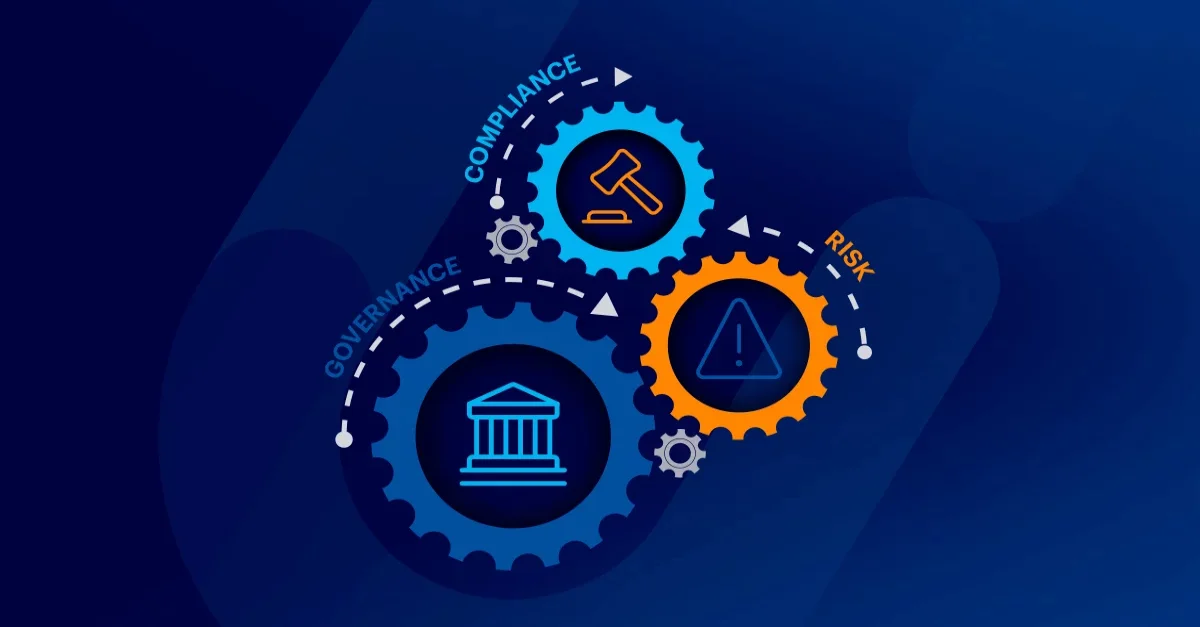
Cybersecurity in gaming does not exist in isolation; it must align with a complex and evolving set of regulatory requirements and industry frameworks. GLI-GSF-1, the first gaming-specific cybersecurity standard released by Gaming Laboratories International in 2024, covers critical controls for gaming infrastructure and transaction integrity and is increasingly referenced in regulatory contexts across the sector. PCI DSS v4.0 is mandatory for all organizations that process payment card data, with strengthened requirements for WAFs, authentication, and monitoring.
ISO 27001 provides an internationally recognized framework for information security management, while the GDPR and UK GDPR govern data protection obligations for European players. The NIST Cybersecurity Framework’s five-function model of Identify, Protect, Detect, Respond, and Recover is applicable across sectors and widely referenced in gaming regulatory discussions. The EU’s updated NIS2 Directive further strengthens governance obligations by requiring board-level accountability for cyber risk, meaning senior executives in covered organizations can now be held personally liable for cybersecurity failures.
Third-Party and Supply Chain Risk
Third-party and supply chain risk is one of the most undermanaged areas in gaming cybersecurity. Every vendor connected to your platform, payment processors, game content providers, affiliate systems, KYC and AML tools, and cloud providers, represents a potential attack vector into your environment. Security assessments should be conducted before onboarding any vendor; cybersecurity requirements should be embedded in all contracts, with minimum standards defined and audit rights included; and third-party access to your environment should be continuously monitored rather than trusted once during onboarding and then left unreviewed for years.
Security Governance
Security governance and cybersecurity require establishing a structure with genuine board-level visibility, not just a security committee that surfaces only when something breaks. A formal risk register should track identified threats, their likelihood and potential impact, and the controls in place to mitigate them, providing a living document that executive leadership can use to make informed investment decisions. Annual security audits, whether conducted by an internal qualified team or an external assessor, verify that controls are functioning as intended and not merely documented as such.
Staff Security Awareness
Staff security awareness training is mandatory and not exclusively a technical concern. Phishing, vishing, and social engineering attacks frequently target HR, finance, and customer service teams precisely because those employees are accessible, naturally helpful, and often less security-conscious than technical staff. The MGM breach reportedly began with a social-engineering call to the IT help desk, a reminder that even the most sophisticated technical defenses can be circumvented by a persuasive phone call to the right person at the right moment.
Mandatory training for all employees, combined with simulated phishing campaigns throughout the year, builds an organizational immune system against social engineering. A culture that encourages and rewards reporting suspicious activity, rather than meting out embarrassment or blame, is what makes training translate into real security behavior when it counts.
Emerging Threats Gaming Companies Must Prepare For in 2026
The threat landscape is not static, and several emerging attack categories warrant particular attention as gaming companies plan their security roadmaps.

AI-Powered Attacks
AI-powered attacks increased by 47% in 2025 according to industry survey data, and the trajectory is not slowing. Attackers are using generative AI to craft highly personalized phishing emails that no longer carry the grammatical and formatting tells that trained employees have learned to recognize. Deepfake audio is being used to impersonate executives in vishing calls to authorize fraudulent wire transfers, while AI-driven automated vulnerability discovery tools are identifying and exploiting weaknesses at a pace that outstrips traditional patching cycles. Defenders must respond in kind by deploying AI-powered behavioral analytics, fraud detection, and automated threat response capabilities that operate at machine speed.
KYC Forgery Using Generative AI
KYC forgery using generative AI is an emerging problem specific to iGaming and financial platforms. Fraudsters are producing synthetic identity documents, fabricated passports, driving licenses, and utility bills that pass automated optical character recognition and basic document verification checks with increasing reliability. Biometric liveness detection and document forensic analysis tools capable of identifying AI-generated imagery are becoming necessary components of a robust identity verification stack, rather than optional enhancements to be deferred until the problem has been exploited.
Web3 and Metaverse Attack Surfaces
Gaming platforms expanding into NFTs, crypto wallets, and virtual environments inherit an entirely new set of vulnerabilities. Game assets and in-platform currencies become targets for smart contract exploits and wallet-draining attacks, and the convergence of gaming, cryptocurrency, and Web3 means the security perimeter extends far beyond the browser into immersive environments and cross-platform digital wallets. Digital assets should be treated with the same level of protection as traditional financial instruments, including equivalent access controls, transaction monitoring, and incident response procedures.
Insider Threats
Insider threats are becoming more sophisticated as attackers increasingly use social engineering to recruit or coerce employees into granting initial access, rather than attempting to breach technical defenses from the outside. Remote and hybrid work arrangements have complicated insider threat detection by removing the physical observation layer that once provided a degree of passive monitoring. Behavioral analytics applied across internal user accounts, not just external-facing traffic, is a necessary component of any mature security program aiming to address this vector effectively.
Building a Security Culture, Not Just a Security Checklist
A checklist is a floor, not a ceiling. The gaming companies with the most resilient security postures are not the ones who have checked every box; they are the ones who have built security into every layer of their business culture, so that the checklist reflects existing practice rather than aspirational intention.
That means executives who understand cyber risk as a business risk, not a technical problem delegated to the IT department. It means developers who think about security from the first line of code, not after a penetration tester finds a critical flaw in production. It means customer-facing staff who can recognize social engineering attempts, because the most sophisticated firewall ever built is useless if an attacker simply calls your help desk and talks their way past a well-meaning employee.
The average cost of a security breach now exceeds $4 million in remediation costs alone, and that figure does not account for regulatory fines, reputational damage, or the long-term player churn that follows a publicized data breach. Research consistently shows that more than half of online gamblers would permanently stop using a platform after a major breach. In an industry built entirely on trust, the cost of inaction is not a risk to be managed; it is an existential threat.
Read more: VO Technology
Cybersecurity Checklist Summary

Network and Infrastructure
Always-on DDoS mitigation should be deployed and tested; network segmentation must be enforced across all system types; a WAF must be active on every public-facing application; and next-generation firewalls with deep packet inspection must be enabled across the environment. Remote access should be restricted to VPN connections, with RDP exposure to the internet eliminated entirely.
Identity and Access
MFA must be enforced on all internal accounts without exception; the least privilege principle must be applied organization-wide; privileged access must be audited and fully logged; and access must be revoked immediately upon any role change or departure. Just-in-time provisioning should govern all administrative elevation to prevent persistent high-privilege exposure.
Player and Fraud Protection
Behavioral analytics should continuously monitor for account takeover patterns; credential stuffing protection must be active at the login layer; bot and multi-account detection must run at all times; and KYC and AML processes must be verified, documented, and maintained in an audit-ready state.
Data Protection
AES-256 encryption at rest and TLS 1.2 or higher in transit are the minimum acceptable standards. A data retention policy must be defined, actively enforced, and regularly reviewed, and GDPR, along with all applicable jurisdictional privacy requirements, must be mapped and fully addressed across every market you serve.
Endpoint and Application Security
EDR must be deployed on all endpoints; the development pipeline must include SAST and DAST for every release cycle; patch SLAs must be defined and tracked against clear urgency tiers; and dedicated mobile application security testing must be conducted at least annually.
Security Operations and Detection
24/7 SOC monitoring must be active, whether managed internally or through an MSSP; a SIEM platform must be deployed and properly tuned to reduce false-positive noise; threat intelligence subscriptions relevant to the gaming sector must be maintained; and annual penetration testing with red team exercises must be scheduled and completed without exception.
Incident Response
The IRP must document named role assignments for every function; tabletop exercises must be conducted at least twice per year; backup and recovery must be tested and validated rather than assumed to function correctly; and a ransomware response retainer should be in place well before it is needed.
Compliance and Governance
All applicable frameworks GLI-GSF-1, PCI DSS, ISO 27001, GDPR, and NIST CSF must be mapped and actively addressed, third-party vendor security must be formally assessed before onboarding and monitored continuously thereafter, board-level cyber risk governance must be established and functioning, and annual security awareness training must be completed by all staff across every department without exception.
Conclusion
The gaming industry has crossed a threshold from which there is no return. Cybersecurity can no longer be treated as a technical back-office cost center; it is now table stakes for operating in regulated markets, maintaining player trust, and protecting the long-term viability of any gaming business.
The companies that thrive in the years ahead will not be the ones that never face attacks. They will be the ones who have built the systems, the processes, and the culture to detect, contain, and recover faster than their attackers can adapt. Start with this cybersecurity checklist for gaming companies, address each area systematically, and treat security not as a project with a finish line but as a continuous operational discipline woven into everything your organization does. The next attack is already being planned. The only question is whether you’re ready.
Read more: 12 Essential Steps to Secure Your Remote Workspace
Frequently Asked Questions (FAQs)
What is the most common cybersecurity threat to gaming companies?
DDoS attacks, account takeover via credential stuffing, ransomware, and player data breaches are the most frequently reported threats across the gaming sector. The industry also faces increasingly sophisticated phishing and social engineering attacks targeting non-technical staff rather than technical systems directly, because human manipulation is often easier and faster than breaking through hardened infrastructure.
What compliance standards apply to gaming companies?
Depending on jurisdiction and business type, the relevant standards include PCI DSS for payment processing, GDPR and UK GDPR for European players, the GLI Gaming Security Framework for gaming-specific infrastructure controls, ISO 27001 for information security management, the NIST Cybersecurity Framework across sectors, and the EU’s NIS2 Directive for operators in European markets who must now demonstrate board-level accountability for cyber risk.
How often should gaming companies conduct penetration testing?
At minimum, annual penetration testing is recommended, along with additional tests following significant infrastructure changes, major feature launches, or new third-party integrations. Mature organizations supplement scheduled penetration tests with continuous automated scanning and bug bounty programs that provide ongoing visibility between formal testing cycles.
How can gaming platforms protect players from account takeover?
The most effective approach combines multi-factor authentication, device fingerprinting, behavioral analytics, and credential stuffing protection at the login layer. Monitoring for anomalous post-login behavior, unusual play patterns, rapid withdrawal attempts, or sudden device changes adds a secondary detection layer that catches compromised sessions even when the initial login appeared legitimate.
What should a gaming company do immediately after a data breach?
The Incident Response Plan should be activated immediately: contain the breach, preserve forensic evidence, notify affected players and relevant regulatory authorities within required timeframes (72 hours under GDPR), engage external incident response support if the internal team lacks the capacity, and then conduct a thorough post-incident review to understand the root cause and prevent recurrence.